Apple is planning to introduce vapor chamber cooling technology to the iPad Pro, similar to what was implemented in the iPhone 17, to better manage heat generated by high-performance tasks, with an expected release around spring 2027.
Apple is planning to include a vapor chamber cooling system in the upcoming iPad Pro with the M6 chip, aiming to improve heat dissipation and performance for demanding tasks, potentially differentiating it from previous models. The new cooling technology, already used in some smartphones, could be introduced around 2027.
The next-generation iPad Pro is expected to feature vapor chamber cooling to improve thermal performance, especially for the upcoming M6 model, which is likely to debut around spring 2027 with the new 2nm chip, enhancing performance while maintaining its thin, fanless design.
Apple is developing a vapor chamber for improved cooling in the upcoming iPad Pro expected by 2027, exploring ads in Apple Maps, and facing development challenges with an 18-inch foldable iPad; the company also released updates to its M5 product line.
Initial firmware-based testing indicates that the Samsung Galaxy S25 FE, despite having a larger vapor chamber, heats up quickly and throttles more aggressively than the S24 FE, possibly due to unoptimized firmware or vapor chamber performance issues.
iFixit’s teardown of the iPhone 17 Pro reveals a new vapor chamber cooling system, a removable battery tray, and confirms the scratch-prone issue known as scratchgate, with the device scoring 7/10 for repairability due to design choices like the front-only access and non-dual-entry design.
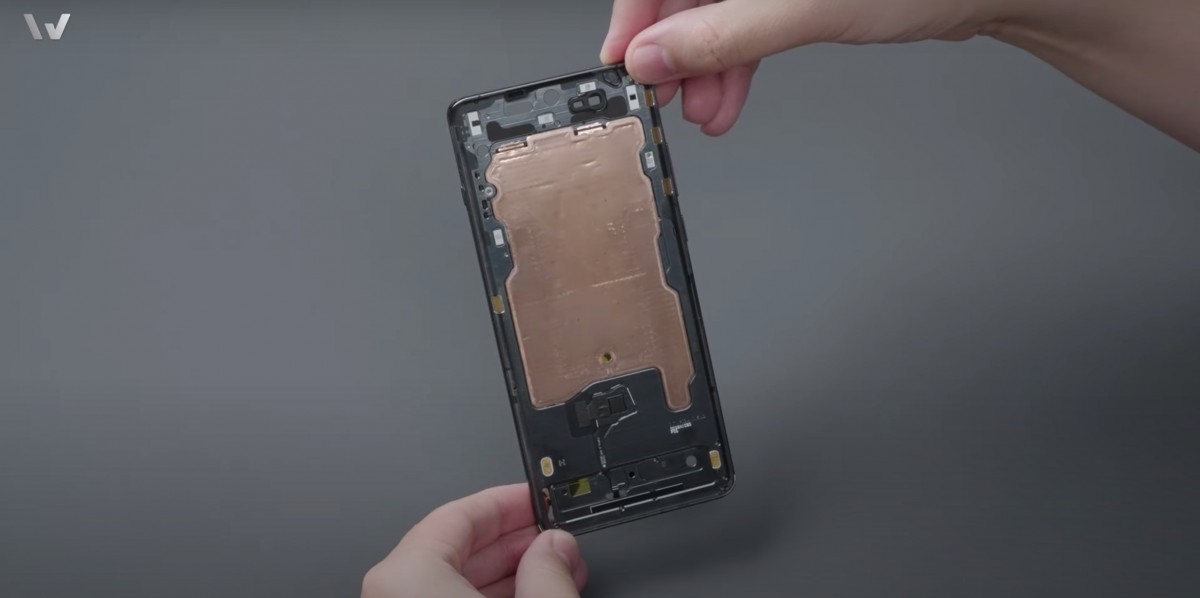
A leaked image suggests the iPhone 17 Pro Max will feature vapor chamber cooling technology, potentially improving heat dissipation and maintaining high performance under demanding conditions, especially for power users and in warm climates.
The iPhone 17 Pro and Pro Max are rumored to feature a vapor chamber cooling system, a first for iPhones, which could improve heat dissipation during intensive tasks like gaming. A leaked photo of a copper thermal plate suggests this upgrade, aligning with high-end Android devices that already use vapor chambers. This system would help manage heat from the A19 Pro chip, potentially enhancing performance and device longevity.
The teardown of the Samsung Galaxy S24 Ultra reveals a larger vapor chamber for improved thermal management and pull tabs for the battery, earning it a 9/10 repairability score and showcasing 5G mmWave antennas on the frame in the US version.
Samsung has unveiled the Galaxy Book 4 Ultra, the latest addition to its Galaxy Book lineup. The new Ultra model features a touchscreen, improved outdoor visibility, and a more efficient cooling system. The vapor chamber design has been refreshed, with an 11% wider chamber and a dual fan with uneven blade spacing. This new cooling system lowers heat and fan noise, allowing the laptop to operate at its maximum potential. The Galaxy Book 4 Ultra will be available for sale in Korea on January 2, with other markets gradually joining the release.
A teardown of the OnePlus 12 reveals a massive 9,140 mm2 vapor chamber, showcasing the company's focus on thermal performance. The phone's internals are neatly arranged, and the vapor chamber is expected to significantly aid the Snapdragon 8 Gen 3 in sustained performance. The OnePlus 12 is currently available in China and will launch globally next month, with the possibility of a more affordable OnePlus 12R variant.
Certain NVIDIA RTX 3080 Founders Edition and RTX A6000 graphics cards may develop a breach in the vapor chamber, resulting in a chemical reaction that creates a hole and leaks fluid. This reaction produces a blue substance, likely copper sulfate or oxide. While relatively uncommon, users experiencing high temperatures may need to replace thermal paste and pads.
The Pixel 8 Pro teardown reveals that Google has once again skipped the use of a vapor chamber cooling system, relying instead on thicker layers of graphite and copper to manage heat. Concerns have been raised about the performance, efficiency, and stability of the Tensor G3 SoC, which was made by Samsung Foundry. While vapor chambers can assist in sustained performance, they cannot compensate for underlying issues with inefficiency. The Pixel 8 Pro offers software-based AI features and improved camera capabilities, but its cooling mechanism has raised questions about thermal management.