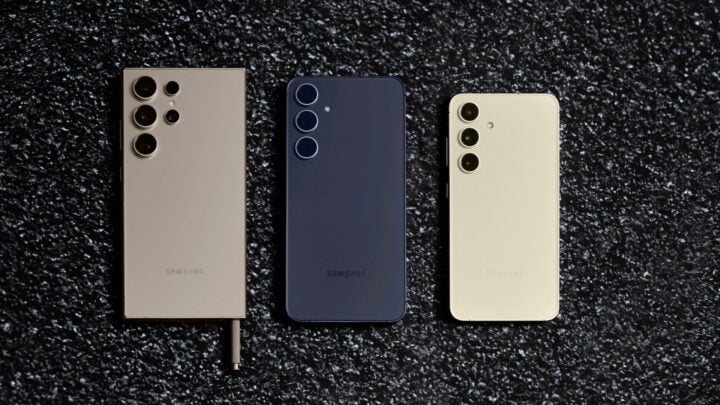
Initial firmware-based testing indicates that the Samsung Galaxy S25 FE, despite having a larger vapor chamber, heats up quickly and throttles more aggressively than the S24 FE, possibly due to unoptimized firmware or vapor chamber performance issues.
The Samsung Galaxy S25 FE is expected to feature a new Exynos 2400 chipset, 12GB RAM, a triple-camera setup, a 4,500mAh battery, and a lighter, thinner design with a 6.7-inch display, set to be announced soon.
Samsung is set to release the Galaxy Z Flip7 FE in 2025, alongside the Galaxy Z Flip7. The Flip7 FE will be a more affordable version, likely featuring the same display but with downgraded cameras and a less powerful SoC, potentially the Exynos 2400. The success of this model may depend on its price difference from the standard Flip7, with a significant price cut possibly boosting foldable phone sales.
Samsung's decision to use different chipsets in the Galaxy S24 and S24 Plus models based on geography has led to performance discrepancies, with the Snapdragon 8 Gen 3 outperforming the Exynos 2400. This move, reportedly made for cost-saving reasons, has resulted in users in North America getting better-performing phones than those in Europe. The split chipset approach has raised concerns about the user experience and the fairness of the purchase. The article also discusses the potential impact on future Samsung flagship releases and emphasizes the importance of providing a consistent experience for Galaxy phone owners regardless of their location.
Samsung Foundry is reportedly gaining traction in the semiconductor industry, potentially securing orders for Google's upcoming Tensor G4 chip, thanks to the positive reception of the Galaxy S24 and the Exynos 2400. The new chip for the Pixel 9 series is expected to be manufactured on Samsung Foundry's 4nm process, utilizing FOWLP technology. Despite differences in design, the success of the Galaxy S24, powered by the Exynos 2400, showcases Samsung Foundry's capability to produce high-end mobile chips.
A tipster claimed that Google's upcoming Tensor G4 chip is based on Samsung's Exynos 2400, but the specifications and GPU differences suggest otherwise. The tipster later clarified that the Tensor G4 could be a semi-custom SoC utilizing ARM's CPU and GPU designs, possibly taking advantage of Samsung's fabrication and packaging technologies. Until Google switches to TSMC as its foundry partner, the Pixel 9 and Pixel 9 Pro may not pose a significant performance threat, but could focus on other features like on-device AI capabilities and camera improvements.
The Galaxy S24+ with the Exynos 2400 chip and full-screen Always On Display feature has impressed a former S22+ user with its battery life, showing significant improvement after the device learned usage patterns, providing 52% battery charge and an estimated 17 hours and 26 minutes of usage after almost 14 hours unplugged, with 6 hours and 20 minutes of screen-on time and minimal energy consumption from the new AOD feature. The user recommends giving the S24+ at least a week of use to truly appreciate its battery performance.
Samsung's Exynos 2400 chipset in the Galaxy S24 competes well against last year's Snapdragon 8 Gen 2 in CPU performance but lags behind in GPU tests due to thermal throttling. The Exynos 2400 shows promise for future gaming with ray tracing capabilities, but overall, the Snapdragon 8 Gen 3 in the Galaxy S24 Ultra outperforms it. Customers seeking peak performance should consider the S24 Ultra, especially for gaming.
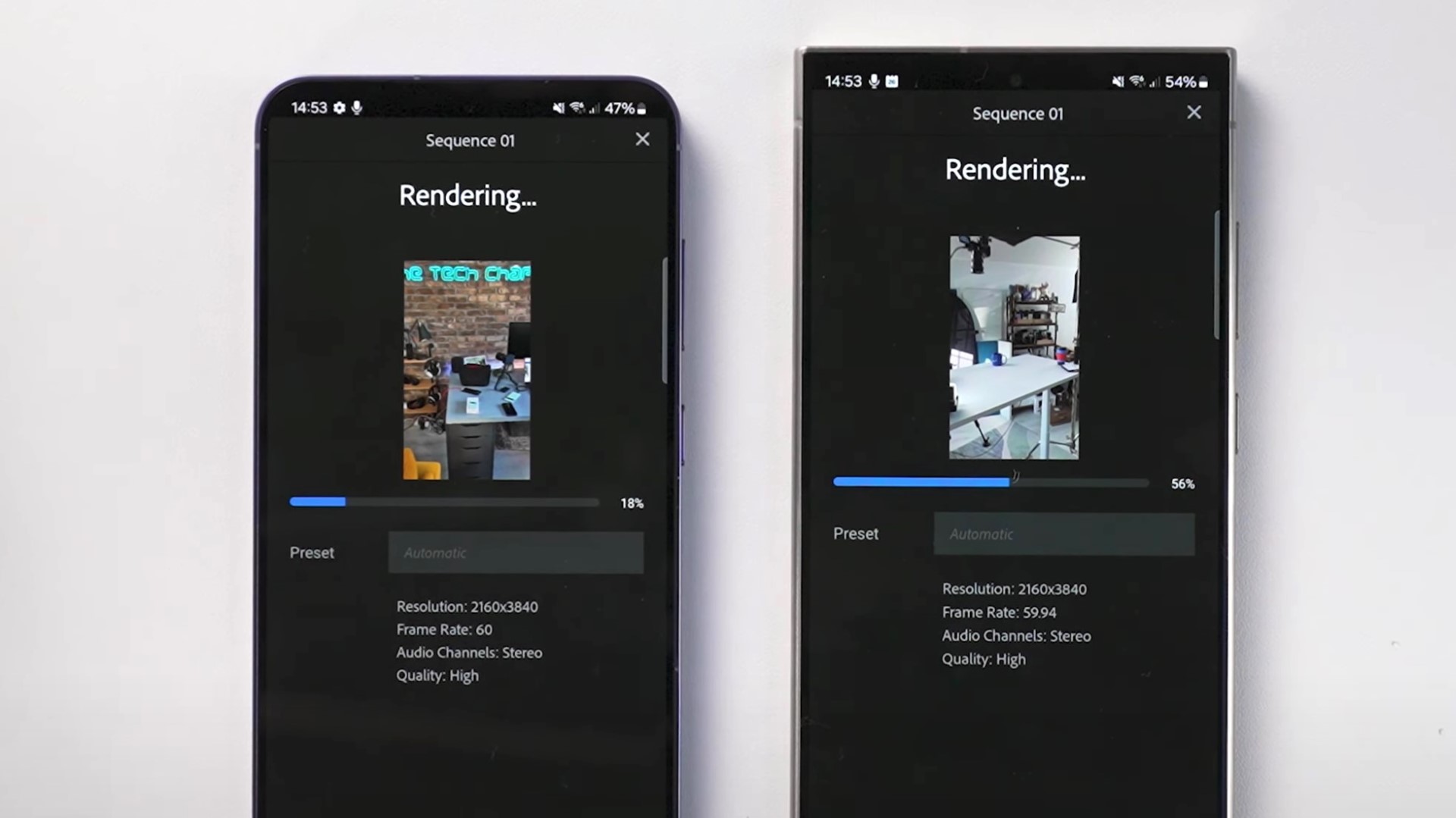
A comparison video of the Samsung Galaxy S24+ and Galaxy S24 Ultra reveals significant lag and stuttering issues on the S24+ when using the video rendering program Premiere Rush, attributed to the Exynos 2400 chip. The performance differences and lag persist even in basic One UI operations, with a noticeable battery drain on the S24+. The tester suggests that software updates from Samsung and Adobe could potentially address these issues, but cautions against making purchase decisions based on future updates.
Benchmark comparisons reveal that the Samsung Exynos 2400, used in the Galaxy S24 and S24+, lags behind the Snapdragon 8 Gen 3 in performance and efficiency, except for its strengths in ray tracing. The Exynos 2400 consumes more power and is slower than the Snapdragon 8 Gen 3, but outperforms it in ray tracing with lower power consumption. However, the Exynos 2400's high power consumption, particularly from its performance cores, raises concerns about battery life, indicating room for optimization by Samsung.
In a recent test, the Exynos 2400-powered Galaxy S24 Plus outperformed the Snapdragon 8 Gen 3-powered Galaxy S24 Ultra in a ray tracing benchmark for GPUs, indicating better performance over extended gaming periods. While initial reports suggested the Exynos 2400 handled demanding games well, it was later revealed that the texture resolution was set to low. Nonetheless, the Exynos 2400 remains impressive, and the discrepancy in game performance may be due to optimization issues for the Galaxy S24.
The Samsung Galaxy S24 series offers different chipsets for global and US customers, with the Snapdragon 8 Gen 3 and Exynos 2400 being the options. The two chipsets have differences in CPU, GPU, AI, networking, and manufacturing processes, but Samsung ensures that customers receive the same features regardless of the chipset. While there may be slight performance variations, especially for high-end gaming and networking, the differences may not be significant for most users. The Galaxy S24 Ultra comes with the Snapdragon 8 Gen 3 chipset in all regions, offering a consistent high-performance option for global customers.
Benchmark scores and battery life figures for the Exynos 2400 variants of the Galaxy S24 and S24+ have been revealed, showing competitive performance against the Snapdragon 8 Gen 3. The Exynos 2400 processor demonstrates nearly equivalent performance, with the Galaxy S24 series showcasing impressive battery life improvements compared to their predecessors.
Early benchmarks of the Exynos 2400 SoC in the Samsung Galaxy S24 series show promising results, with a 4042 overall score on the 3DMark Wild Life Extreme benchmark, placing it very close to the Apple A17 Pro. The RDNA 3 GPU inside the Exynos 2400 scored 4042, indicating a significant improvement over its predecessor, the Exynos 2200. However, it's important to note that mobile GPU benchmark tests can be influenced by the thermal capacity of smartphones, and the stability of the chip's performance over prolonged stress tests remains to be seen.
Samsung's Exynos 2400 and Qualcomm's Snapdragon 8 Gen 3 chipsets are closely matched in real-time gaming performance, with the Exynos 2400 showing promise in keeping up with the Snapdragon 8 Gen 3. While the Snapdragon 8 Gen 3 outperformed the Exynos 2400 in Call of Duty: Mobile, the latter excelled in War Thunder, indicating its potential for handling Ray Tracing. Despite the Snapdragon 8 Gen 3's advantage of a larger vapor chamber for cooling, the Exynos 2400 held its own in real-time gaming tests, showcasing its competitive capabilities.