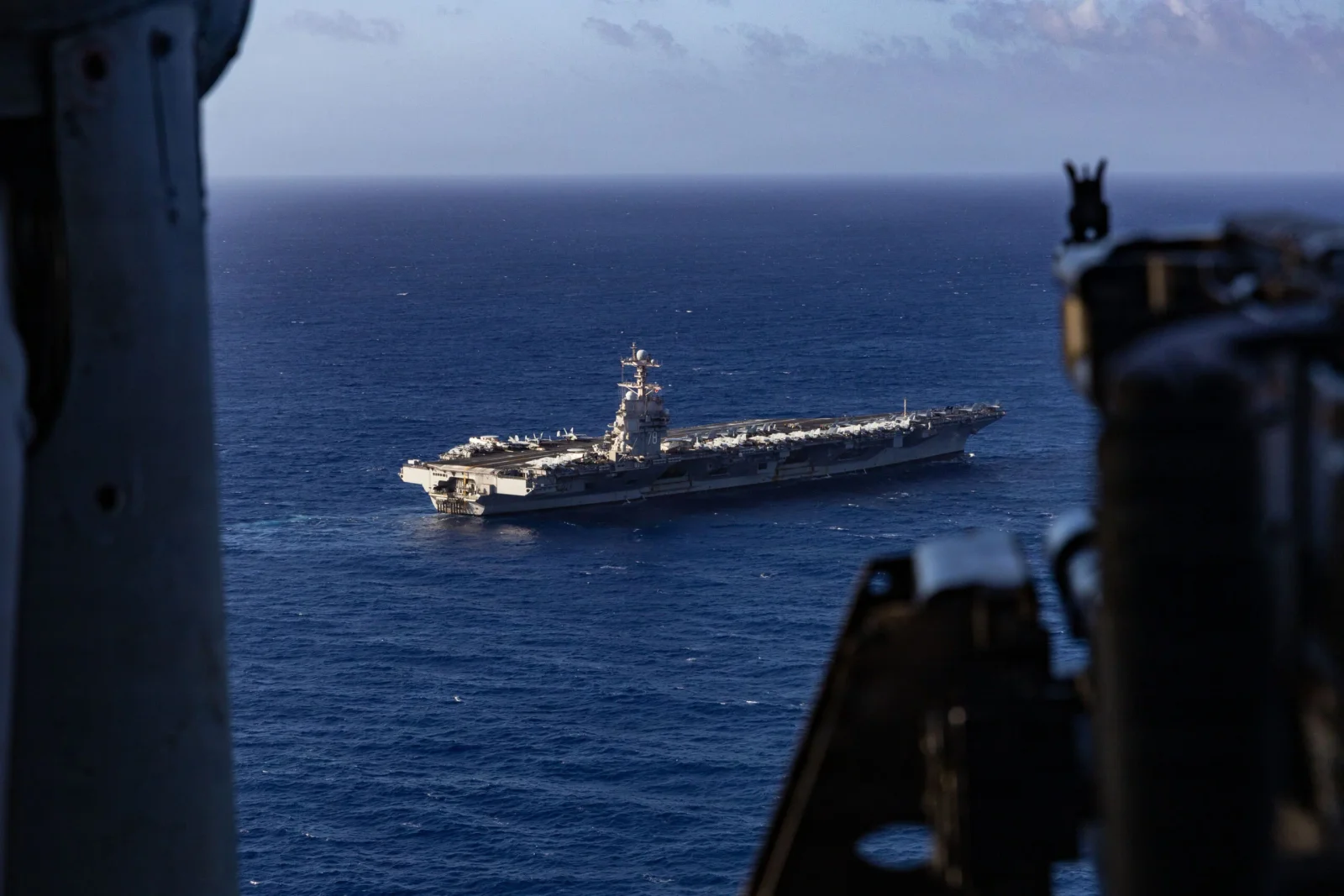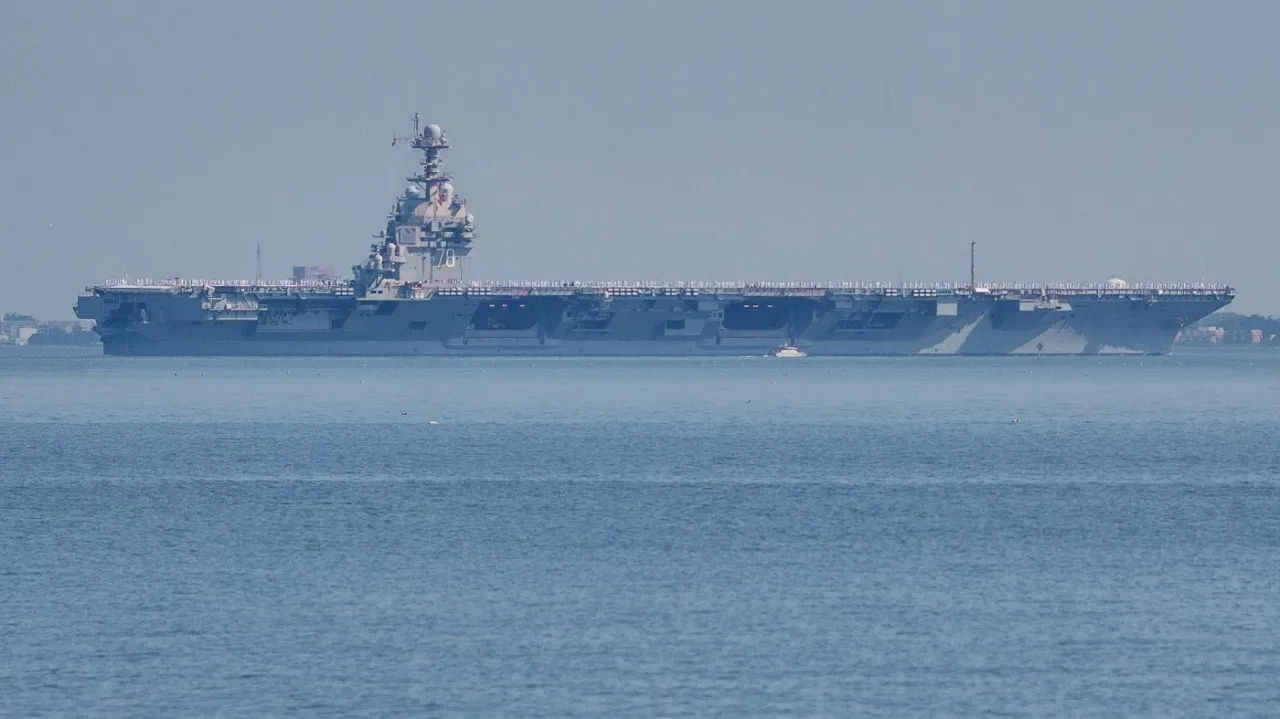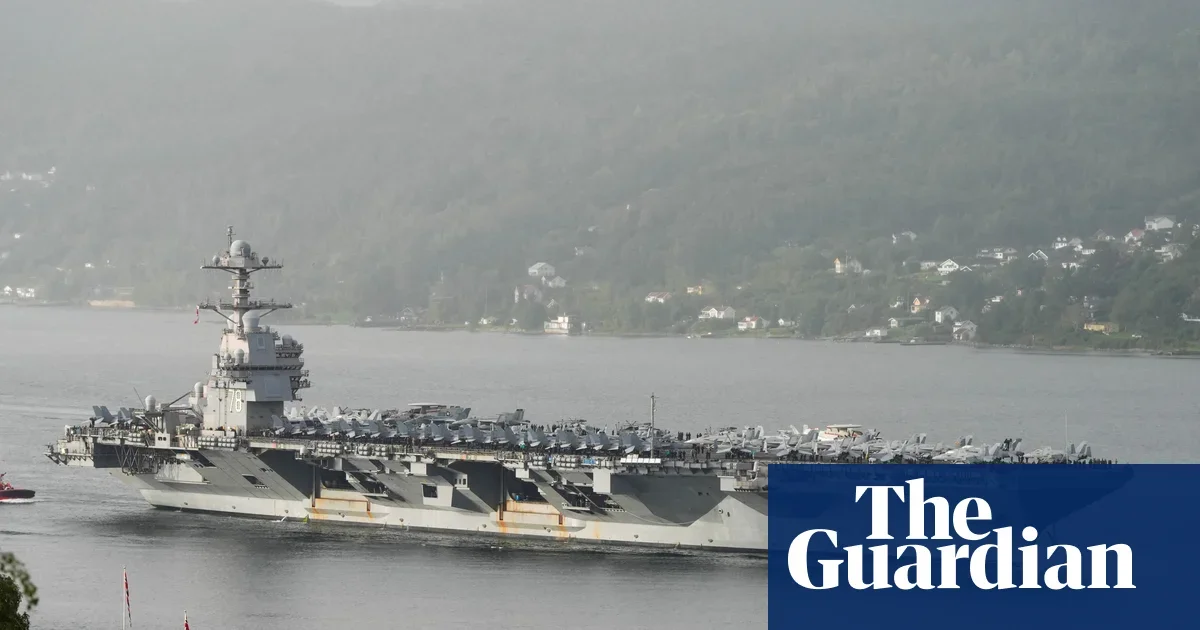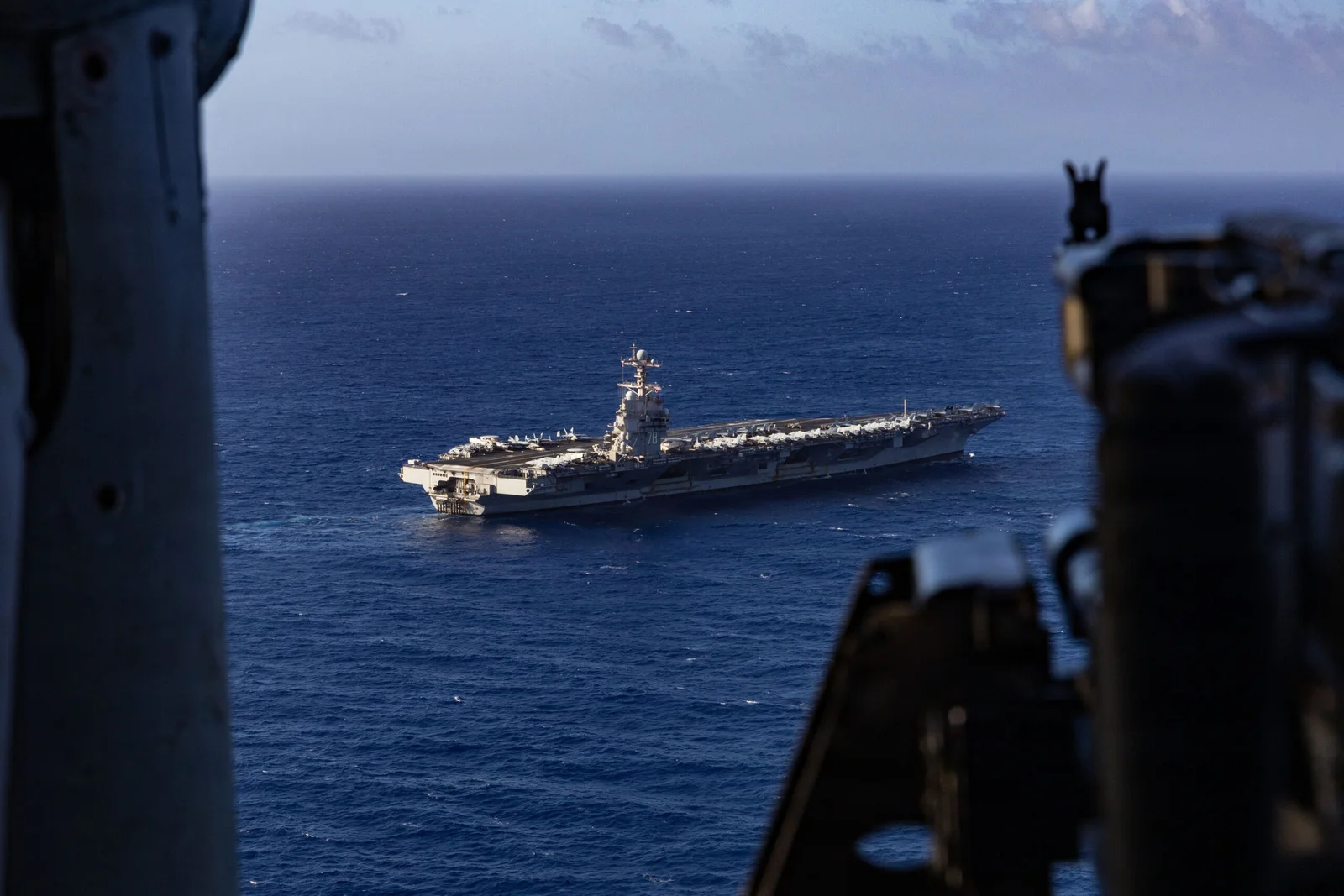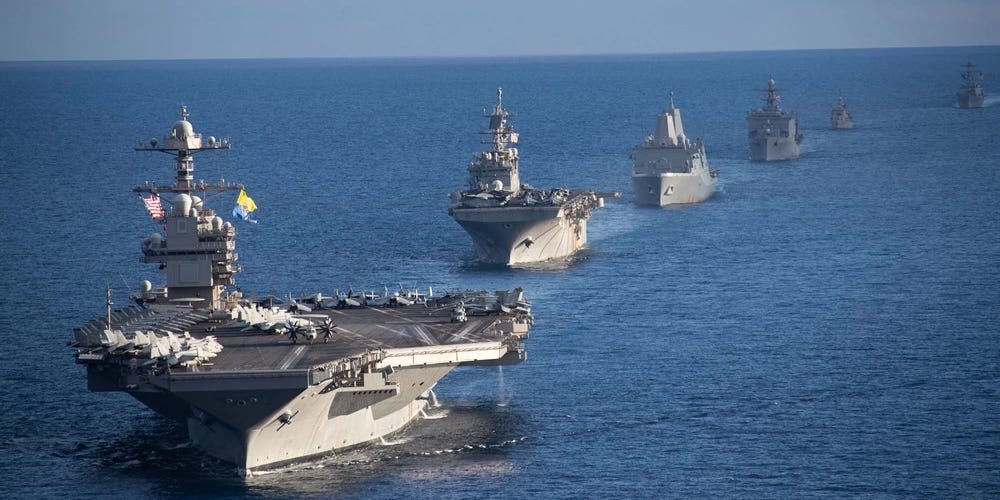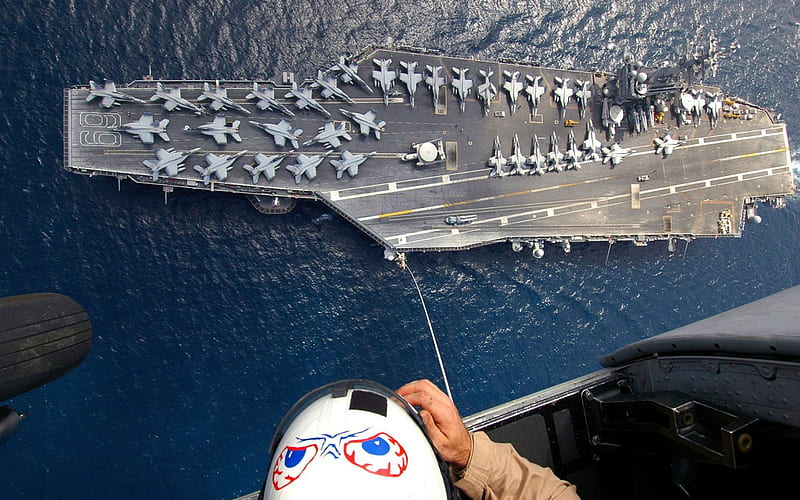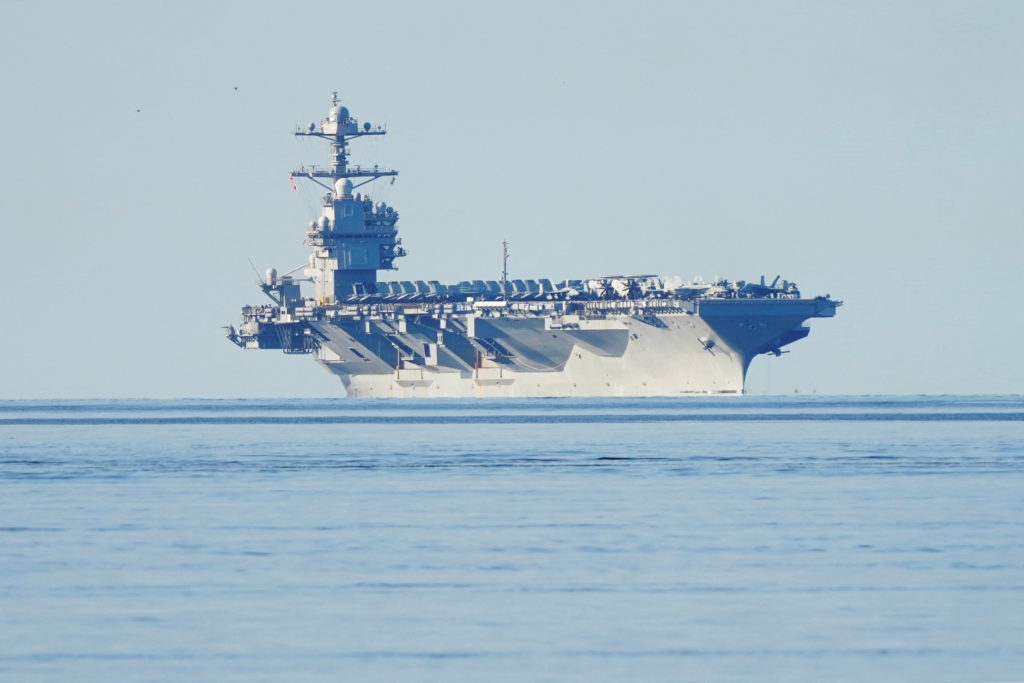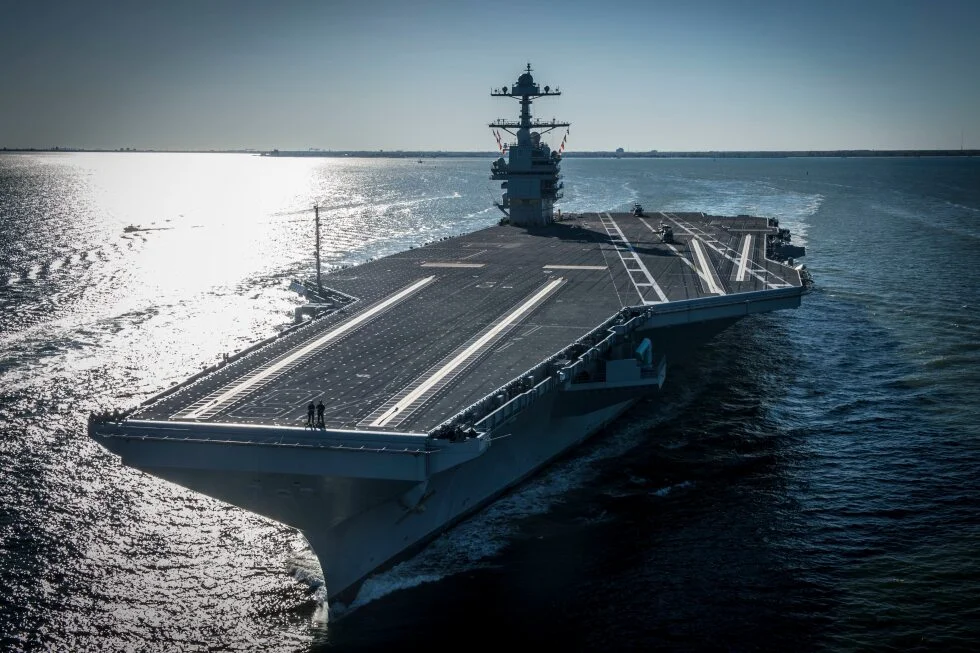
The US Navy's largest aircraft carrier, USS Gerald R. Ford, has arrived in Latin America amid rising tensions with Venezuela, bolstering US military presence in the region to counter drug trafficking and regional instability.
The US has deployed its largest aircraft carrier, USS Gerald R Ford, along with a strike group, to Latin American waters, escalating tensions with Venezuela amid accusations of US interference and Venezuela's military response, marking the region's largest US military presence in decades.
The aircraft carrier USS Gerald R. Ford has transitioned from the Mediterranean to operate in U.S. Southern Command, enhancing U.S. naval presence in the region to counter transnational threats and support ongoing efforts against criminal organizations involved in narcotics trafficking.
Venezuelan President Nicolás Maduro accused the US of fabricating a war against Venezuela as the US deploys the aircraft carrier USS Gerald R. Ford near the country, amid tensions and accusations of drug trafficking and election theft.
The US has deployed its largest aircraft carrier, USS Gerald R. Ford, to Latin America to support ongoing military efforts against drug trafficking, following recent strikes and increased regional military activity, with the ship expected to arrive within 7-10 days.
The USS Gerald R. Ford, the world's largest and most advanced aircraft carrier, completed its first full deployment, spending 8.5 months largely in the Mediterranean Sea and supporting Israel after the October Hamas attacks. The deployment was extended by 76 days as a response to the conflict, with the carrier and its strike group serving as a deterrence message. The ship conducted multinational drills, vigilance exercises, and flight operations, while also standing as a warning to certain malign actors in the region.
The USS Gerald R. Ford aircraft carrier has returned to its homeport in Norfolk, Virginia after an eight-month deployment, which was extended due to the Israel-Hamas conflict. The deployment was part of the Pentagon's efforts to prevent the conflict from escalating into a larger regional war. The U.S. Navy and Marine Corps still maintain a significant presence in the Middle East, with an amphibious ready group off Israel and the Eisenhower Carrier Strike Group in the Red Sea. The Ford's return marks the end of a prolonged deployment that saw it spending 239 days at sea, and its sailors were commended for their performance during the extended mission.
The USS Gerald R. Ford aircraft carrier is returning home after an extended deployment in the eastern Mediterranean, where it provided protection for Israel following an attack by Hamas. The carrier strike group, which also engaged in intercepting missiles and drones from Houthi-controlled Yemen in the Red Sea, will be replaced by the USS Bataan and its accompanying warships. The U.S. Navy's presence in the region has been a response to Houthi attacks on commercial shipping, particularly near the strategic Bab el-Mandeb Strait, with recent incidents involving the USS Dwight D. Eisenhower's response to attacks on the Maersk Hangzhou container ship.
The USS Gerald R. Ford, the world's largest and most advanced aircraft carrier, is set to return to its home port in Norfolk, Virginia, despite recent threats from Iranian-backed Houthi rebels in the Red Sea. The US Navy has successfully intercepted anti-ship ballistic missiles and drones fired by the Houthis, showcasing advanced defense capabilities amid rising naval threats. The Red Sea remains a high-tension area with international efforts underway to protect commercial shipping from Houthi attacks, which have prompted some ships to alter their routes to avoid the region.
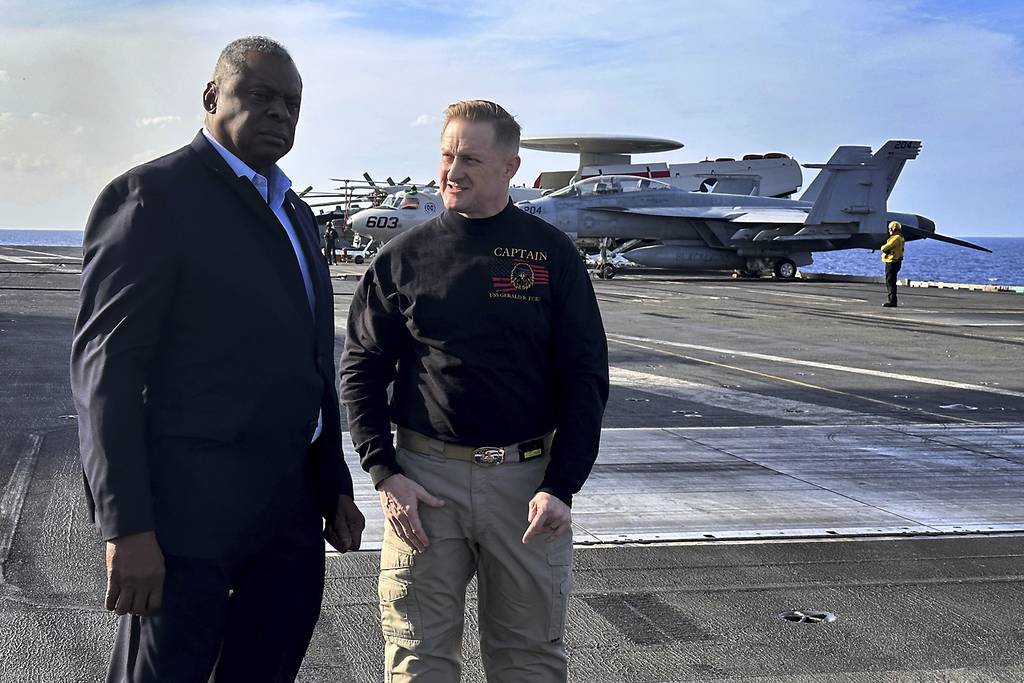
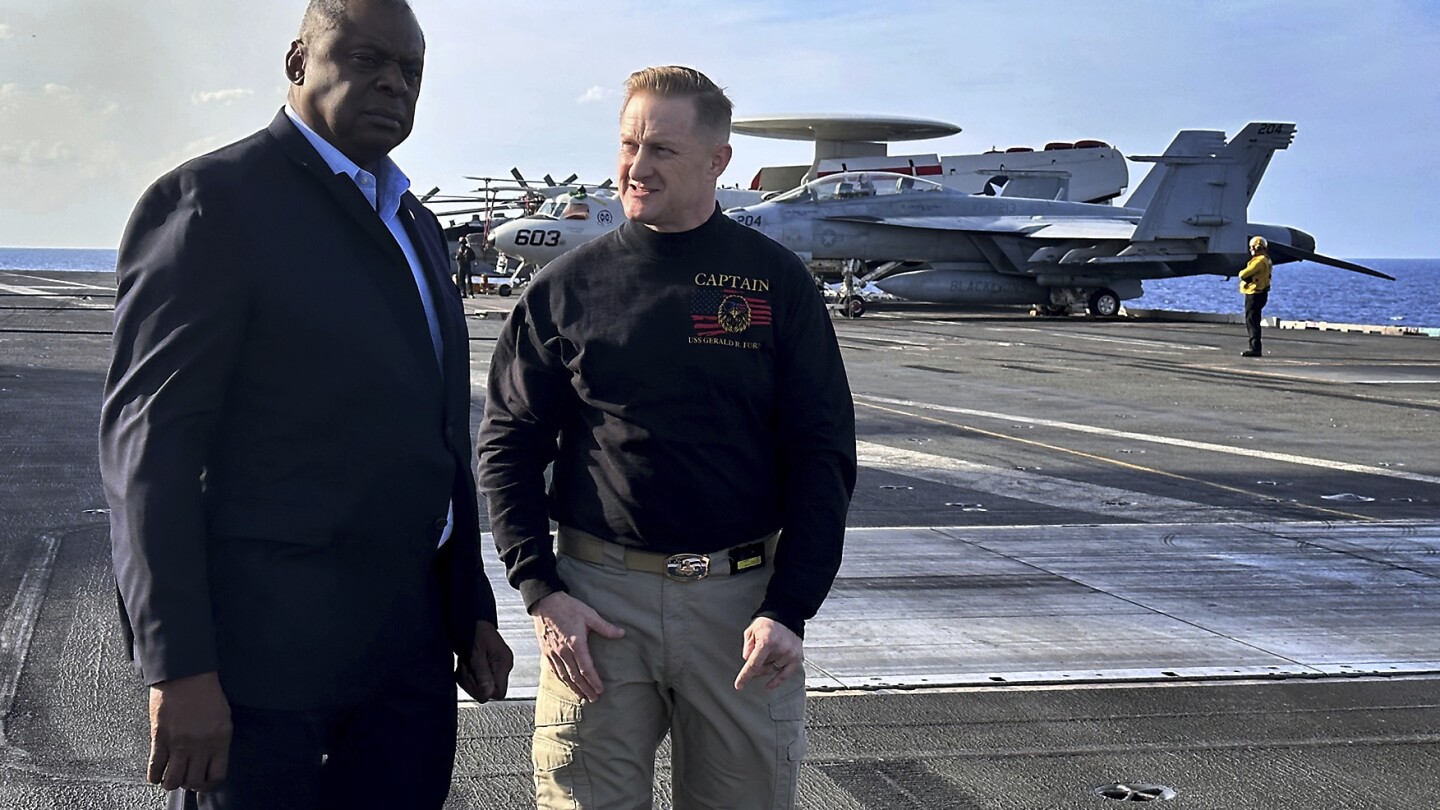
U.S. Defense Secretary Lloyd Austin made an unannounced visit to the USS Gerald R. Ford aircraft carrier to meet with sailors who have been ordered to remain at sea to prevent the Israel-Hamas conflict from escalating into a wider regional war. Austin's visit comes as he presses Israel to shift its bombardment of Gaza to a more limited campaign and address the dire humanitarian needs of Palestinian civilians. There are concerns that Israel may launch a military operation along its northern border with Lebanon, potentially widening the conflict. The USS Gerald R. Ford and its crew have been stationed in the Eastern Mediterranean to be closer to Israel since October. Austin thanked the sailors for their sacrifice and acknowledged their role in preventing a wider regional conflict.
U.S. Defense Secretary Lloyd Austin made an unannounced visit to the USS Gerald R. Ford aircraft carrier, which has been stationed in the Eastern Mediterranean to prevent the Israel-Hamas conflict from escalating into a wider regional war. Austin urged Israel to shift its bombardment of Gaza to a more limited campaign and address the dire humanitarian needs of Palestinian civilians. Concerns remain that Israel may launch a military operation along its northern border with Lebanon, potentially widening the conflict. Austin thanked the sailors for their sacrifice and discussed the dangers in the region. He also announced a new international maritime mission to protect commercial vessels in the Red Sea.
The USS Gerald R. Ford aircraft carrier and one additional vessel have been directed to stay in the Mediterranean Sea for a few more weeks by US Defense Secretary Lloyd Austin, extending their deployment and keeping the crew away from home during the holiday season. This is the third extension of the carrier's deployment, reflecting ongoing concerns about instability in the region due to Israel's conflict with Hamas. The extension comes as the USS Ford is downsizing its crew due to a severe shortage of sailors, with approximately 500-600 sailors leaving the ship over the past six months to a year without being replaced.
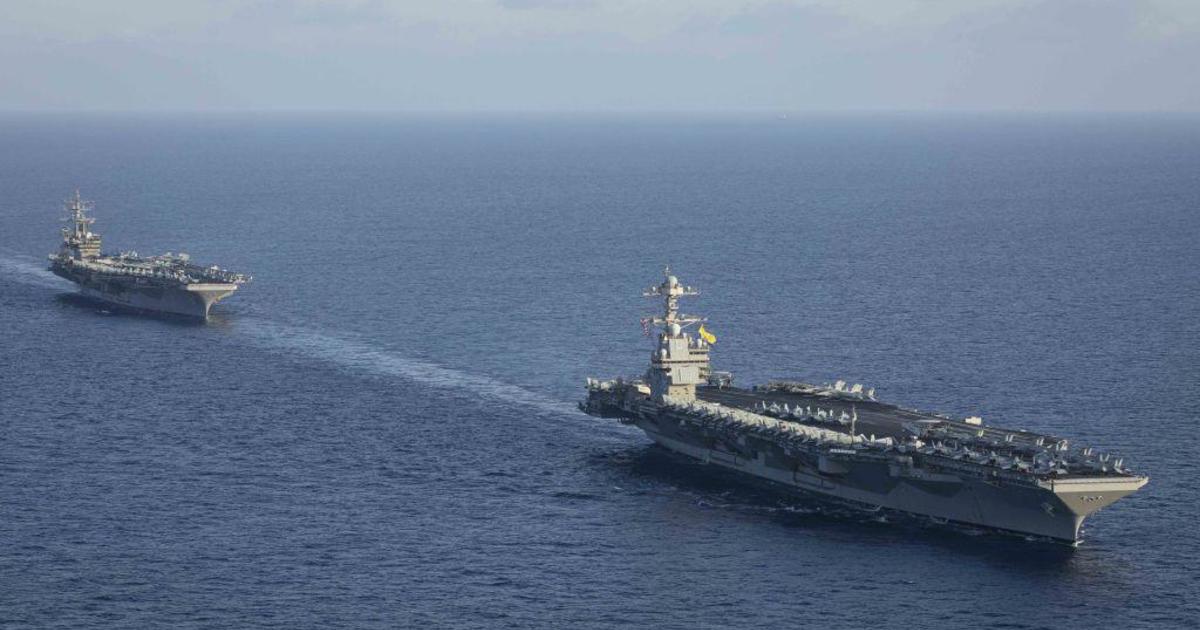
The Pentagon has ordered the USS Gerald R. Ford aircraft carrier and another warship to remain in the Mediterranean Sea near Israel for several more weeks, maintaining a two-carrier presence as Israel's war with Hamas continues. This is the third time the Ford's deployment has been extended, reflecting concerns about the region's volatility. The decision comes as Iranian-backed militants in Iraq and Syria have been conducting regular attacks on U.S. military installations, and U.S. warships in the Red Sea have intercepted missiles fired towards Israel. There are currently 19 U.S. warships in the region, with the Ford's strike group expected to stay for several more weeks.
The Pentagon has ordered the USS Gerald R. Ford aircraft carrier and another warship to remain in the Mediterranean Sea for several more weeks to maintain a two-carrier presence near Israel as its war with Hamas continues. This is the third time the Ford's deployment has been extended, highlighting concerns about volatility in the region. The decision comes as Iran-backed militants in Iraq and Syria have been conducting regular attacks on U.S. military installations, and U.S. warships have intercepted missiles fired towards Israel from Iranian-backed Houthi rebels in Yemen. The Ford's deployment extension is part of the Pentagon's efforts to deter Iran from escalating the conflict into a regional war.
The USS Gerald R. Ford Carrier Strike Group, including the USS Gerald R. Ford aircraft carrier and several guided missile destroyers, has arrived in the Eastern Mediterranean Sea to deter any potential escalation or widening of the conflict. The deployment is part of ongoing efforts to increase the U.S. posture in the region, with additional fighter squadrons being rapidly deployed. The move is seen as a strong signal of deterrence against any actor hostile to Israel, according to General Michael "Erik" Kurilla, commander of U.S. Central Command.