Canadian NORAD Commander Maj. Gen. Chris McKenna discusses the challenges of defending the Arctic from threats like China and Russia, highlighting the development of advanced radar systems, concerns over cruise missiles, and the evolving military activities in the region, emphasizing the need for enhanced domain awareness and new technologies.
War on the Rocks' most-read articles of 2025 highlight global conflicts, military modernization, and strategic technology, reflecting a year of significant geopolitical tensions and evolving warfare strategies.
In 2025, Western Pacific saw significant naval activity with France, the UK, and other allies deploying carrier strike groups for exercises and patrols, while China and North Korea increased military movements and encounters, including shadowing and surveillance operations, highlighting ongoing regional tensions and strategic collaborations.
The article discusses the increasing militarization of space, highlighting recent incidents of satellite dogfights between the US and China, where satellites maneuver aggressively near each other in orbit, raising concerns about space security and strategic dominance.
The Senate passed a $901 billion defense bill that authorizes military funding, increases troop pay, and includes provisions for oversight of military actions near Venezuela, while also addressing issues like diversity cuts, climate programs, and war authorizations, amidst bipartisan support and some controversy over military transparency and strategic priorities.
The article discusses China's ongoing efforts to develop its submarine capabilities, particularly its nuclear ballistic-missile submarines (SSBNs), and highlights the significant technological and operational advantages held by the US Navy in undersea warfare, making China's goal of achieving parity or superiority in this domain a long-term challenge. The US maintains a decisive edge in submarine stealth, detection, and anti-submarine warfare, which limits China's ability to ensure a secure second-strike nuclear capability and poses strategic implications for regional security.
The Pentagon, under Secretary Hegseth, is shifting its weapons acquisition process to a 'wartime footing' to accelerate technology procurement and streamline bureaucracy, reflecting a focus on rapid military readiness amid global threats.
China has rapidly expanded its military capabilities, unveiling numerous new weapons and advanced systems, raising concerns about whether U.S. intelligence can effectively track and analyze these developments amidst the global strategic competition, with experts highlighting both the challenges and the capabilities of the U.S. intelligence community.
The newsletter discusses concerns about potential declines in American military standards, highlighting recent speeches by political figures like Trump and Hegseth that emphasize internal threats, 'wokeness,' and the need for higher lethality and discipline in the armed forces, raising questions about the current state of military professionalism.
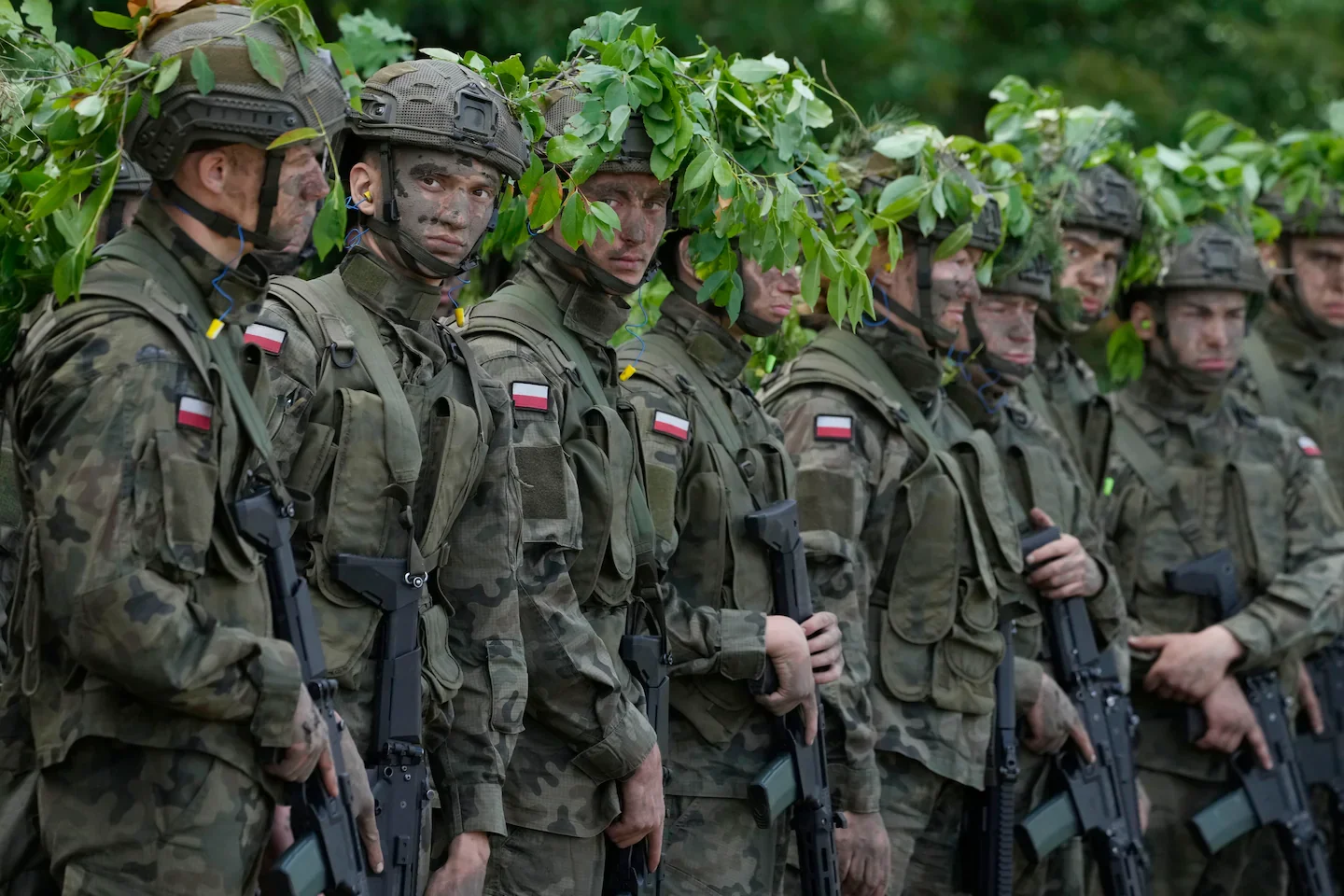
The article discusses how a potential Russia-NATO war could start, emphasizing that Russia might initiate a quick, covert attack on the Baltic states using drones, electronic warfare, and surprise tactics to exploit NATO's weaknesses, rather than engaging in a traditional large-scale battle, thereby risking the alliance's unity and credibility.
The Pentagon has implemented new restrictions on public speaking and media engagements by military leaders, aiming to tighten control over information and manage narratives amid concerns about leaks and internal politics, reflecting a broader trend of increased censorship and influence over external communications.
China officially unveiled the JL-1, a nuclear-capable air-launched ballistic missile, during a military parade, marking the first public display of its aerial nuclear component and completing its strategic nuclear triad alongside submarine-launched and land-based missiles, signaling a significant advancement in China's military capabilities and nuclear modernization efforts.
During Israel's 12-day conflict with Iran, the U.S. military reportedly fired over 150 THAAD missile interceptors to defend Israel, which constitutes about a quarter of its total THAAD stockpiles, highlighting concerns over missile inventory levels and the challenges of maintaining operational readiness amid ongoing conflicts and procurement delays.
Israel demonstrated significant air superiority over Iran during a recent conflict, leveraging advanced intelligence and technology, unlike Russia's struggles over Ukraine or the US's challenges against Yemen's Houthis. Experts highlight that these conflicts are highly distinct, with Israel's success partly due to pre-existing intelligence and targeted strikes, raising questions about Iran's future ability to rebuild its defenses amid ongoing tensions.
A large Antonov An-124 cargo jet was seen flying over Kyiv's restricted airspace, sparking curiosity and speculation about its origin and purpose. The aircraft, likely stranded in Ukraine since 2022, appears to have flown from Kyiv to Leipzig, Germany, possibly heading to Antonov's facility. Its flight raises questions about Ukraine's ability to operate such large aircraft amid ongoing conflict and the implications for military logistics.