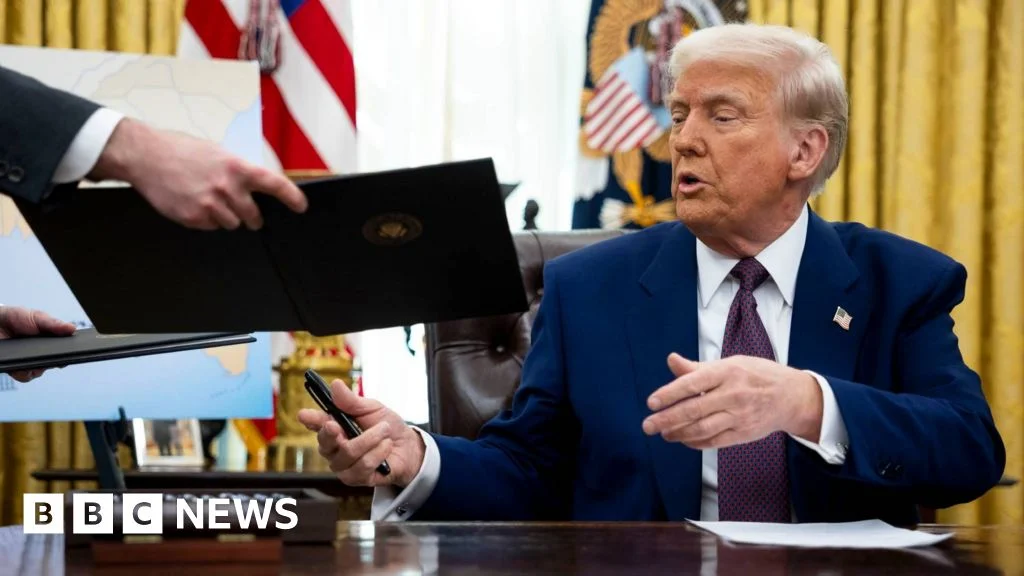
A US judge ruled that the Trump administration's attempt to end temporary protected status (TPS) for Venezuelan and Haitian migrants was unlawful, allowing around 1.1 million migrants to continue living and working legally in the US, though the DHS plans to appeal the decision.
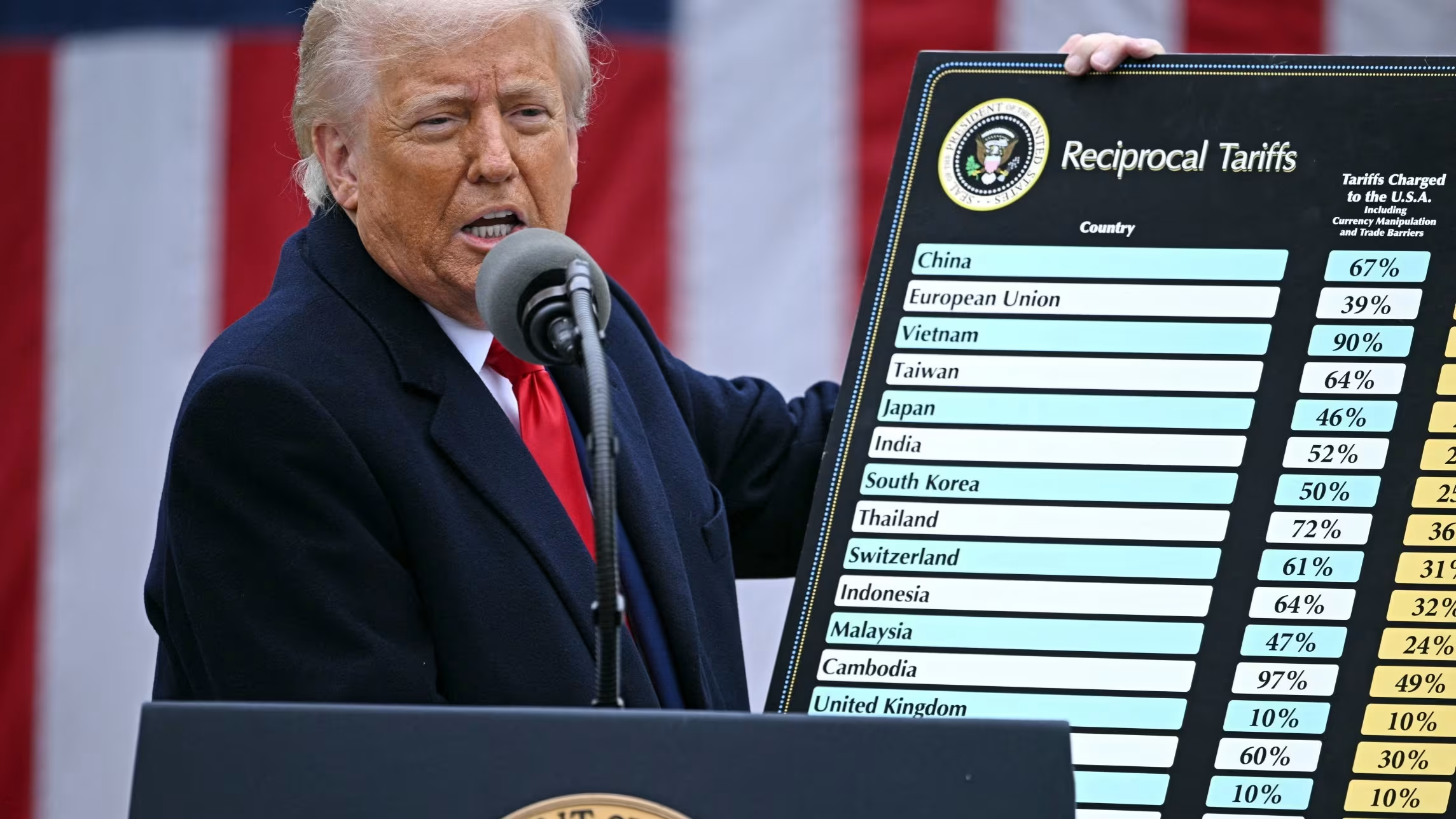
The article discusses the significance of a recent US court ruling on tariffs, highlighting its implications for trade policy and economic relations, though specific details of the ruling are not provided in the excerpt.
The U.S. Court of Appeals ruled that Trump's reciprocal tariffs on countries like China, Canada, and Mexico were an overreach, but they will remain until October 14 to allow an appeal, adding uncertainty to trade policies and potentially increasing market volatility despite recent stock gains.
A US federal appeals court ruled that most of Donald Trump's tariffs were an overreach of his emergency powers, declaring them illegal under the law, with the decision potentially impacting US trade policies and markets, and setting the stage for a Supreme Court challenge.
A US appeals court ruled that most of Trump's tariffs are illegal, stating they exceed presidential authority and belong to Congress, potentially leading to a Supreme Court case that could impact US trade policy.
A U.S. appeals court has ruled that employers can dock salaried employees' paid time off if they fail to meet productivity quotas, in response to a class action lawsuit filed by workers from Bayada Home Care. The judges decided that paid time off doesn't count as compensation and that no American employee, salaried or otherwise, is entitled to paid leave. The ruling could have broad implications for employee benefits if other companies adopt a similar strategy.