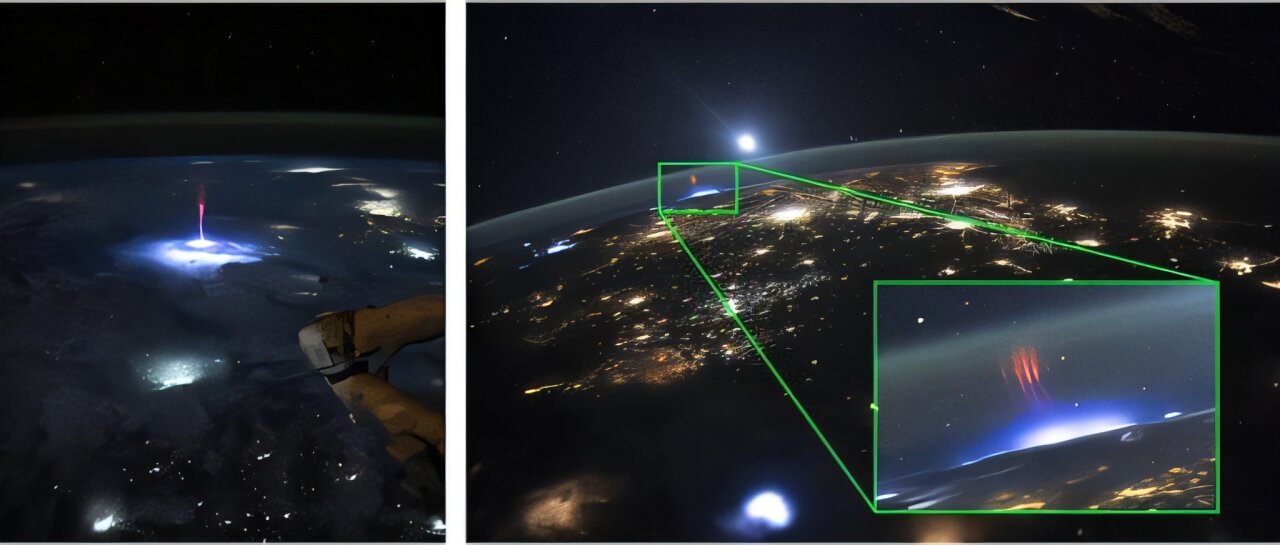
NASA astronaut Nichole Ayers captured a rare image of a gigantic jet, a powerful electrical discharge extending from thunderstorms into the upper atmosphere, providing new insights into high-altitude lightning phenomena.
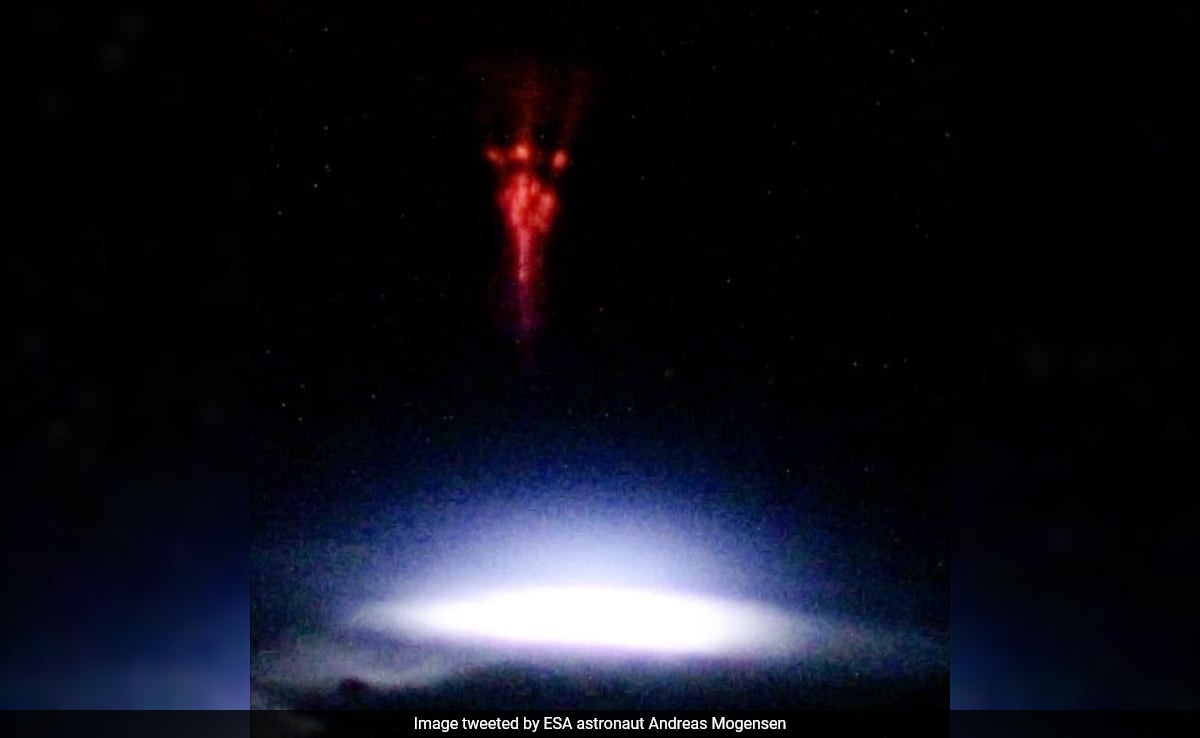
Astronaut Andreas Mogensen, on behalf of the European Space Agency, captured images of a rare meteorological phenomenon known as a red sprite using a high-resolution camera. Red sprites are transient luminous events that occur above thunderclouds at altitudes between 40 and 80 kilometers above the Earth's surface. These quick and elusive events pose challenges for scientists to study comprehensively, but further research can provide valuable insights into upper atmospheric activities.
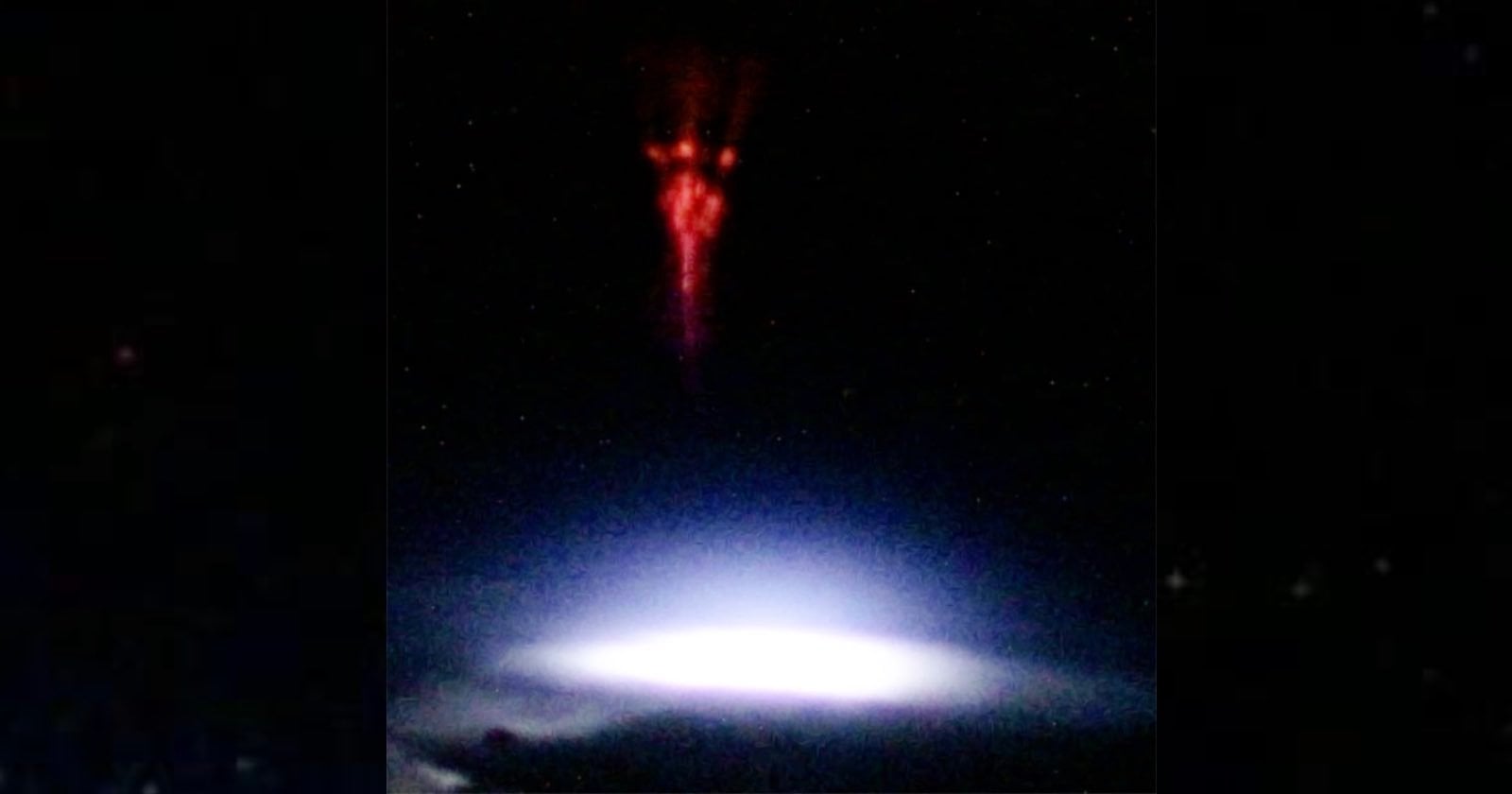
European Space Agency astronaut Andreas Mogensen captured a rare photograph and footage of a "red sprite," an elusive lightning phenomenon that is rarely visible from Earth. The image was taken as part of the Thor-Davis experiment at Danish Technical University, which studies lightning in the upper atmosphere and its impact on greenhouse gas levels. Red sprites, which are part of Transient Luminous Events, form above thunder clouds and are mostly seen from space. The photograph captured by Mogensen shows a red sprite approximately 8.7 by 16.2 miles in size.
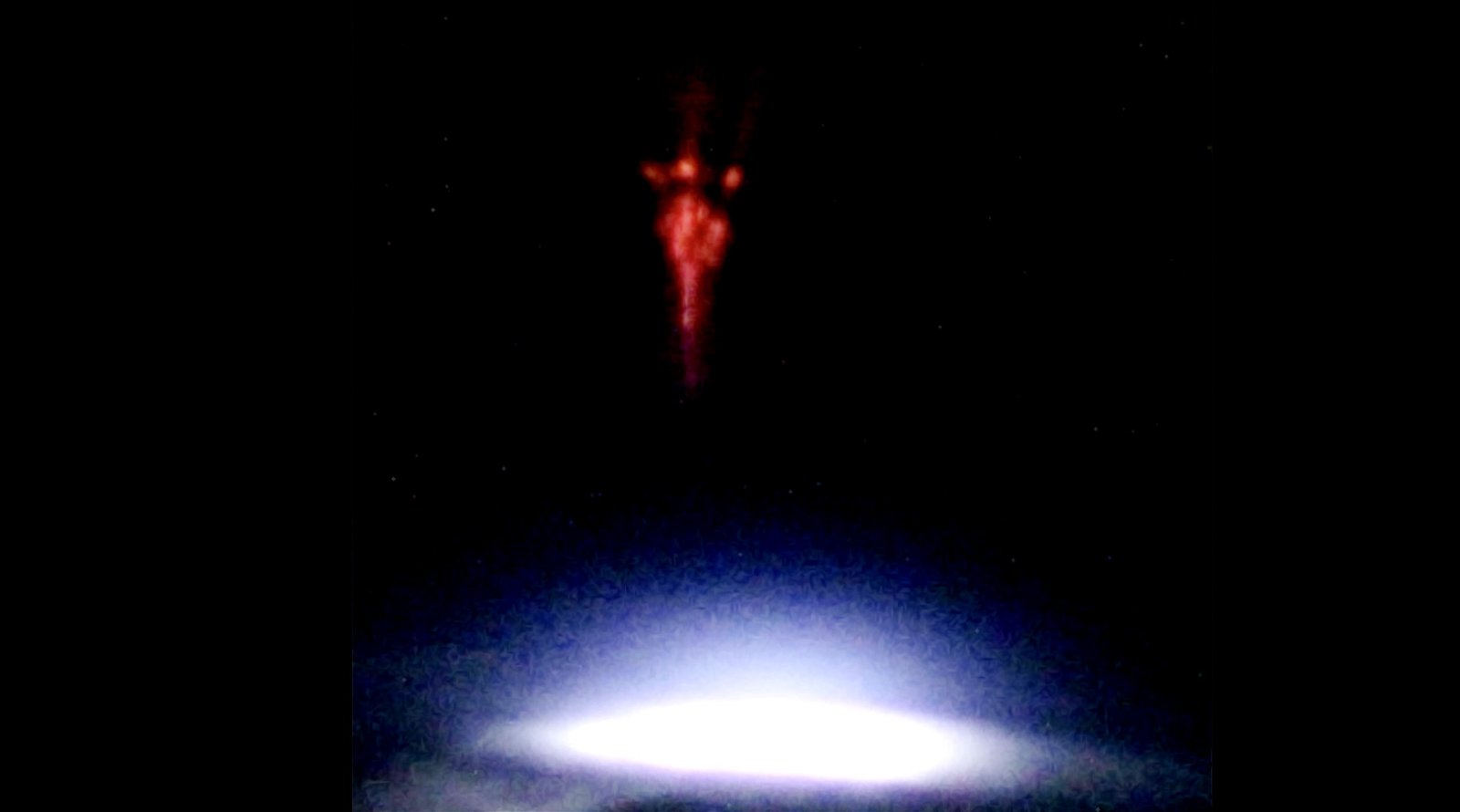
The Thor-Davis experiment, conducted aboard the International Space Station (ISS), successfully captured rare Transient Luminous Events (TLEs) known as red sprites using a special neuromorphic camera. These upper atmospheric lightning phenomena, occurring between 40 and 80 kilometers above the Earth's surface, are poorly understood due to limited ground observations. The experiment aims to study the vertical structure of TLEs and their impact on atmospheric chemistry, particularly greenhouse gas concentrations. The recent images obtained by ESA astronaut Andreas Mogensen during the Huginn mission provide valuable insights into these elusive atmospheric phenomena.
European Space Agency astronaut Andreas Mogensen has captured an image of a rare electrical discharge known as a red sprite, or transient luminous event (TLE), from the International Space Station's Cupola observatory module. TLEs, which occur between 40 and 80 kilometers above the Earth, are rarely seen from the surface and are caused by a build-up of electrical charge within clouds. The study aims to better understand how lightning in the upper atmosphere affects greenhouse gas concentrations.