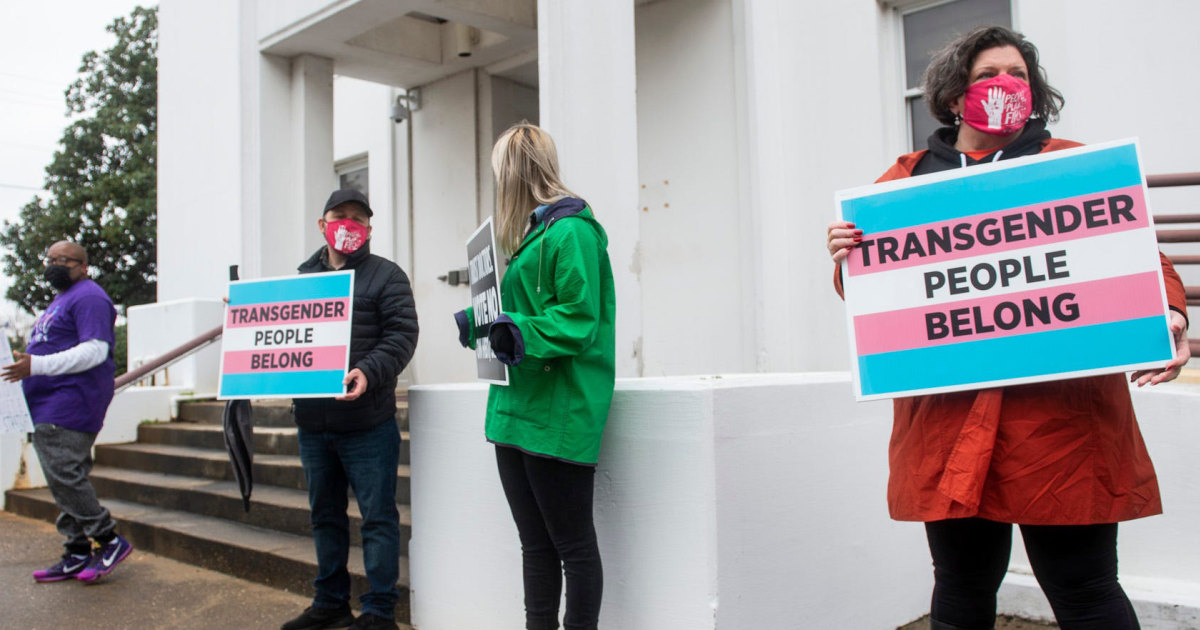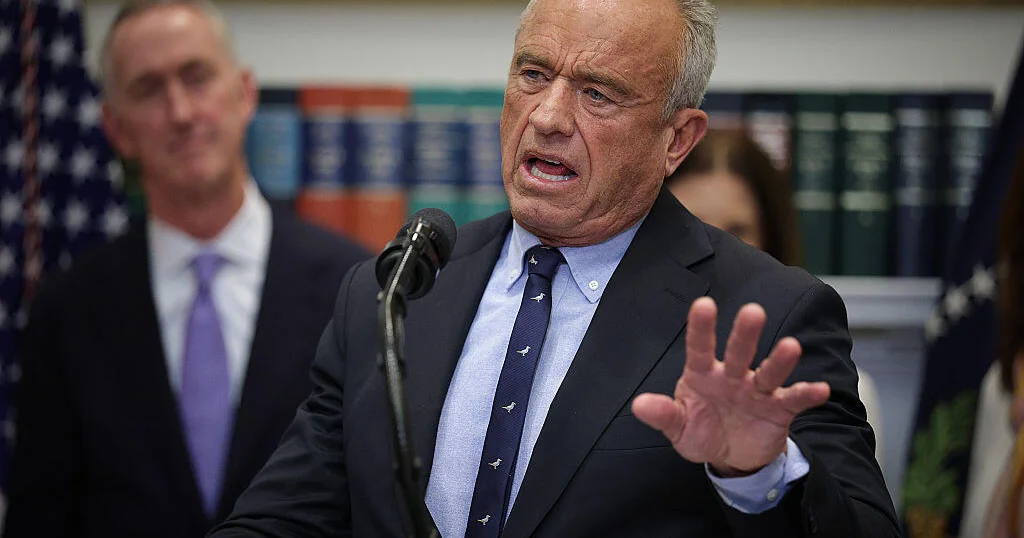
Nineteen states and D.C. sued the U.S. Department of Health and Human Services over a declaration that labels gender-affirming treatments for minors as unsafe, aiming to restrict access and potentially cut federal funding, amid ongoing legal and political battles over transgender healthcare rights.

Tennessee lawmakers are divided over a state law banning gender-affirming care for transgender children, as the issue heads to the Supreme Court for a constitutional review. The law, passed in 2023, prohibits treatments like puberty blockers and surgeries, sparking debate on parental rights and children's ability to make informed decisions. Advocates argue the ban exacerbates mental health issues, while opponents claim children are too young for such decisions. With a conservative Supreme Court, overturning the ban seems unlikely, raising concerns about individual freedoms.
Tennessee lawmakers are divided over a state law banning gender-affirming care for transgender children, as the issue heads to the Supreme Court for a constitutional review. The law, passed in 2023, prohibits treatments like puberty blockers and surgeries, sparking debate about parental rights and children's ability to make informed decisions. Advocates argue the ban exacerbates mental health issues, while supporters claim it protects children from making irreversible decisions. The Supreme Court's conservative majority makes overturning the ban unlikely, raising concerns about individual freedoms.
A report commissioned by NHS England recommends further research on gender-affirming care for transgender youth and young adults, urging caution in the use of hormone therapies due to poor quality of published studies. The report calls for increased workforce, regional outlets for care, investment in research, and improved quality of care to meet international guidelines. It emphasizes the need for holistic care and early discussions with families, while also highlighting the lack of long-term follow-up data on minors receiving treatment. The recommendations aim to guide and shape the use of gender-affirming care in children and potentially impact youth patients in England accessing such care.
The Senate has passed an $886 billion defense bill that defies the demands of hard-right Republicans by excluding restrictions on abortion, transgender care, and diversity initiatives. The legislation includes a 5.2 percent pay raise for military personnel and provisions to enhance the Defense Department's capabilities against China and Russia. It also authorizes military assistance to Ukraine and Israel, extends a warrantless surveillance program, and implements components of a key Indo-Pacific security partnership. The bill has faced backlash in the House, where Republicans are angry about the removal of hard-line provisions.
Attorneys representing a St. Louis clinic that provides transgender care have vowed to fight a lawsuit filed by Missouri Attorney General Andrew Bailey, calling it a "desperate overreach." The lawsuit alleges that the clinic violated state law by providing transgender care to minor patients without adequate mental health assessments. The clinic's attorneys argue that Bailey is distorting consumer protection laws to interfere with healthcare access and accuse him of prioritizing erasing transness over addressing more pressing issues. The lawsuit comes in the midst of an ongoing fight over a new Missouri law restricting transgender healthcare for minors.
Washington University in St. Louis has announced that its physicians will no longer provide gender-affirming medications, such as puberty blockers and cross-sex hormones, to minors due to concerns over legal liability under a new Missouri law. While the law exempts patients who were receiving medications before it took effect, a new legal claim in the law has prompted the university to cease providing these treatments to minors. The Washington University Transgender Center will continue to offer education and mental health services to transgender youths, and transgender adults will still be able to receive medications from the university. This decision comes after a months-long fight by conservative Republicans to end puberty blockers and hormone treatment for minors.
Washington University in St. Louis has become the second provider in Missouri to cancel pre-existing prescriptions for puberty blockers or hormone-replacement therapy for transgender minors due to legal concerns. A new state law restricts access to gender-affirming care for those under 18, but patients who had already begun treatment before the law went into effect were grandfathered in. However, a provision in the law allows patients to bring a cause of action against their doctor 15 years after treatment or their 21st birthday, creating potential liability for healthcare professionals. The University cited this provision as the reason for its decision. Another provider, University of Missouri Health, had previously announced a similar move.
A federal appeals court has ruled that Alabama can enforce a ban on the use of puberty blockers and hormones to treat transgender children, marking a victory for gender-affirming care restrictions adopted by Republican-led states. The court vacated a judge's temporary injunction against enforcing the law, allowing the state to safeguard the physical and psychological well-being of minors. The decision leaves families of transgender children scrambling for care, with the ban threatening doctors with prison time. Advocacy groups and major medical organizations oppose the bans, arguing that treatments are safe if properly administered. Similar bans have been struck down or temporarily blocked in other states, but more GOP-led states are poised to enact similar restrictions.
House GOP members are threatening to derail the annual defense policy bill over provisions related to abortion and transgender care. The lawmakers are pushing for amendments that would restrict access to abortion services on military bases and prohibit the Pentagon from providing gender transition-related medical treatments. The dispute highlights the ongoing ideological divisions within the Republican Party and the potential for these issues to impact the passage of crucial legislation.
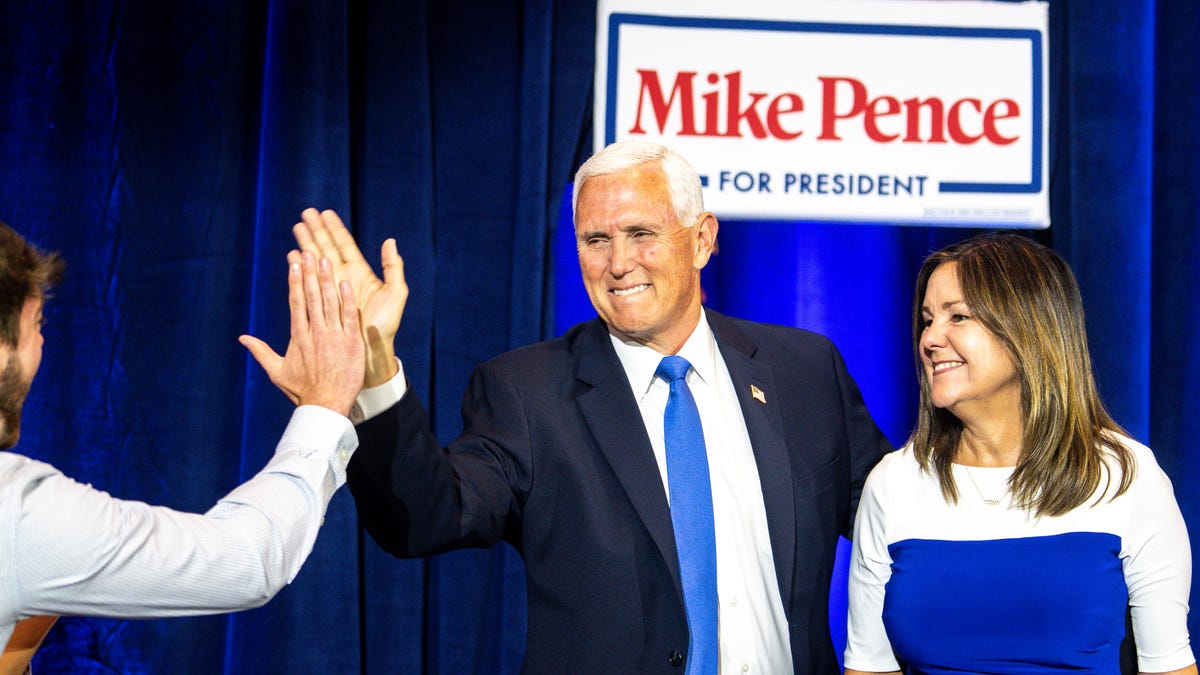
Former Vice President Mike Pence launched his 2024 presidential bid and distanced himself from Donald Trump's behavior and policies during a CNN town hall in Iowa. Pence hopes Trump won't be indicted and declined to say if he would pardon him. He emphasized his conservative positions on abortion, transgender care, Social Security, TikTok, and other issues. Pence wants to change Social Security eligibility, ban TikTok, and supports a federal abortion ban with exceptions for rape, incest, and the life of the mother. He also said he won't bring back family separation at the border.
Talks between Oregon Governor Tina Kotek and Senate Republicans over ending a month-long walkout have stalled due to disagreements over a bill expanding protections for abortions and transgender care. Republicans have insisted that the bill be amended or killed, while Democrats have refused to touch it. The impasse raises questions about whether the 2023 session is doomed, and the walkout is set to test a new voter-approved law that could end the political careers of absent lawmakers.
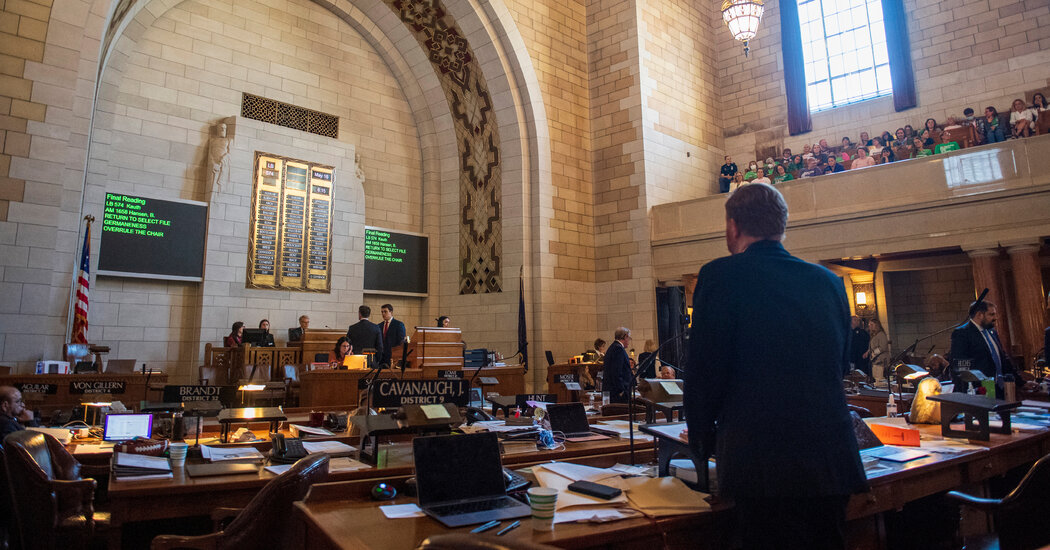
Nebraska lawmakers are set to vote on a bill that combines restrictions on abortion and medical care for transgender youth. The bill includes looser restrictions than the original provisions sought by Republicans, who initially wanted to ban most abortions after six weeks of pregnancy but settled for a 12-week limit with exceptions for rape, incest, and medical emergencies. The bill bans surgeries for transgender minors but allows for puberty blockers and hormone therapy under certain criteria established by the state's chief medical officer. Democrats are concerned about potential onerous requirements for accessing these treatments.
Missouri officials terminated an emergency rule proposed by the Republican attorney general that would have placed limits on transgender care for minors and some adults. The rule would have required adults and children to undergo more than a year of therapy and fulfill other requirements before they could receive gender-affirming treatments such as puberty blockers, hormones and surgery. The ACLU of Missouri filed a lawsuit to stop it, arguing that Bailey bypassed the Legislature and did not have the authority to regulate health care through Missouri’s consumer-protection law.
Missouri officials have terminated an emergency rule proposed by the Republican attorney general that would have placed limits on transgender care for minors and some adults. The rule would have required adults and children to undergo more than a year of therapy and fulfill other requirements before they could receive gender-affirming treatments such as puberty blockers, hormones, and surgery. The move was announced without explanation on the Missouri Secretary of State’s website. The law's termination comes less than a week after the Missouri Legislature approved a ban on minors starting care.