
Tag

Tharsis Region

All articles tagged with #tharsis region

astronomy1 year ago

"Mars' Hidden Giant Volcano: Potential Signs of Life"

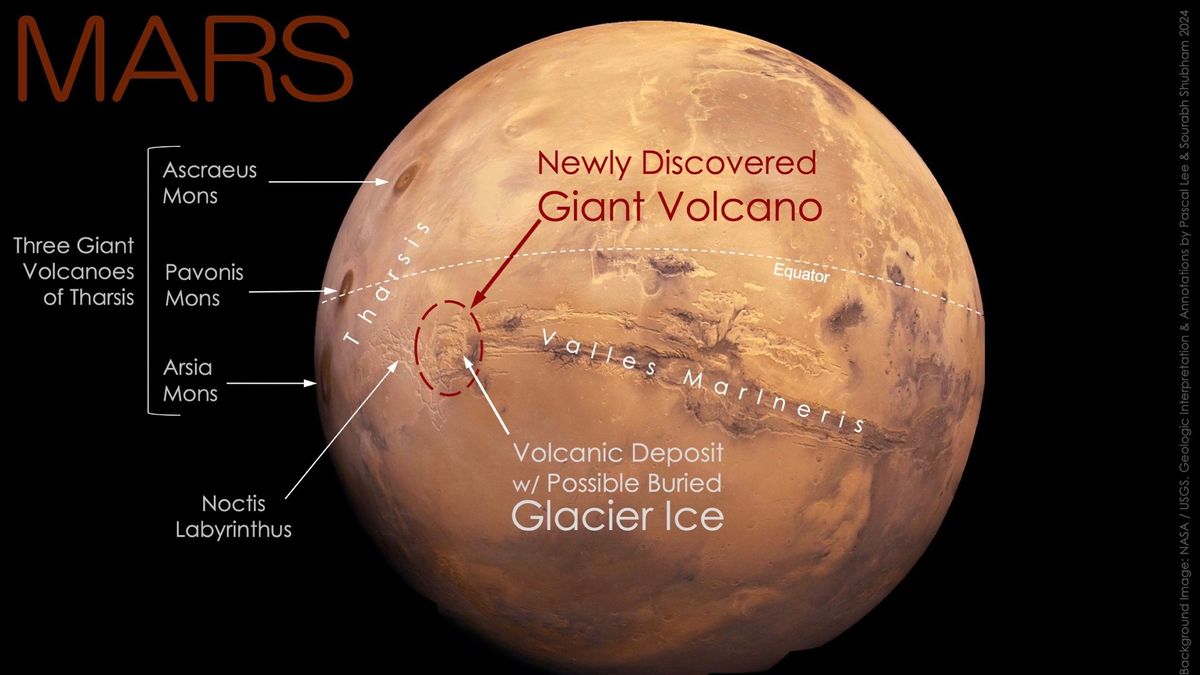
Scientists have discovered a massive volcano on Mars, measuring 280 miles wide and over 29,600 feet high, which had gone unnoticed for over 50 years. Located near the planet's equator, it also features what appears to be the remains of a buried glacier ice sheet, making it a promising site for astrobiological research. The volcano's location, within the Tharsis volcanic province, suggests it could hold potential signs of alien life, and further exploration is anticipated to shed light on its geologic evolution and potential for supporting life.

science-and-astronomy2 years ago

Mars Express unveils the enigmatic crinkly valley in stunning flyover video

The European Space Agency's Mars Express mission has released a flyover video showcasing Noctis Labyrinthus, a massive valley system on Mars that spans the length of Italy. The video reveals landslides, dune fields, and lowered regions of crust known as graben, indicating the planet's volcanic past. Mars Express has been operating since 2003 and, along with other spacecraft, continues to study Mars' weather and gather insights into its complex history. The thin atmosphere and high radiation on the surface make it challenging for organisms to survive, suggesting that life may exist underground.

space2 years ago

Exploring Mars's Enigmatic Nighttime Maze with Mars Express

The European Space Agency's Mars Express has released a video showcasing a flight over the eastern part of Noctis Labyrinthus, a vast system of deep valleys on Mars. The video reveals distinctive features called "graben," which are parts of the crust that have subsided in relation to their surroundings. These formations were caused by intense volcanism in the nearby Tharsis region. The video also highlights intersecting canyons, valleys, landslides, and dune fields, providing a fascinating glimpse into the martian landscape. Mars Express has been orbiting Mars since 2003, studying its surface, atmosphere, and geological phenomena.