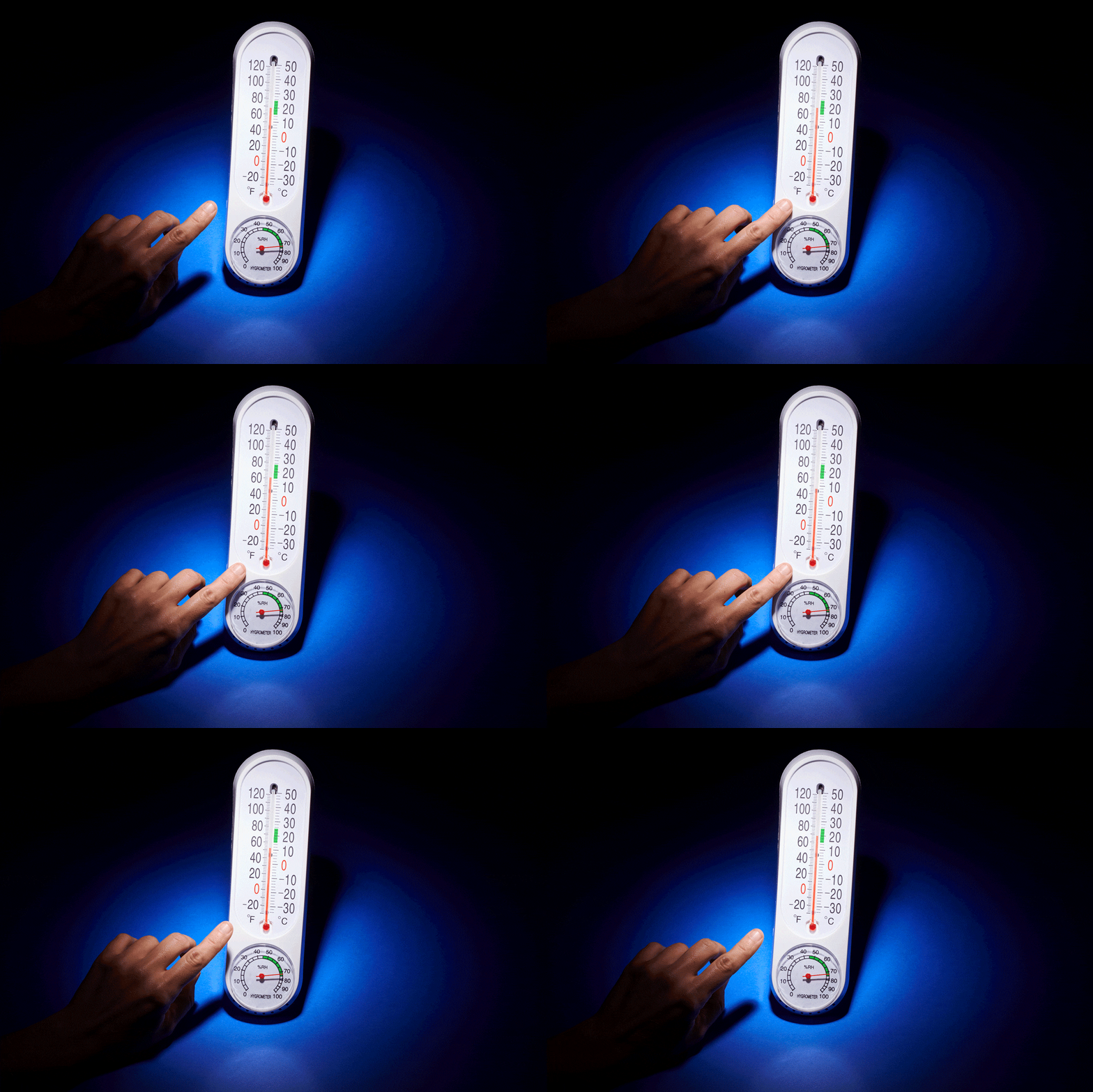
Research shows that women tend to prefer warmer environments while men prefer cooler ones, with women being more sensitive to cold due to factors such as smaller body size, lower metabolic rate, and lower skin temperature. Hormonal changes, medical conditions, and other factors can also influence temperature sensitivity. Studies on birds and bats suggest that sex-related temperature preferences may have evolved to reduce resource competition and protect offspring.

Yale physicists have developed a mathematical model to explain how pit vipers are able to hunt for prey in the dark by detecting tiny temperature changes with their infrared sensors. The model suggests that the snakes' ability to amplify small signals and transmit them to their brain with high fidelity, along with a feedback mechanism to maintain thermal sensitivity, allows them to locate prey in varying environments. The study may have broader applications for understanding sensory systems in other species.
New research has revealed that warming up skeletal muscles before a workout or race enhances their efficiency by saving energy and allowing for better rest when not in use. The study found that skeletal muscles are more sensitive to heating than the muscles of the heart, allowing them to contract quickly and efficiently when warmed up. However, the muscles of the heart have a lower temperature sensitivity to maintain a continuous beat. The findings suggest that a light, 10-minute jog and some simple warmup drills are sufficient for runners to be ready to perform at their best.