Executives and founders heavily invested in tech stocks are using exchange funds to diversify their portfolios without incurring steep capital gains taxes, by pooling shares into a fund that, after a lock-up period, provides a diversified basket of stocks, helping to manage risk and facilitate wealth transfer.
Dow Jones futures are slightly up ahead of the December jobs report and a Supreme Court ruling on Trump tariffs, with mixed market performance and sector movements, while key stocks like Nvidia, Taiwan Semiconductor, and Revolution Medicines show notable activity.
Investing $5,000 in long-term AI-focused tech stocks like Micron Technology, Nvidia, and Alphabet could be a wise move, as these companies are well-positioned to benefit from the ongoing AI infrastructure expansion and have demonstrated strong growth and market presence.
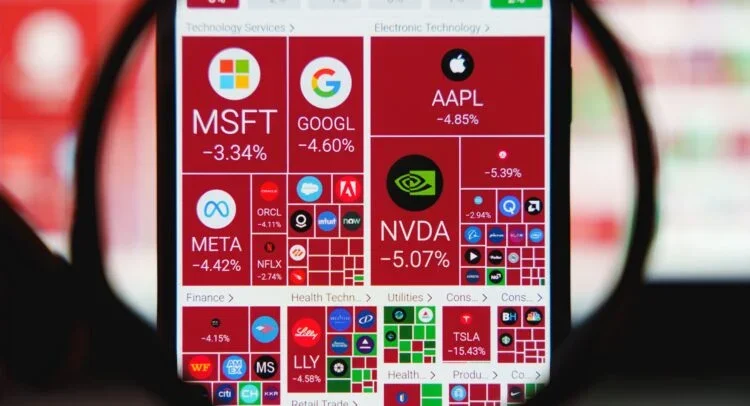
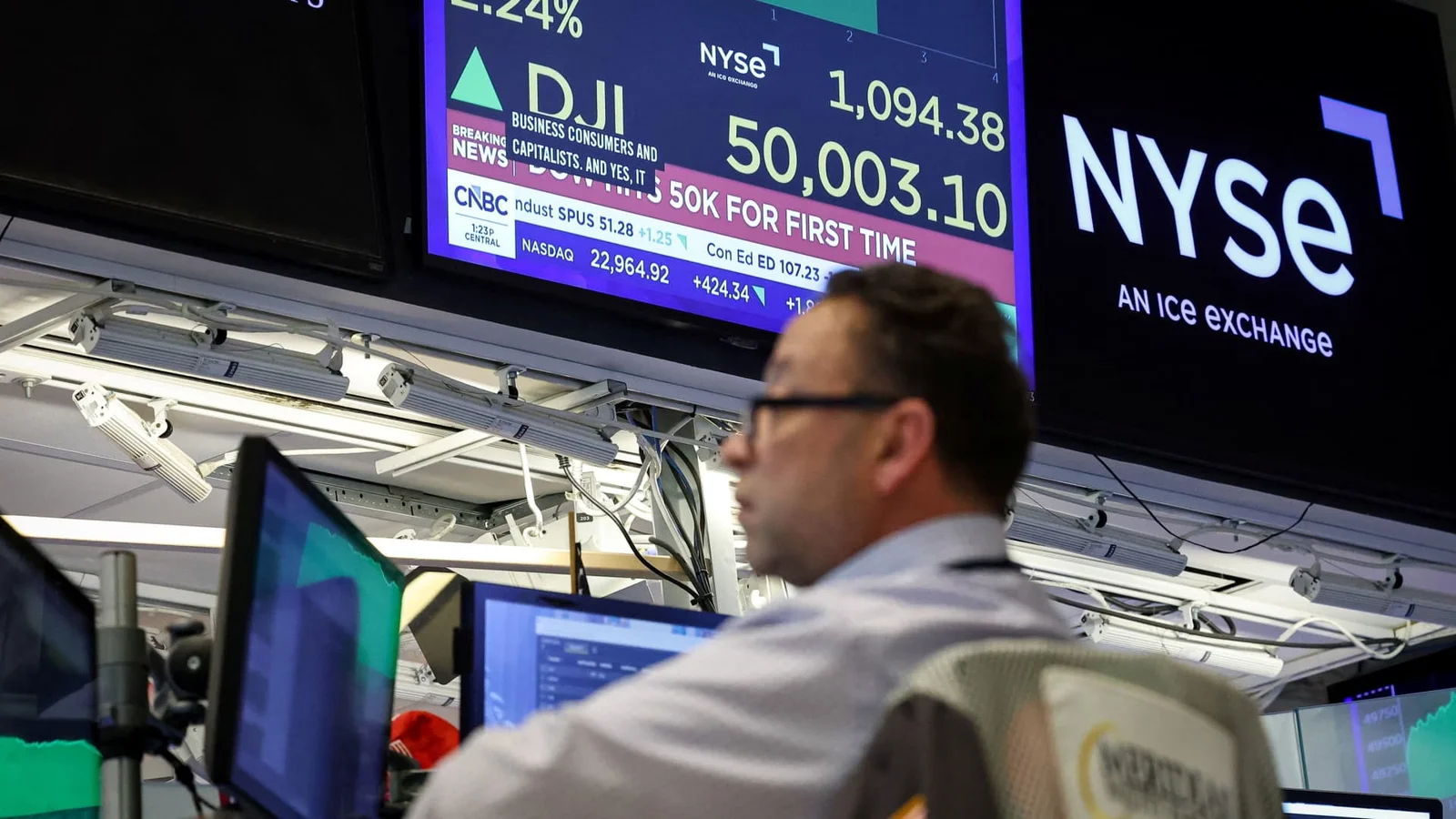
The stock market rally continues with the Dow and S&P 500 reaching new highs, several stocks like Amazon and Seagate flashing buy signals, while Tesla declines below its 50-day moving average; futures are modestly higher amid broad market strength and sector rotations.
Dow Jones futures and major indices are slightly higher ahead of the market open, with key tech stocks like AMD, Apple, Palantir, Nvidia, and Tesla showing mixed movements. Nvidia announced a new AI chip, boosting its stock, while other stocks like AMD and Apple declined. The market is awaiting key economic data, including the December jobs report, as Wall Street watches for further cues. Nvidia's new AI processor and CEO Jensen Huang's speech could drive future gains, amid ongoing market rally conditions.
At CES, Nvidia's Jensen Huang and AMD's Lisa Su are set to showcase their latest AI solutions, with investors closely watching for new product announcements that could influence tech stock performance amid recent concerns about an AI bubble and market sustainability.
Investors have already favored tech stocks in the early days of 2026, with memory and storage companies like Sandisk and Micron leading the gains, reflecting strong optimism about AI-related demand and significant earnings growth prospects.
The article examines whether the current AI-driven stock market rally resembles a bubble, comparing it to past market bubbles and analyzing factors like valuation, concentration, fundamentals, and investor scrutiny. While some indicators suggest overvaluation and high concentration in tech stocks, historical context and company fundamentals imply that a crash isn't imminent, though increased scrutiny remains a healthy check on potential risks.
Investing in Nvidia and Alphabet in January offers a strategic opportunity to profit from the AI revolution, with these industry leaders poised to dominate their respective sectors for the next 20 years due to their innovation, financial strength, and expanding AI capabilities.
The article examines whether the current AI-driven stock market rally resembles a bubble, comparing it to past market bubbles and analyzing factors like valuation, concentration, fundamentals, and investor scrutiny. While some indicators suggest caution, experts believe a crash is unlikely in the near term, but increased scrutiny and high valuations warrant careful monitoring.
The stock market experienced mixed results on Jan. 2, 2026, with the Dow and S&P 500 rising and breaking four-day losing streaks, while the Nasdaq declined slightly, influenced by sector performances and investor shifts towards AI-related stocks ahead of the CES trade show.
Stock futures rose on the first trading day of 2026, with tech stocks leading gains, building on last year's momentum driven by AI optimism and economic growth, and analysts expecting further market gains in 2026.
European shares, led by technology, rallied as Britain's FTSE 100 briefly surpassed 10,000 points for the first time, while the Stoxx 600 index rose nearly 16% in 2025. Major stocks like TSMC and ASML gained on positive news, and precious metals gold and silver saw significant increases, supported by global economic factors and investor optimism at the start of the year.
Gillian Tett predicts that the leading tech stocks, known as the Magnificent 7, will diverge in their performance in 2026, as the AI-driven growth era appears to be ending, leading to varied trajectories for these companies.
Amid concerns about an AI bubble and high AI-related spending by tech giants, Apple stands out as a stable investment option in 2026 due to its strong financial performance, focus on core products, and less reliance on AI investments, making it potentially a safer choice for investors wary of the AI hype.