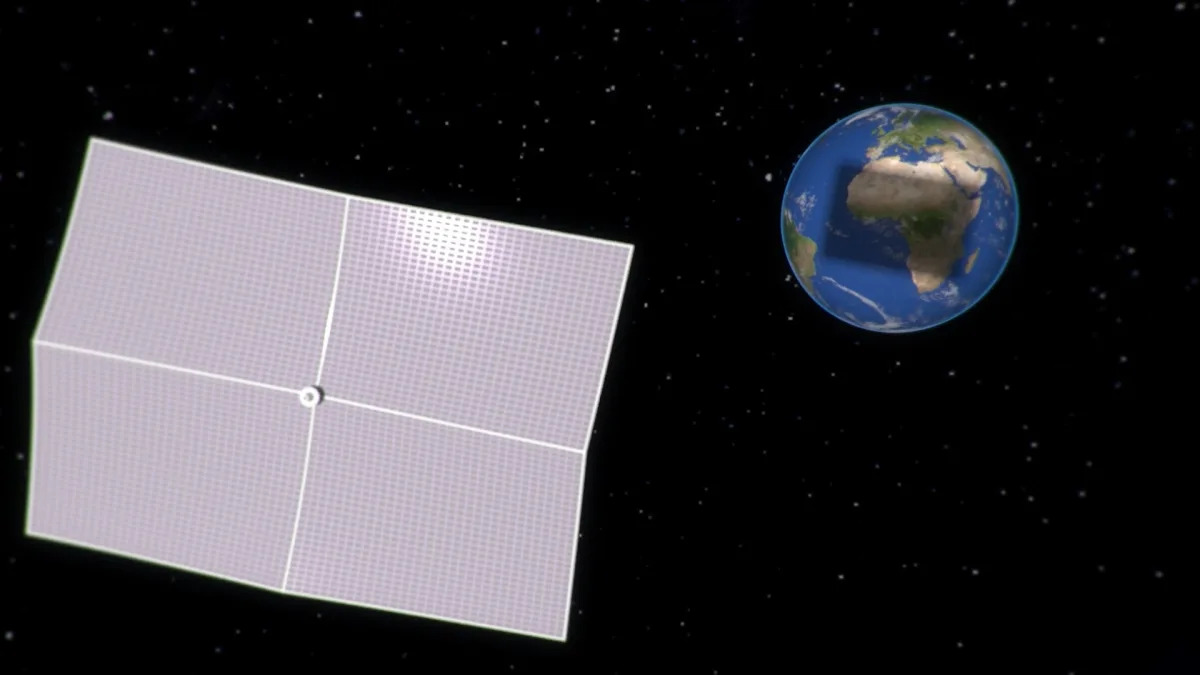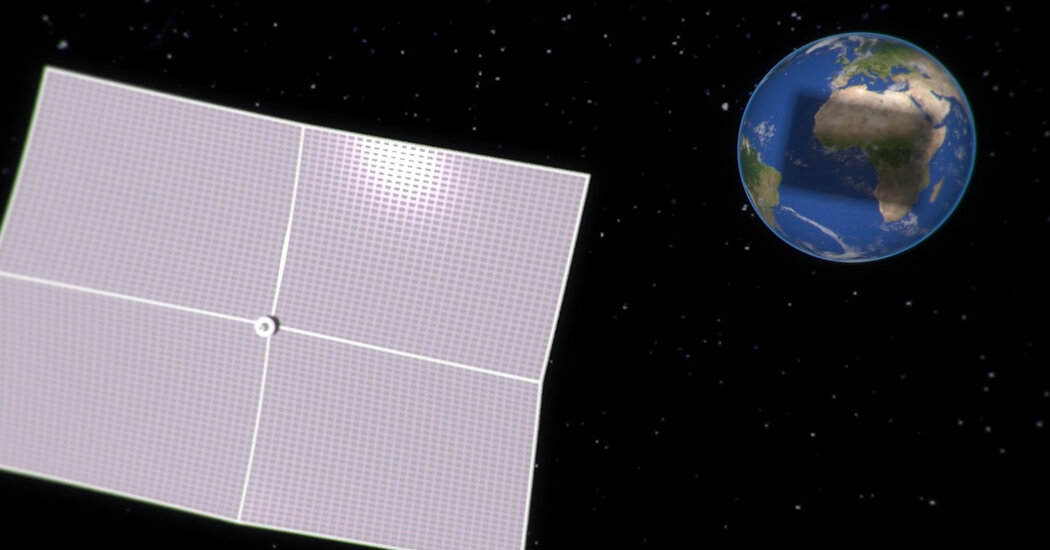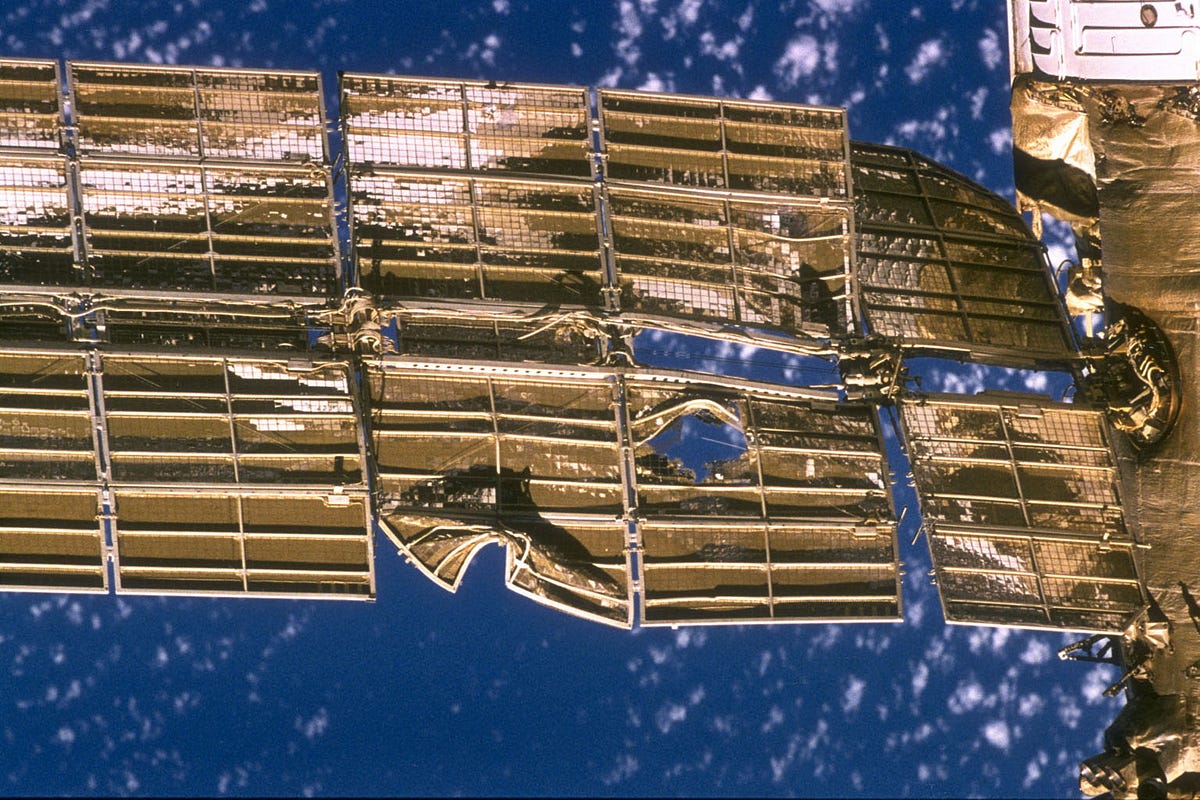
Research on micrometeoroids suggests that a proposed sunshade to protect Earth's climate from rising temperatures may be perforated by space debris, posing a potential threat to the planet. The initiative, which involves positioning a giant sunshade at the Lagrange Point L1 between Earth and the Sun, faces engineering challenges and potential risks from impacts by micrometeoroids and dust. The author, Avi Loeb, emphasizes the importance of considering the threat from impactors in any space infrastructure, highlighting the potential vulnerability of a thin film in space.
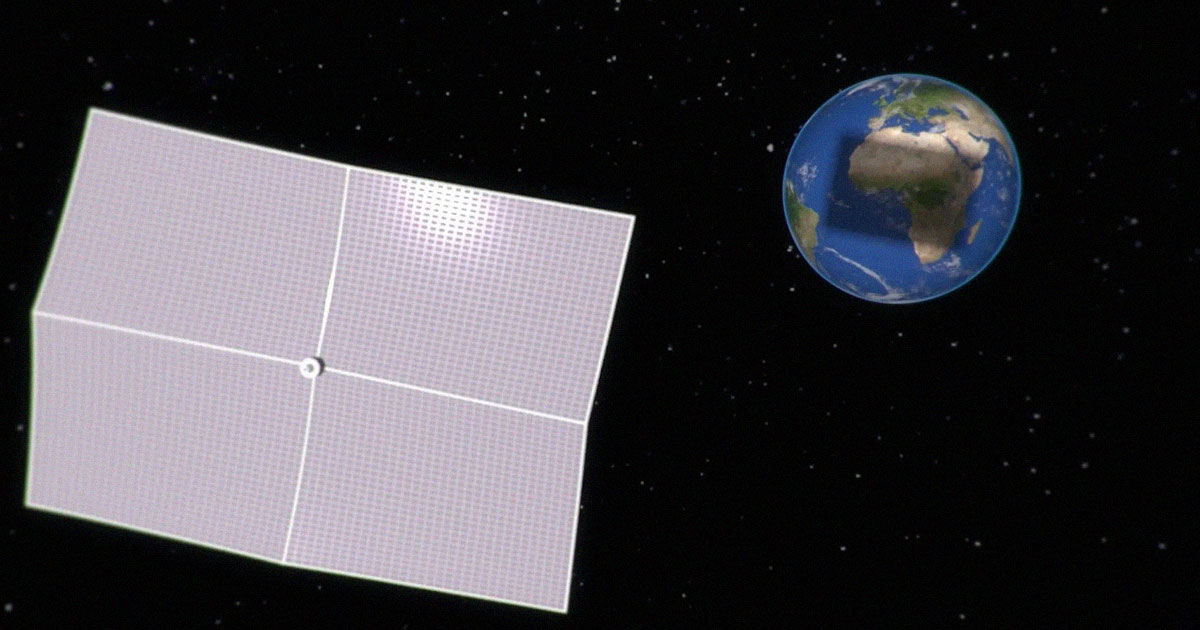
Scientists are considering the deployment of a massive sunshade in space to mitigate the effects of global warming by blocking a small percentage of the Sun's radiation. The proposed plan involves launching a swarm of smaller shades to collectively cover an area roughly the size of Argentina. While some critics argue that the idea is cost-prohibitive and unrealistic, proponents believe it's important to explore all potential solutions to climate change. The team is seeking funding to build a prototype and demonstrate the feasibility of the concept.
Scientists are proposing the idea of a giant sunshade in outer space to counter global warming by blocking a small but crucial amount of solar radiation. Various proposals include scattering dust deep into space, creating a shield made of "space bubbles," and tethering a solar shield to a repurposed asteroid. Proponents argue that while reducing greenhouse gas emissions and removing carbon dioxide from the atmosphere are important, a sunshade could help stabilize the climate while other climate mitigation strategies are pursued. Critics, however, argue that a sunshade would be astronomically expensive and could not be implemented in time, given the speed of global warming.
Scientists are proposing the idea of deploying a giant sunshade in outer space to block a small but crucial amount of solar radiation, enough to counter global warming. Interest in sun shields has been gaining momentum as the climate crisis worsens, with various research teams exploring different approaches such as scattering dust deep into space and creating shields made of "space bubbles." A team of scientists led by Yoram Rozen from the Asher Space Research Institute at Technion-Israel Institute of Technology is ready to build a prototype shade to demonstrate the feasibility of the concept, which would involve a series of smaller shades casting slightly diffused shade onto Earth.