Astronomers are advocating for the installation of disco balls in observatories and scientific facilities as a fun and accessible way to observe the Sun. Disco balls, made up of pinhead mirrors, can project bright solar images across a room, allowing for safe observation by larger or socially distanced groups. The researchers argue that disco balls have been overlooked as a solar projection tool and are a cheap and readily available alternative. They also highlight the disco ball's associations with concerts and parties, making them interesting objects for demonstrating physics to schoolchildren and the general public.
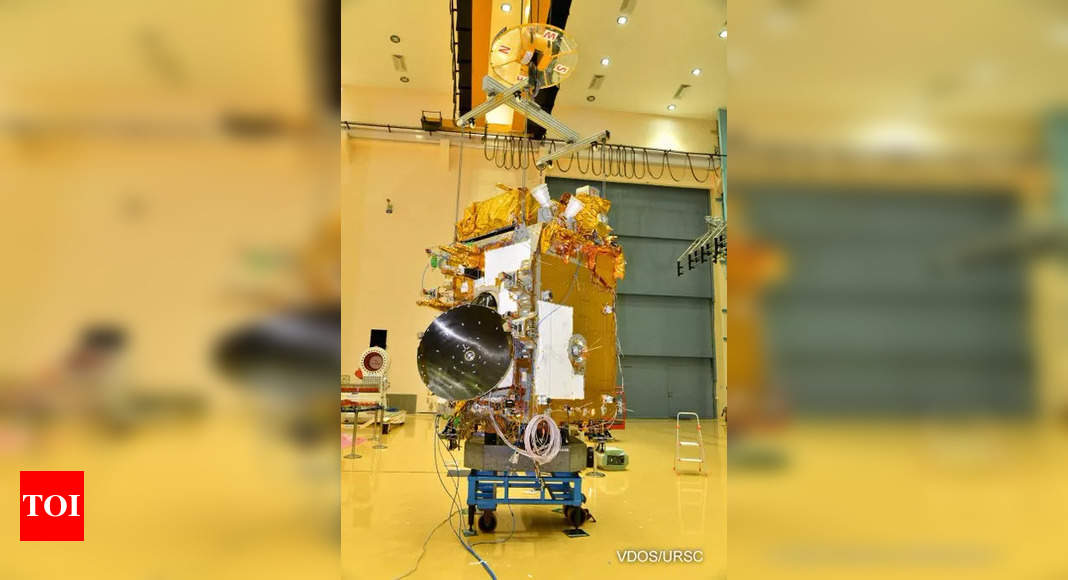
The Indian Space Research Organisation (ISRO) is preparing to launch the Aditya-L1 solar mission on September 2. The spacecraft will study the Sun from an orbit around the L1 point, providing observations of the solar corona and solar wind. The mission will carry seven payloads to observe different aspects of the Sun, including the photosphere, chromosphere, and corona. Aditya-L1 aims to understand phenomena such as coronal heating, coronal mass ejections, and flares, as well as the dynamics of space weather. The satellite will be placed in a halo orbit around L1, allowing continuous observation of the Sun without any occultation or eclipses.
India's first solar mission, Aditya-L1, has arrived at the spaceport in Sriharikota and is set to launch by the end of August or early September. The spacecraft will study various properties of the Sun, such as coronal mass ejections, from the first Lagrange point of the Earth-Sun system. Aditya-L1 will be placed 1.5 million km from Earth in a halo orbit around the L1 point, allowing for real-time observation of solar activities and their impact on space weather. The mission carries seven payloads to observe different layers of the Sun and conduct in-situ studies of particles and fields.
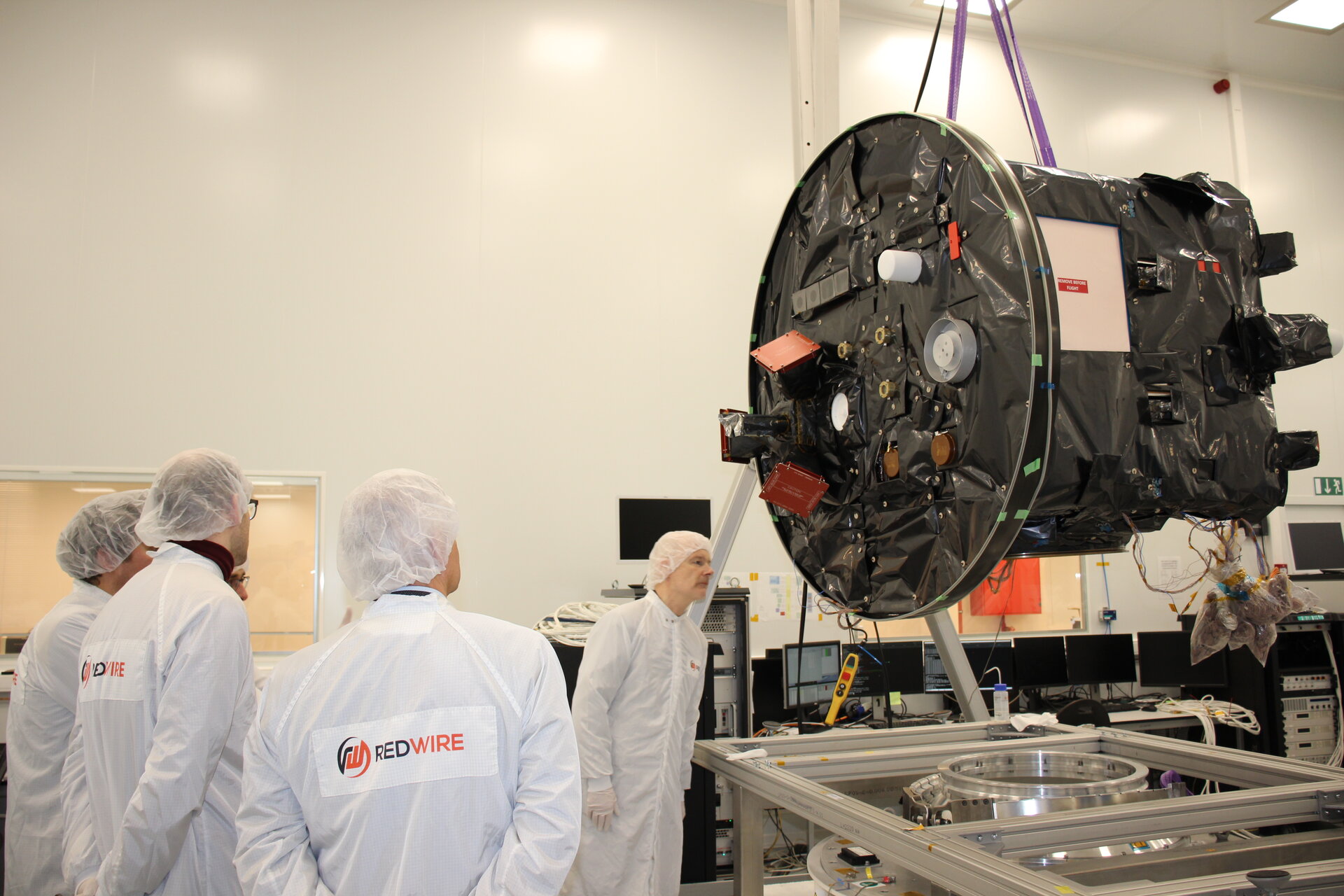
The two spacecraft forming ESA’s Proba-3 mission for precise formation flying in orbit are now complete and fully integrated. The mission's main payload is a science instrument focused on the Sun which will produce unique data. The spacecraft will fly on a highly elongated orbit and will perform observations at the top of each orbit to minimize gravitational and illumination effects from Earth. The spacecraft will be shipped to Germany for a four-month environmental test campaign before being flown by PSLV launcher from India next year.