Amazon is ending its Prime Invitee Program to curb sharing, a move similar to Netflix's successful crackdown that boosted its stock by 425%. While Amazon's stock has only gained about 70% over three years and trades sideways, the crackdown could help increase Prime memberships and subscription revenue, though it may not be as impactful as Netflix's gains. The company's broader ecosystem, including e-commerce and AWS, faces competitive pressures, and investors are advised to wait for a better entry point.
MongoDB's stock surged after reporting strong Q2 earnings, with revenue and subscription growth driven by AI application demand, despite previous struggles and industry concerns about AI's impact on software business models.
Coinbase reported a significant increase in second-quarter profit driven by a 9.5% rise in subscription and services revenue, despite a 2% decline in transaction revenue and sluggish retail trading volumes due to market uncertainty. The profit boost was mainly due to gains from investments in stablecoin issuer Circle and its crypto portfolio.
X, formerly known as Twitter, has updated its terms of service to officially allow users to post consensual adult content, a move that aligns with Elon Musk's strategy to boost subscription revenue. This change follows the introduction of the X Premium subscription, which enabled sex workers and porn actors to monetize their content. Despite Musk's ambitious revenue goals, X has struggled with declining user numbers and advertising revenue since his acquisition.
Workday Inc. shares experienced their largest drop in over eight years after the company reduced its full-year subscription revenue forecast, citing increased sales scrutiny and cautious customer orders. The stock fell 15% following the announcement, with the company now expecting subscription sales to reach up to $7.73 billion, down from a previous estimate of $7.78 billion. Despite a 19% increase in first-quarter subscription sales, the revised outlook disappointed investors.
Workday's stock fell by 8% despite reporting first-quarter earnings and revenue that exceeded expectations, due to the company cutting its full-year subscription revenue guidance. CFO Zane Rowe attributed the revised guidance to increased sales scrutiny and lower customer headcount growth.
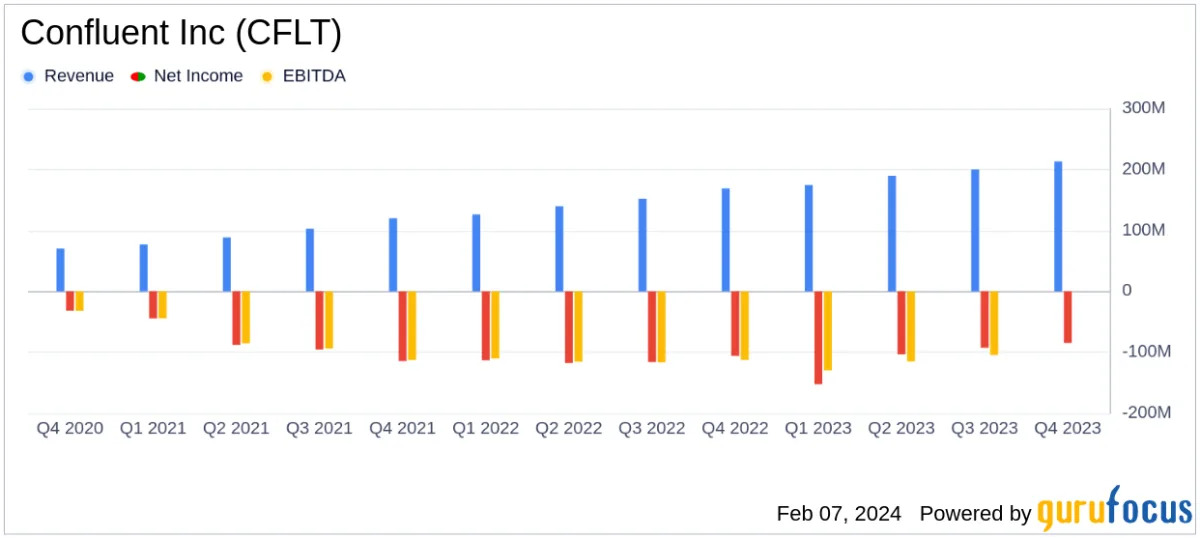
Confluent Inc reported strong financial results for Q4 2023 and FY 2023, with total revenue reaching $213 million in Q4, a 26% increase year over year, and $777 million for the fiscal year, up 33%. The company achieved its first positive non-GAAP operating margin in Q4 and improved free cash flow to $6.8 million. Confluent's cloud revenue saw a significant 46% surge in Q4, reaching $100 million, and subscription revenue grew by 31% year over year. The company's focus on cloud services and subscription revenue aligns with current industry trends, positioning it well for future growth.
Deepwater Asset Management speculates that Apple may acquire Peloton to enhance its fitness subscription services, citing potential benefits to Apple's health and wellness investments. However, this prediction overlooks significant obstacles, such as Peloton's legal issues, the high acquisition cost that would be unprecedented for Apple, and the company's historical acquisition strategy. Despite Deepwater's claim of past predictive accuracy, their track record is mixed, and the rationale behind such a large purchase by Apple remains questionable.
Enterprise software maker Workday reported better-than-expected earnings and revenue for the third quarter, leading to an increase in its fiscal 2024 revenue outlook. The company's subscription revenue rose 18% and it raised its fiscal 2024 subscription revenue guidance to $6.598 billion, representing 19% year-over-year growth. Workday's stock price jumped 7.3% following the earnings report. The company sells software for human capital management and has expanded into financial software. Workday had previously lowered its outlook for subscription revenue growth but now expects growth in the range of 17% to 19% in the next three fiscal years.
ServiceNow reported third-quarter earnings and revenue that exceeded expectations, causing its stock to climb. The company's earnings rose 49% to $2.92 per share, while revenue increased by 25% to $2.29 billion. Subscription revenue also surpassed estimates, rising 27% to $2.22 billion. ServiceNow's remaining performance obligations (CRPO) came in above expectations at $7.43 billion, indicating strong sales growth. The company also announced an expanded alliance with Deloitte for AI-related digital transformation projects.
Workday reported second-quarter earnings that exceeded analyst expectations, with adjusted earnings per share of $1.43 and revenue of $1.79 billion, representing a 16.3% increase from the same period last year. Subscription revenue for the quarter also rose by 18.8% to $1.62 billion. Workday's stock surged by 4.1% in after-hours trading. The company raised its guidance for the fiscal year, projecting subscription revenue of $6.58 billion, and predicted subscription revenue of $1.679 billion for the current quarter. Analysts noted that while the results were solid, the company's outlook for the second half of the year appeared conservative.
Twitch has announced the Partner Plus program, which offers streamers a 70% share of net subscription revenue for 12 months up to $100,000 if they maintain a sub count of 350 recurring paid subscriptions for three consecutive months. The program launches on October 1. This comes after Twitch released new guidelines regarding branded streams, which caused outrage among content creators.
Twitch is launching Partner Plus, a program that will pay streamers a 70% share on net subscription revenue, with Twitch keeping the other 30%. To qualify, Twitch Partners must maintain a sub count of at least 350 recurring paid subscriptions for three consecutive months. Streamers in the program will receive the 70/30 revenue share on net subscription revenue for 12 months up to $100,000. The program will launch on Oct. 1, 2023, and streamers who meet the qualification criteria will be automatically enrolled.
The New York Times added 190,000 digital subscribers last quarter, bringing its total digital subscriber base to nine million. The increase was driven in part by subscriptions to a bundle of products that includes The Athletic sports site. However, adjusted operating profit dropped 11% from a year earlier due to higher operating costs and lower advertising revenue. The Times has been trying to offset declines in its print business with new revenue from digital subscribers and online utilities. The company had about 9.7 million subscribers of its print and digital products at the end of the first quarter, up about 8% from a year earlier.