Monday.com reported strong third-quarter earnings that beat estimates, but its revenue guidance fell short, leading to an 18% stock plunge to a two-year low amid concerns over future growth and market expectations.

OpenAI has entered the SaaS market with AI-powered sales, support, and contract tools, challenging established software vendors like HubSpot, Salesforce, DocuSign, and ZoomInfo. This move positions OpenAI as both a partner and competitor in the enterprise software space, potentially reshaping the industry by integrating AI directly into core business processes. Companies may need to adapt by partnering or competing, with pricing strategies playing a crucial role in the evolving landscape.
Adobe's stock is declining due to concerns over AI disruption threatening its core creative software business, with analysts cautious about its slow growth and future competitiveness, despite some optimism from a minority of analysts.
Workday's stock fell 3.8% after reporting strong Q2 earnings but issuing a slightly disappointing Q3 outlook, amid broader concerns about AI's impact on the software industry. Despite beating revenue and earnings estimates, the company's cautious guidance and the sector's AI disruption fears led to a selloff, even as Workday invests heavily in AI-driven solutions to stay competitive.
India's leading IT firm TCS plans to cut over 12,000 jobs amid a shift towards AI, highlighting a skills mismatch and broader economic challenges in India's software sector, which could impact the country's middle class and economic growth.
Salesforce is acquiring Informatica for $8 billion to enhance its data management and AI capabilities, marking one of its largest deals and signaling industry consolidation, with the deal expected to close early in fiscal year 2027.
A debate is intensifying within the software industry over the definition of open-source AI, with significant implications for companies that align with the prevailing interpretation. This discussion highlights the dual nature of the industry: one side focused on revenue-generating products and services, and the other on the collaborative development of foundational software tools. The outcome of this debate could determine which companies gain a competitive edge in the rapidly evolving AI landscape.
Workday Inc. shares experienced their largest drop in over eight years after the company reduced its full-year subscription revenue forecast, citing increased sales scrutiny and cautious customer orders. The stock fell 15% following the announcement, with the company now expecting subscription sales to reach up to $7.73 billion, down from a previous estimate of $7.78 billion. Despite a 19% increase in first-quarter subscription sales, the revised outlook disappointed investors.
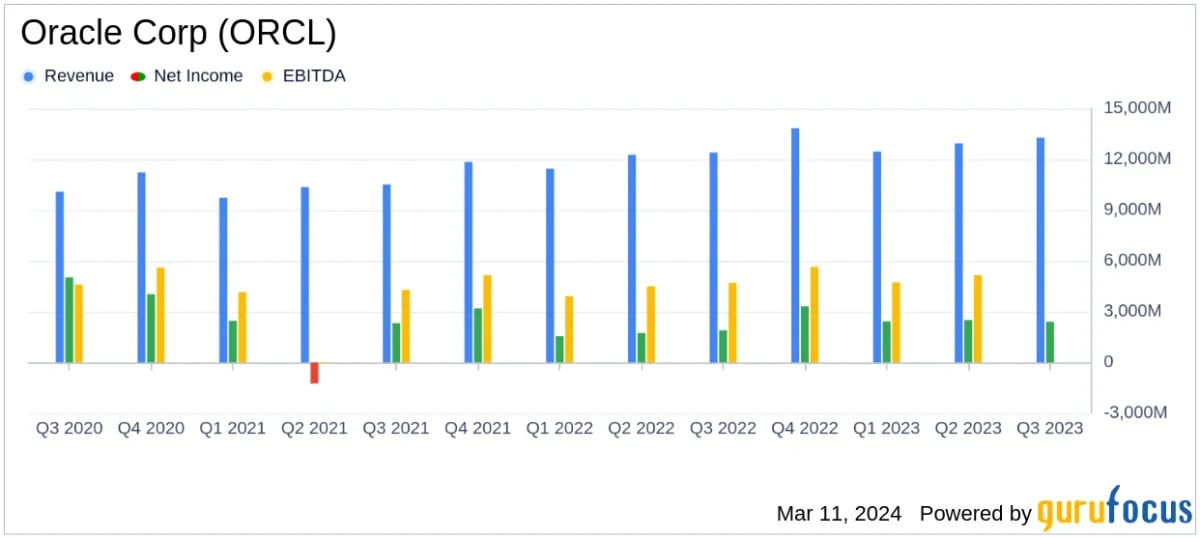
Oracle Corp reported a 7% increase in total revenue to $13.3 billion for the third quarter of fiscal year 2024, with cloud revenue up 25% to $5.1 billion. The company's GAAP operating income was $3.8 billion, while non-GAAP operating income increased by 12% to $5.8 billion. Oracle's earnings per share grew to $1.41, and its remaining performance obligations reached an all-time high of over $80 billion. The company's strong financial results and strategic initiatives in cloud infrastructure and innovative solutions position it for sustained growth in the software industry.
C3.ai shares fell 10% in premarket trading after the company projected a larger operating loss for fiscal 2024 due to increased investments in its generative artificial intelligence solutions. The software firm cited longer sales cycles and delayed decision-making processes by customers as factors impacting profitability. Brokerage D.A. Davidson & Co lowered its price target on the stock, while the average rating from analysts is "hold." Despite this, C3.ai's shares have gained over 160% this year, driven by growing interest in AI-linked stocks. The company reported second-quarter revenue of $73.2 million, slightly missing estimates.
Microsoft co-founder Bill Gates predicts that artificial intelligence (AI) will revolutionize how we use computers within the next five years. He envisions a future where users can simply tell their devices what they want to do in everyday language, and AI-powered personal assistants, called "agents," will be able to handle their requests. These agents will learn about users over time, anticipate their needs, and make proactive suggestions. Gates believes that agents will not only transform how we interact with computers but also upend the software industry, becoming the next platform for technological advancements.
Martin Goetz, known as the "father of third-party software," has passed away at the age of 93. He received the first software patent in 1968 for his sorting system program, which played a crucial role in defining software as a standalone product. Goetz's actions liberated software development from the dominance of the hardware industry and paved the way for the software industry as we know it today.