

Tag

Strong Cp Problem

All articles tagged with #strong cp problem

Unveiling the Mysterious Nature of Axions

Originally Published 2 years ago — by ScienceAlert

Featured image for Unveiling the Mysterious Nature of Axions
Source: ScienceAlert

Axions are hypothetical elementary particles that could solve the problematic exemption to CP symmetry and potentially explain dark matter. While there have been some indications of their existence, concrete evidence is still lacking. Axions, if found, would help resolve the strong CP problem and could have formed abundantly in the early Universe. They would clump together to act like dark matter, but their elusive nature makes them difficult to detect. Further research and data are needed to confirm the existence of axions and their role in the Universe.

Unraveling the Mystery of Ghost Particles in Physics

Originally Published 2 years ago — by SciTechDaily

Featured image for Unraveling the Mystery of Ghost Particles in Physics
Source: SciTechDaily

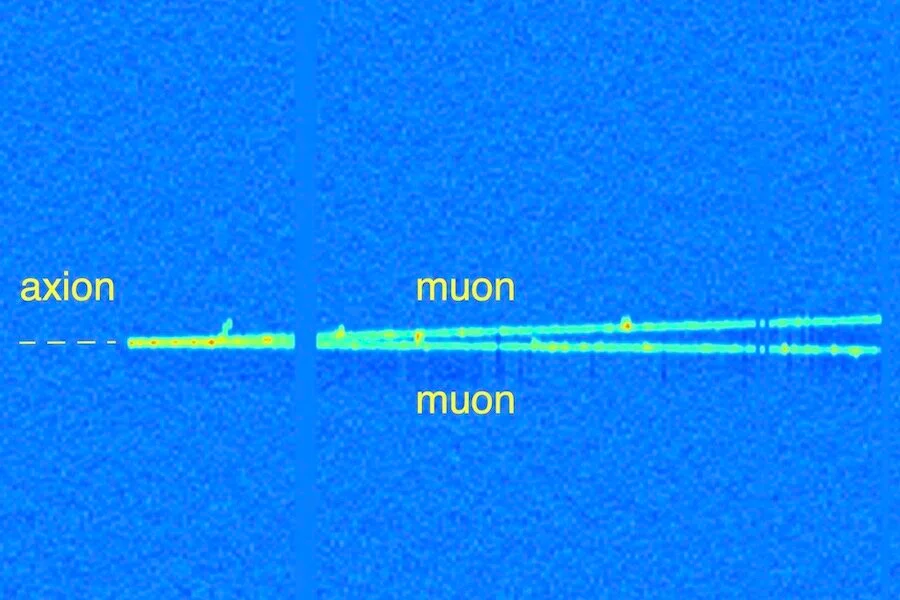
Theoretical physicists from the University of Minnesota have proposed a new method to detect axions, hypothetical particles that could solve the “Strong CP Problem” in physics. The strategy involves tracing the decay of axions into two muons, opening new possibilities in particle collider experiments. The researchers believe they have a chance to locate the axion and prove its existence by measuring the “decay” product of the hypothetical axion into two muons.

Unveiling the Mystery of Dark Matter with Axion Particle Discovery

Originally Published 2 years ago — by Phys.org

Featured image for Unveiling the Mystery of Dark Matter with Axion Particle Discovery
Source: Phys.org

University of Minnesota researchers have developed a new method to search for axions, hypothetical particles that could help solve the Strong CP Problem in physics. The method involves measuring the decay of the axion into two muons, which has not been used before in neutrino or collider experiments. The researchers believe that by working backward from the muon tracks in the detector to reconstruct such decays, they have a chance to locate the axion and prove its existence. The discovery of axions could be a significant advance in our fundamental understanding of the structure of nature.