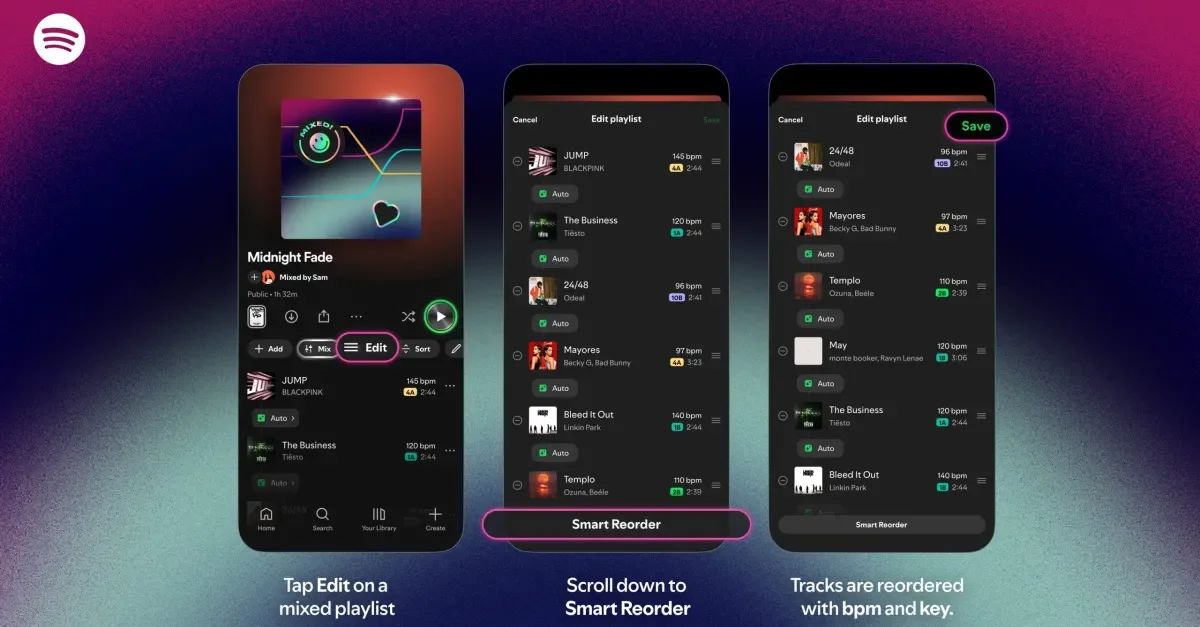
Spotify Premium users can now automatically sort Mixed playlists with a new Smart Reorder option in Mix, arranging tracks by BPM and key for a smoother flow between songs while warning that it will override any manual sorting; this follows a recent move to automate playlists with Prompted Playlists.
On Valentine’s Day, Taylor Swift and Travis Kelce kept a low profile, but Swift celebrated a streaming milestone—'Karma' hit 1 billion Spotify streams and she now has 24 songs over 1 billion streams, the most for any female artist—while a behind-the-scenes version of 'Opalite' and a Chris Lake remix kept the headlines buzzing.
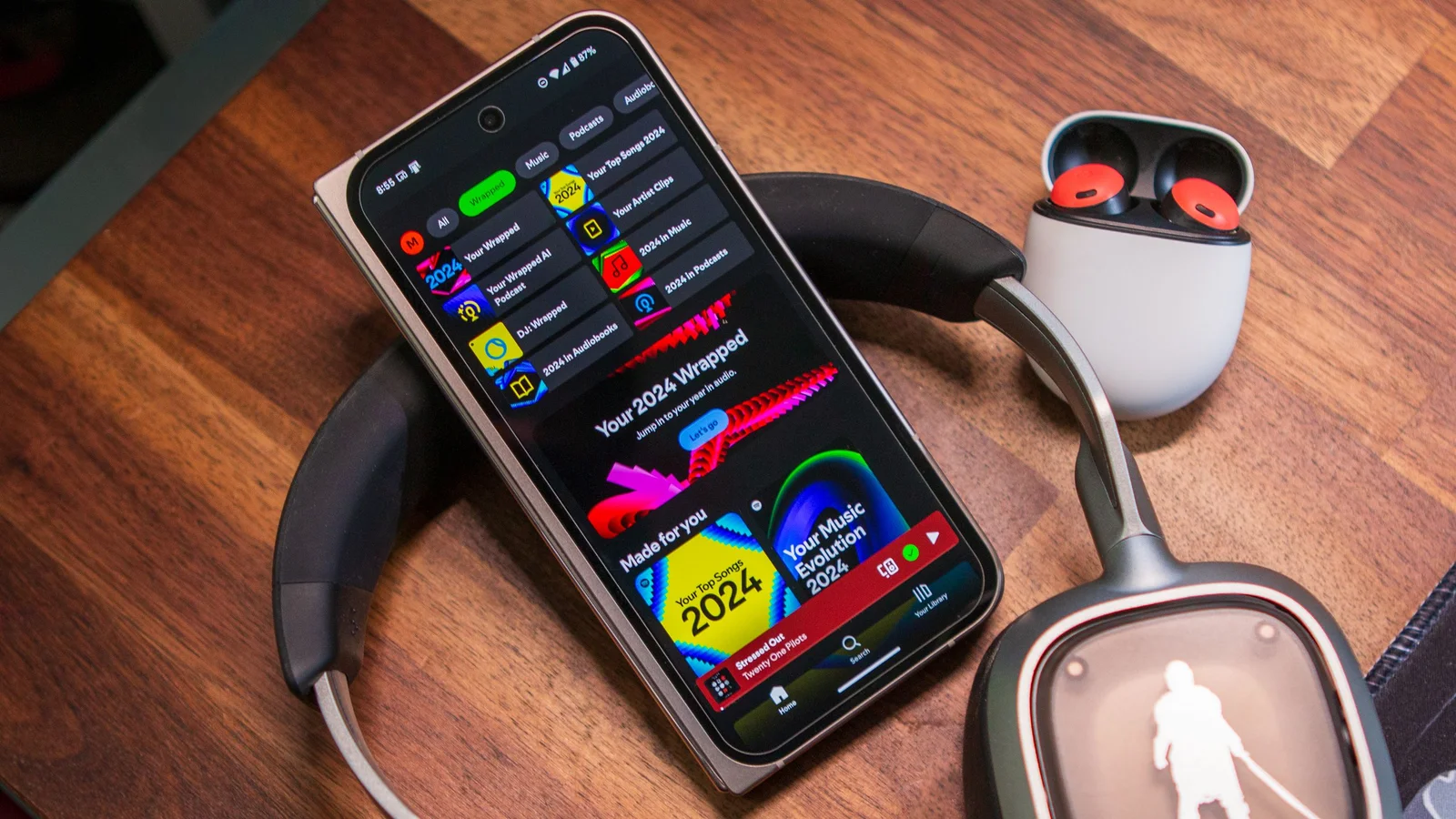
Spotify posted strong Q4 2025 results: premium subscribers rose 10% year over year to 290 million, monthly active users reached 751 million (up 11%), and revenue climbed 13% YoY to €4.5 billion with an 83 basis point gross-margin improvement to 33.1% and €701 million in operating income. The quarter featured record MAU net adds, the largest Wrapped engagement to date, and launches like Prompted Playlist and venue following. Audiobooks expanded to five new countries, with features like Audiobook Recaps and Page Match, and partnerships including Bookshop.org for physical books and FC Barcelona extending through 2030. Spotify signaled 2026 as the “Year of Raising Ambition” with AI-driven opportunities across audio, books, and live experiences, plus ongoing beta expansions such as music videos in Premium.
Spotify is beta-launching About the Song, a feature that shows short, third-party–summarized stories about a track right in Now Playing on mobile for Premium users in the U.S., U.K., Canada, Ireland, New Zealand, and Australia; users can swipe through story cards and provide feedback to help shape the feature.
Spotify expands its audiobooks strategy by partnering with Bookshop.org to sell physical books in-app and launching Page Match, a feature that lets users scan a page to sync audiobook progress with print or e-book and vice versa. Available to most English-language titles on iOS and Android by end of February, in the US and UK, with benefits for readers, authors, and indie bookstores.
Spotify is globally rolling out lyric translations for all users, with translations that adapt to your device language, and adding lyric previews under the album art for both free and Premium users. Premium subscribers will also get offline lyrics when downloading tracks.
Spotify announced it paid more than $11 billion in royalties in 2025, about 30% of the recording industry’s revenue, but the money goes to rightsholders (labels, distributors, publishers) rather than directly to artists; roughly half of the royalties went to independent artists and labels, while payouts for indie acts can vary widely and artists with fewer than 1,000 streams receive no payout; 12,500+ artists earned over $100k in royalties in 2024, with 2025 figures due in March; per-stream payments depend on the pool size and deals, and Spotify is promising new anti-fraud measures and greater human curation to address criticism.
Microsoft is expanding Windows 11’s cross-device resume beyond OneDrive sessions to hand off Spotify playback, Word/Excel/PowerPoint work, and Edge browsing from a phone to a PC; the feature, in Release Preview testing since August, brings macOS‑like Handoff to Windows and is complemented by MIDI 2.0, improved voice typing, and Windows Hello ESS in the same update.
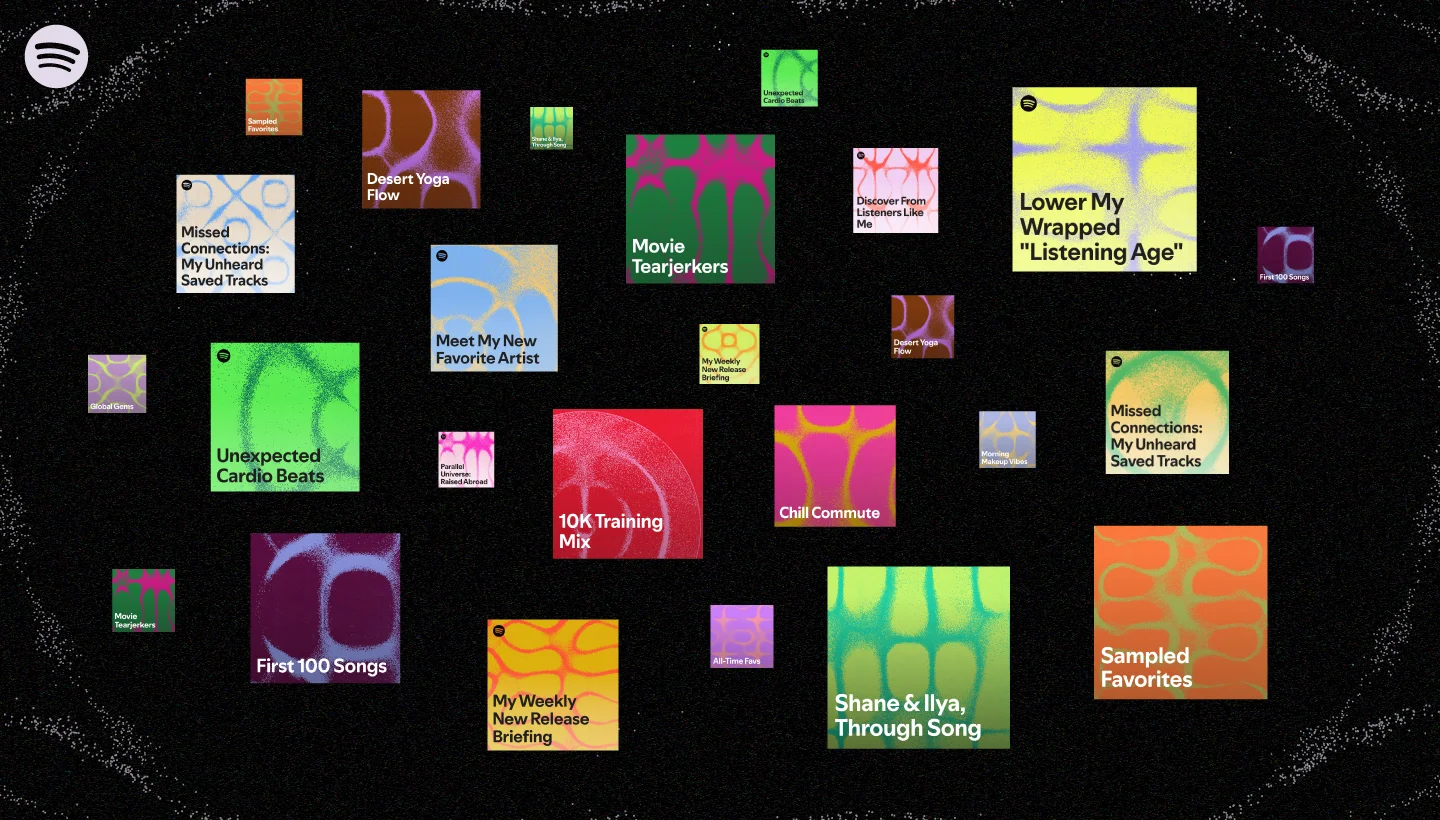
Spotify is expanding its Prompted Playlist beta to Premium listeners in the United States and Canada after testing in New Zealand in December 2025. The feature lets users describe what they want to hear in their own words—moods, moments, or cultural moments—and Spotify generates a playlist drawn from their listening history and current trends. Users can edit prompts, set daily or weekly refreshes, and receive one-line explanations for each track. The idea is a more intuitive, collaborative approach to discovery, with editors providing inspiration prompts; the rollout is in beta and may evolve with usage limits as Spotify learns from feedback.
Spotify appears to be testing a Page Match beta that uses camera-scanned pages and OCR to sync audiobook progress with their corresponding paper or ebook editions, even displaying the matching page number. Listeners would need to own the audiobook and the edition, and the feature could work in reverse as well. OCR reliability and edition page-number differences could complicate use, and there’s no public rollout yet.
Spotify has raised US prices for its Premium plans (Individual $12.99/mo, Student $6.99, Duo $18.99, Family $21.99), with changes applying immediately to new subscribers and at the next billing cycle for existing ones. The move follows the rollout of Lossless streaming and positions Spotify as more expensive than Apple Music, Tidal, and YouTube Music, prompting readers to consider switching to alternatives that offer higher-quality audio or different value propositions.
Spotify is raising the US Premium price to $12.99 per month (from $11.99), while Duo goes to $18.99, Family to $21.99, and Student to $6.99, effective on February billing dates. The company says price updates reflect value and help maintain the experience, though critics argue the extra isn’t necessarily a direct payment to artists.
Spotify raised Premium to $13/month from $12, its third price increase in 2.5 years, with Student, Duo, and Family plans also rising (Basic stays at $11). The move follows its 2024 pricing and is framed as reflecting value and funding product features and royalties; Spotify says it paid $10 billion in royalties in 2024 and has seen growth in subscribers and users, though questions about musician earnings and platform economics persist.
Spotify said prices will rise in the United States, Estonia, and Latvia, part of a broader move as streaming bills—already elevated by widespread subscriptions—grow for households. The company says the increases reflect the value it delivers and support for artists, coming after strong third-quarter results (700 million MAUs and $675 million in operating income) and ahead of February’s Q4 earnings. Industry observers note streaming inflation is widening gaps in consumer costs, with many households now paying for multiple services.
Spotify will raise its Premium plan price from $11.99 to $12.99 per month in the United States, with the increase also applying to Estonia and Latvia; the company says the change reflects the value it delivers and helps support artists, as investors note the stock has fallen amid restructuring and leadership shifts toward co-CEOs.