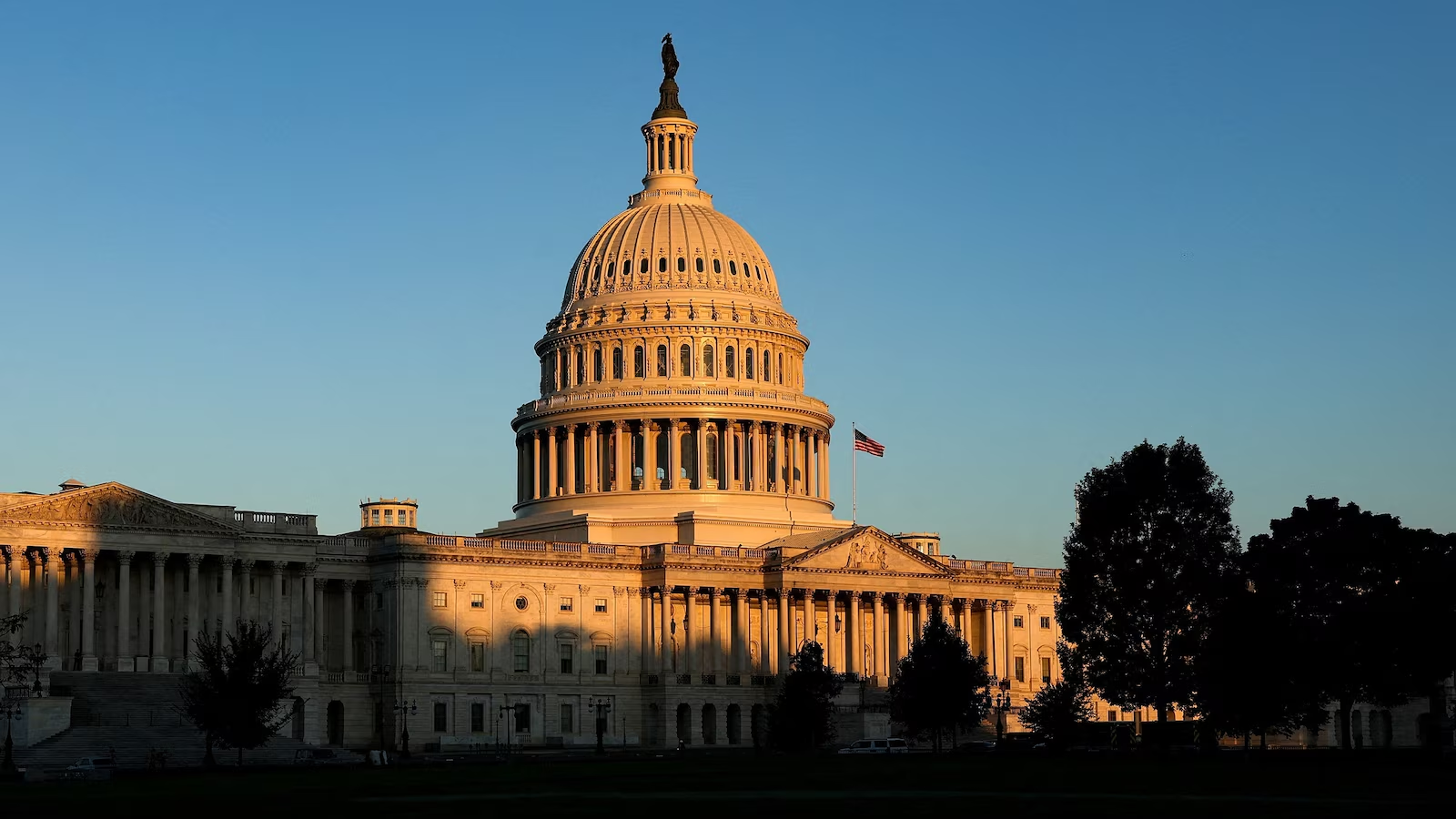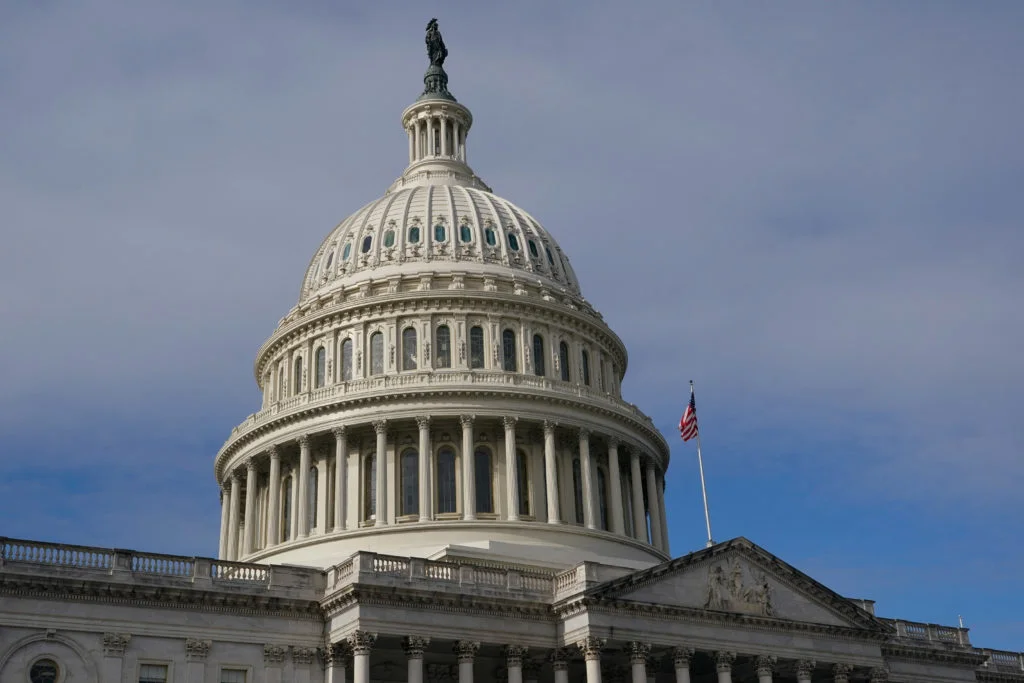
The House passed a bipartisan package of three spending bills to fund parts of the federal government through September, aiming to prevent another shutdown, with broad support from both parties and the White House, covering agencies like the Interior Department and EPA, and including provisions to limit presidential funding delays and maintain certain priorities.
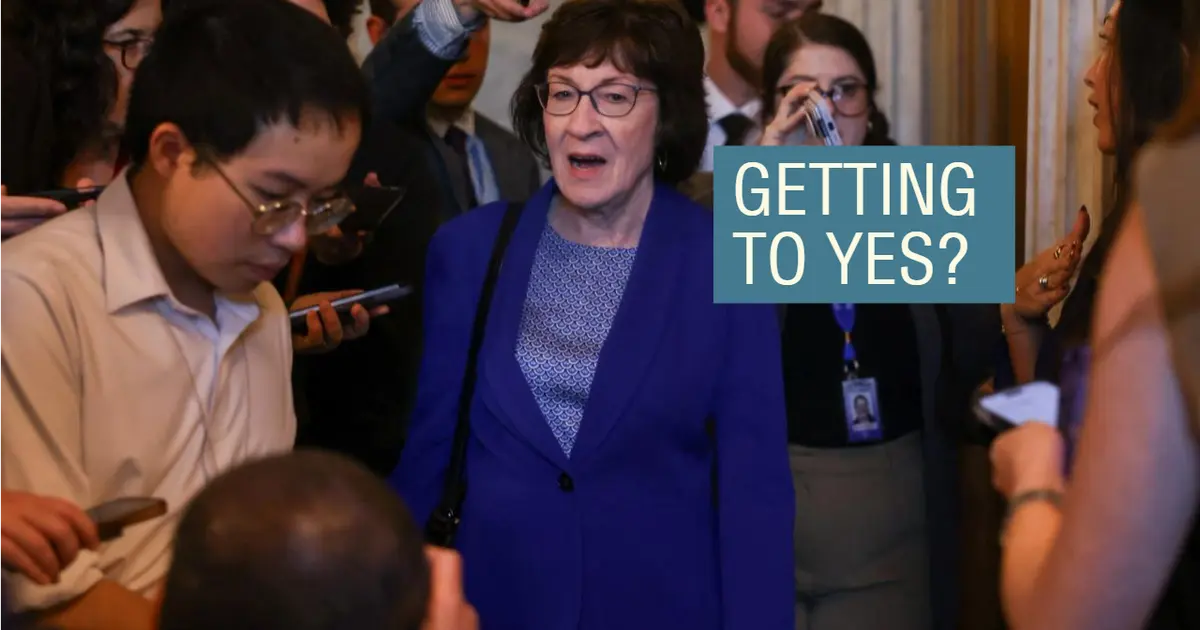
The Senate is planning a vote on Friday to advance a deal to end the government shutdown, involving a continuing resolution and full-year spending bills, with ongoing negotiations and bipartisan efforts to reach an agreement.
The US government shutdown may end next week as benefit cuts and political negotiations influence the timeline, with senators discussing long-term spending solutions amid upcoming elections and ongoing debates over government funding and policy strategies.
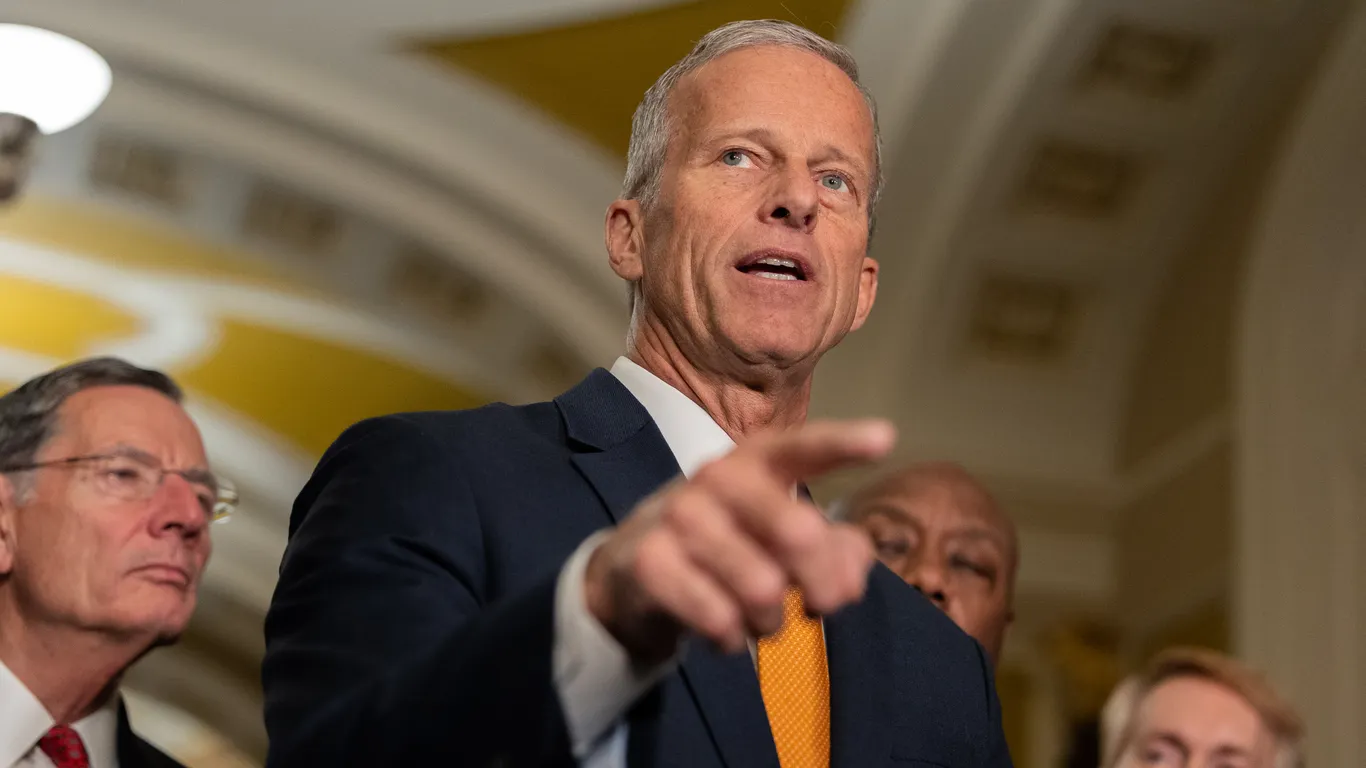
Senate Majority Leader John Thune expressed rare anger at Democrats for refusing to reopen the government, criticizing their repeated votes against it and warning that ongoing delays could prolong the shutdown, though there are signs of potential progress in negotiations on spending bills.
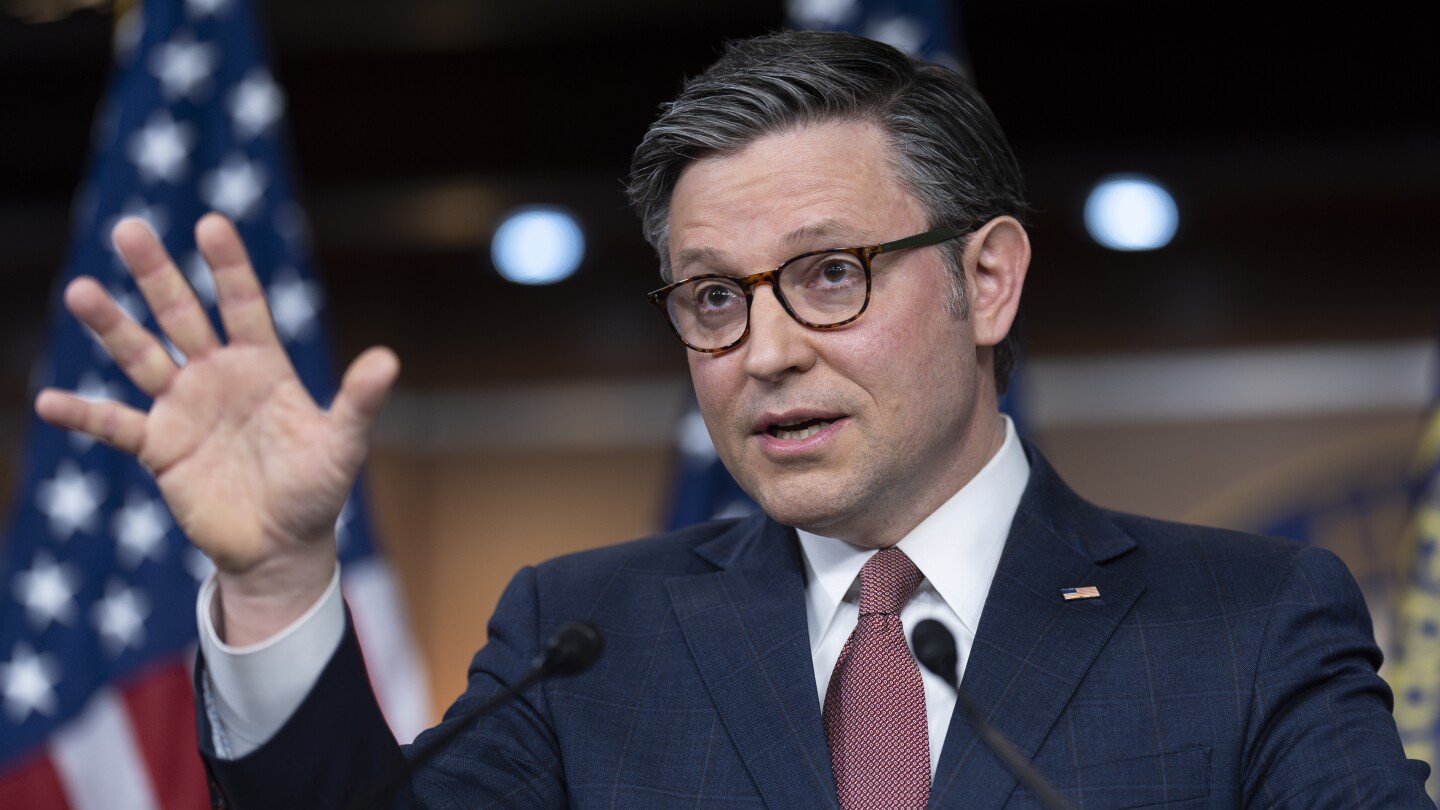
The US government remains shut down amid a deadlock on Capitol Hill over competing spending bills, with Speaker Johnson stating there's nothing to negotiate and blaming Democrats' healthcare demands, while the White House emphasizes efforts to move forward on other issues like Gaza ceasefire talks.
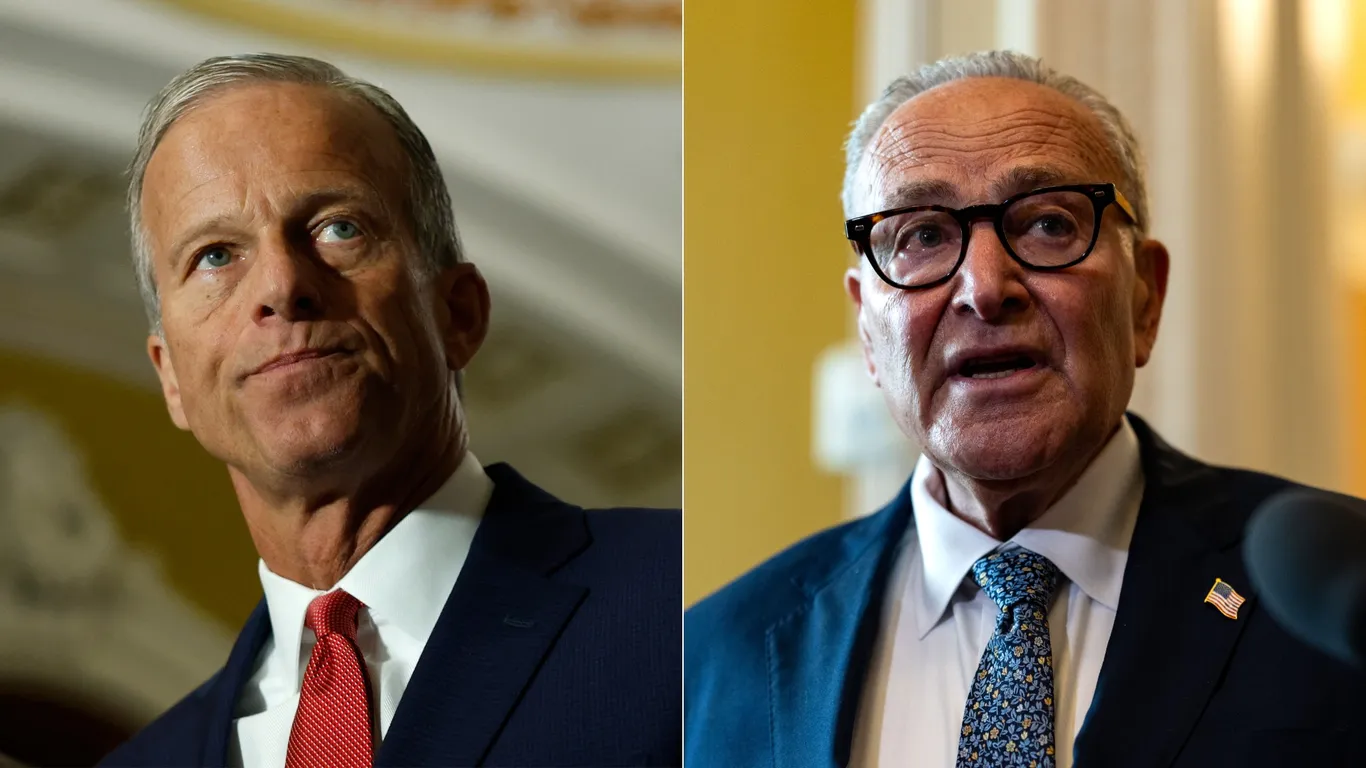
Democratic leaders Schumer and Jeffries demand a meeting with Trump and Republican leaders to negotiate a government funding deal amid a looming shutdown, criticizing the GOP's proposed stopgap bills and emphasizing their readiness for bipartisan negotiations, while Republicans indicate they are open to talks but have not yet engaged directly with Democrats.
The Senate failed to pass two stop-gap spending bills, one from the House and an alternative from Democrats, risking a government shutdown on October 1 as neither bill received enough votes, with ongoing negotiations and partisan disagreements over funding priorities.
Senate leaders are implementing new measures to ensure the Trump administration follows congressional funding instructions, adding detailed legislative language and reporting requirements to strengthen Congress's control over federal spending amid ongoing disputes over executive branch authority.
The Senate has passed its first set of bipartisan spending bills totaling $488 billion, covering military, veterans, agriculture, and legislative programs, but significant disagreements remain over funding levels and priorities, especially with the upcoming September 30 government shutdown deadline and differences between the Senate and House bills.
Senate Democrats are strategizing to counter President Trump and prevent a government shutdown, with debates over resisting or negotiating with Republicans, amid ongoing legislative and political tensions.
Democrats are strategizing to counter Republican efforts on spending bills and nominations, with debates over policy wins and resistance tactics, amid concerns about a potential government shutdown in September.
House Republicans, led by Speaker Mike Johnson, are considering extending the government funding deadline into early 2025, coinciding with the start of President-elect Donald Trump's second term. This move would allow Republicans, who are expected to control both the Senate and the House, more influence over federal spending. However, some Republicans prefer resolving the funding issue this year to avoid distractions during Trump's initial 100 days. The decision is complicated by the need for bipartisan agreement in the Senate, where Democrats currently hold sway.
Lawmakers are rushing to pass a $1.2 trillion spending package to fund federal agencies and avert a government shutdown, with more than 70% of the funds allocated to defense. The process has been delayed by conservative demands for policy mandates and spending cuts, leading to short-term funding measures. The bill includes a 5.2% pay increase for service members and funding for various departments, but faces opposition from both Republicans and Democrats over provisions related to Israel and border policy. Despite frustrations over the lengthy process, the spending largely aligns with an agreement reached last year, and is expected to pass with bipartisan support.
President Biden signed a $460 billion spending package passed by the Senate, avoiding a federal government shutdown. The legislation includes six annual spending bills and is part of ongoing negotiations to fully fund federal agencies by March 22. Lawmakers from both parties praised the bipartisan effort, with Democrats fending off most Republican policy riders. The bill also includes over 6,600 projects requested by individual lawmakers, drawing criticism from some Republicans.
President Biden signed a $460 billion package of spending bills passed by Congress, avoiding a shutdown of federal agencies. The bipartisan legislation, which includes six annual spending bills, allows agencies to continue normal operations. Lawmakers are now negotiating a second package to fully fund federal agencies by March 22. The bill's passage will lead to the hiring of air traffic controllers, rail safety inspectors, a raise for federal firefighters, and increased support for homeless veterans. The total discretionary spending set by Congress for the full budget year is expected to be about $1.66 trillion.