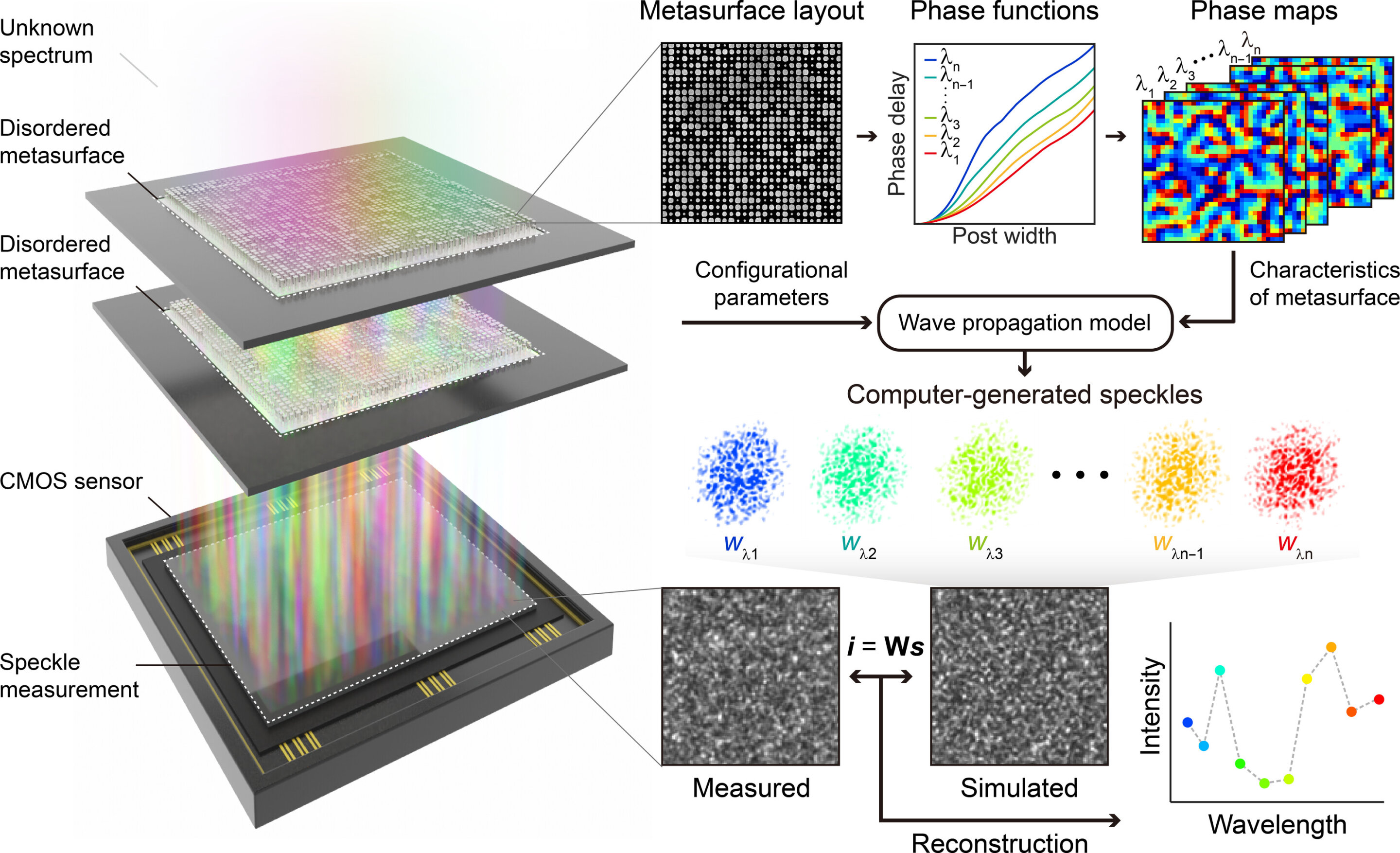
KAIST researchers have developed a compact, high-resolution spectrometer using double-layer disordered metasurfaces, enabling precise light wavelength analysis in devices smaller than a fingernail, with potential applications in daily life and various scientific fields.
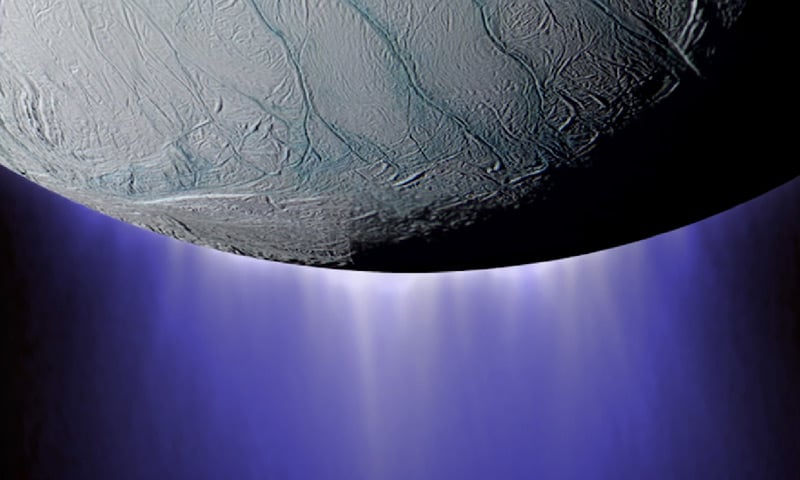
Future spacecraft flying close to Saturn's moon Enceladus may be able to detect amino acids, essential for life on Earth, in the plumes erupting from its surface, according to a study by the University of California San Diego. Scientists built a spectrometer to study the chemical composition of ice grains impacting an electrically conductive surface at high speeds. They found that a spacecraft could fly at speeds up to 4.2 kilometers per second through Enceladus' plume to detect intact amino acids if they exist on the moon. However, detecting amino acids would not confirm the presence of alien life, as life as we know it involves a complex set of molecules.
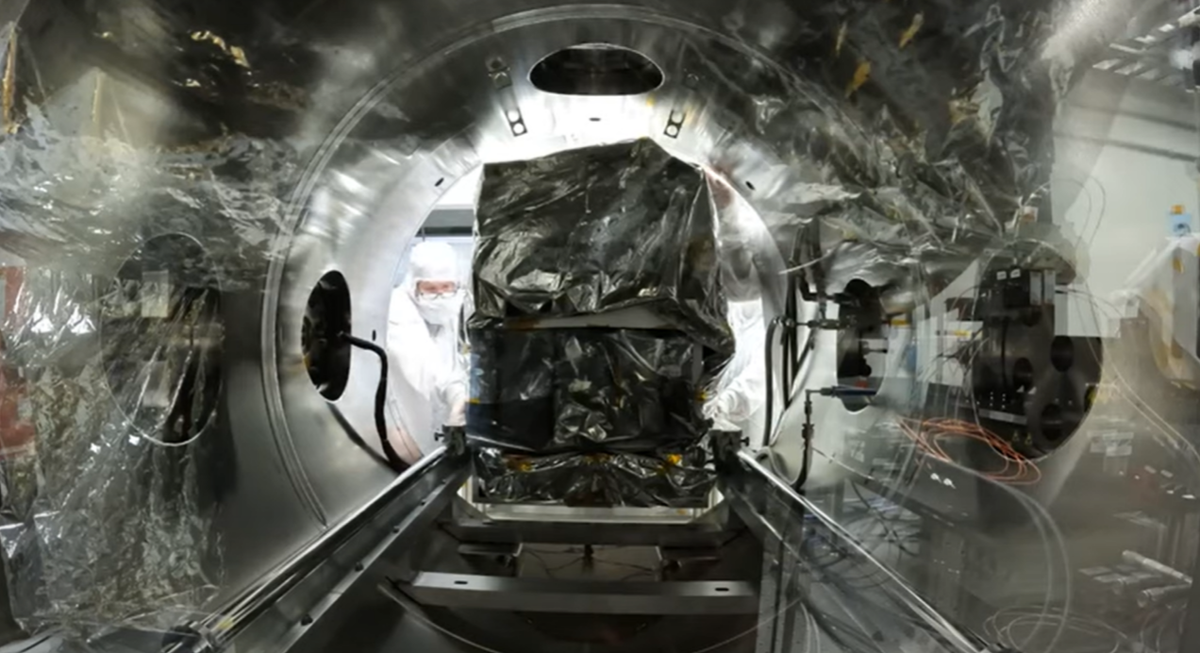
NASA has developed a spectrometer designed to observe carbon dioxide and methane on Earth's surface, with the aim of pinpointing greenhouse gas "super-emitters." The spectrometer, created at NASA's Jet Propulsion Laboratory, will be mounted onto a satellite called Tanager, set to launch in 2024. The device observes infrared light reflected from Earth's surface and separates it into its spectrum, allowing scientists to identify different gases in the atmosphere. The spectrometer has successfully recorded the methane spectral signature during testing, indicating its potential for space measurement. The project is a collaboration between NASA, Carbon Mapper, and other institutions.