
Detecting Signs of Life on Enceladus: A Viable Possibility
TL;DR Summary
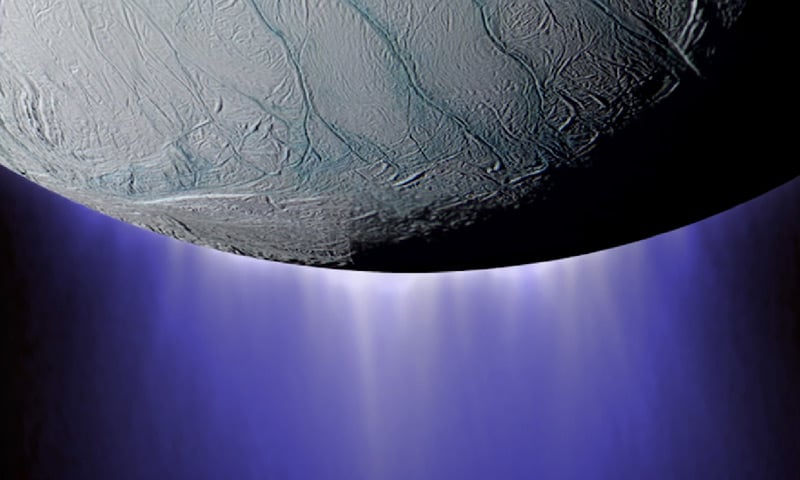
Future spacecraft flying close to Saturn's moon Enceladus may be able to detect amino acids, essential for life on Earth, in the plumes erupting from its surface, according to a study by the University of California San Diego. Scientists built a spectrometer to study the chemical composition of ice grains impacting an electrically conductive surface at high speeds. They found that a spacecraft could fly at speeds up to 4.2 kilometers per second through Enceladus' plume to detect intact amino acids if they exist on the moon. However, detecting amino acids would not confirm the presence of alien life, as life as we know it involves a complex set of molecules.
- Here's how fast a spacecraft should fly to successfully detect amino acids erupting from Enceladus The Register
- If Enceladus Or Europa Have Life It Might Be Easy To Find IFLScience
- NASA Funded Experiments Show Detecting Signs of Life in Water Ejected from Enceladus is Viable The Debrief
- Ice Plumes of Saturn’s Icy Moon Enceladus May Hold Amino Acids, Study Suggests Sci.News
- We could find signs of life on another world in our solar system, scientists say The Independent
Reading Insights
Total Reads
0
Unique Readers
6
Time Saved
3 min
vs 4 min read
Condensed
84%
684 → 111 words
Want the full story? Read the original article
Read on The Register