Scientists have developed autonomous living materials using synthetic lichens that can turn Martian soil into building structures, potentially enabling sustainable construction on Mars without heavy materials from Earth, using a self-growing microbial system that only requires local resources like regolith, air, and light.
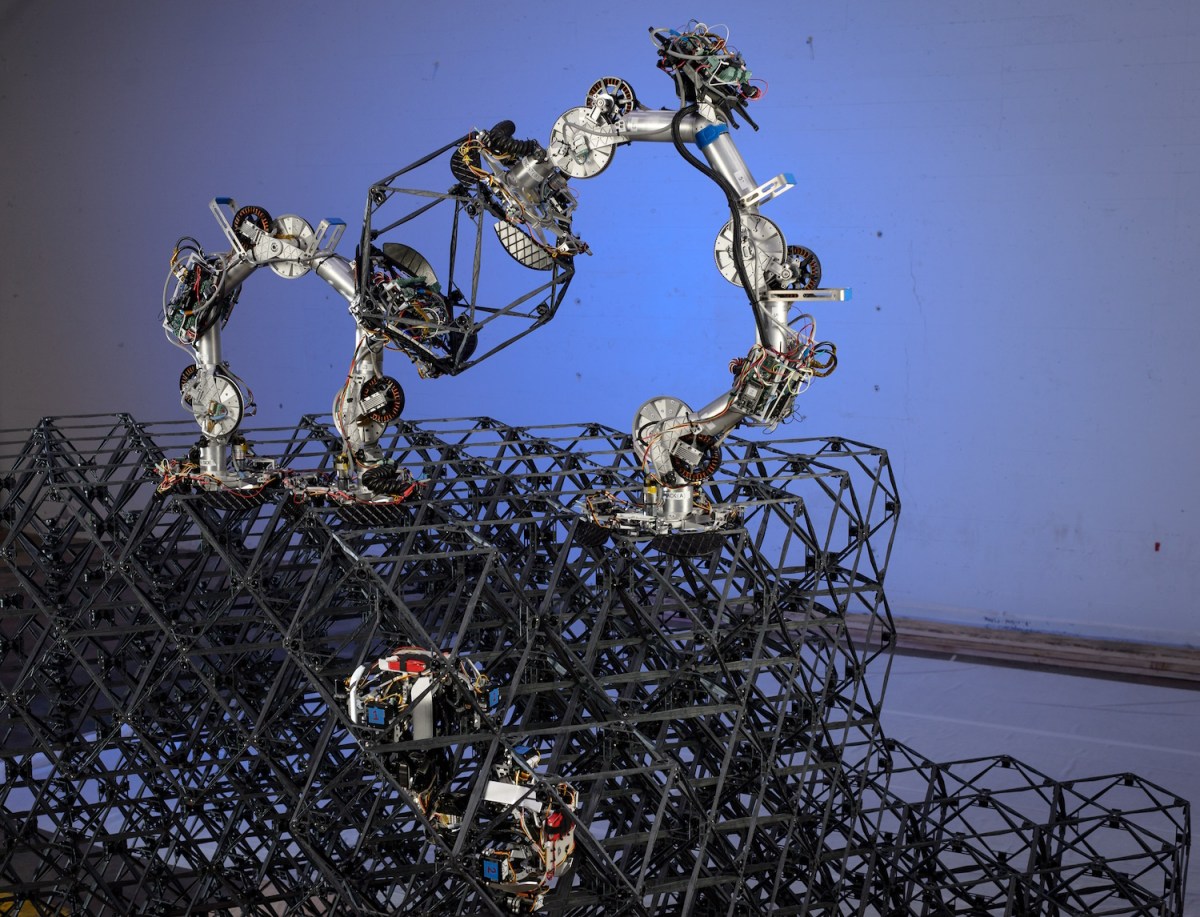
NASA has developed self-assembling robotic structures, called ARMADAS, for construction in space and on planetary surfaces. These structures use cuboctahedral frames called voxels and two types of robots to assemble them. The robots can work autonomously and are designed for scalability and adaptability. The structures could be used for building communication towers, shelters, and other infrastructure on the lunar surface or in space. The robots have already been tested in microgravity and could potentially be powered wirelessly or through the structure itself.
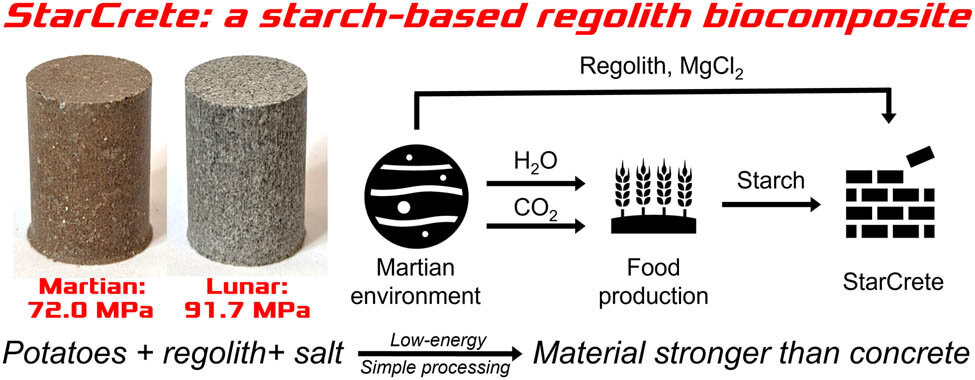
Scientists from Manchester have developed a new material called StarCrete, made from simulated Martian soil, potato starch, and a pinch of salt, which is twice as strong as ordinary concrete and could be used to build homes on Mars. StarCrete offers a simple and cost-effective solution for building infrastructure in space. The material can also be made in an ordinary oven or microwave at normal 'home baking' temperatures, making it a greener alternative to traditional concrete on Earth.