The rise of AI, especially tools like ChatGPT, has significantly devalued traditional computer science degrees, leading to a decline in entry-level tech jobs for recent graduates, and forcing students and universities to adapt to a new, AI-driven job landscape.
AI tools like chatbots are revolutionizing software development by automating coding tasks, with a focus on higher-level goal communication rather than syntax, leading to a competitive market among major AI companies. Despite concerns about job displacement, experts emphasize that skilled engineers remain essential, as AI enhances productivity but does not replace expertise.
AI tools like chatbots are revolutionizing software development by shifting focus from syntax to high-level goals, with companies like Anthropic, OpenAI, and others competing to create the best AI coding assistants, transforming the job experience for many tech workers.
Originally Published 4 months ago — by Hacker News
The article emphasizes that in software development, especially at scale, the goal should be to do the simplest thing that could possibly work, acknowledging that complexity is inevitable but often unnecessary. It advocates for careful consideration, staged implementation, and understanding the problem deeply before opting for simplicity, while warning against over-engineering and the false allure of overly complex solutions. Experience and context are crucial in determining what 'simple' truly means in each scenario.
Originally Published 5 months ago — by Hacker News
The article discusses the realistic impact of AI, particularly large language models, on software engineering productivity, emphasizing that while AI can significantly aid in coding and debugging, claims of 10x improvements are often exaggerated. It highlights the current limitations, such as AI's tendency to hallucinate or produce incorrect code, and suggests that AI's true value lies in assisting discovery, learning, and automating tedious tasks rather than replacing skilled engineers entirely.
Research reveals a hidden penalty of AI in the workplace, showing low adoption rates among engineers, especially women and older employees, despite promises of increased productivity, highlighting potential biases and resistance to new technology.
Originally Published 5 months ago — by Hacker News
Claude Code is praised as a powerful AI tool that automates mundane coding tasks, enhances productivity, and shifts the focus from tedious work to problem-solving and design, though opinions vary on its impact and the nature of programming itself.
Originally Published 6 months ago — by Hacker News
The article discusses the complexities and practical benefits of using GitHub Copilot's Agent Mode and MCP in software development, emphasizing that these tools are primarily aids for decision-making and automation rather than replacements for comprehensive engineering processes. It highlights real-world scenarios where AI accelerates coding tasks, but also cautions about over-reliance and organizational issues, advocating for thoughtful integration and communication.
Meta is undertaking a major project to rewrite a decades-old C messaging library used across its platforms into Rust, aiming to modernize the codebase and improve developer experience, as discussed in the Meta Tech Podcast with engineers Elaine and Buping.
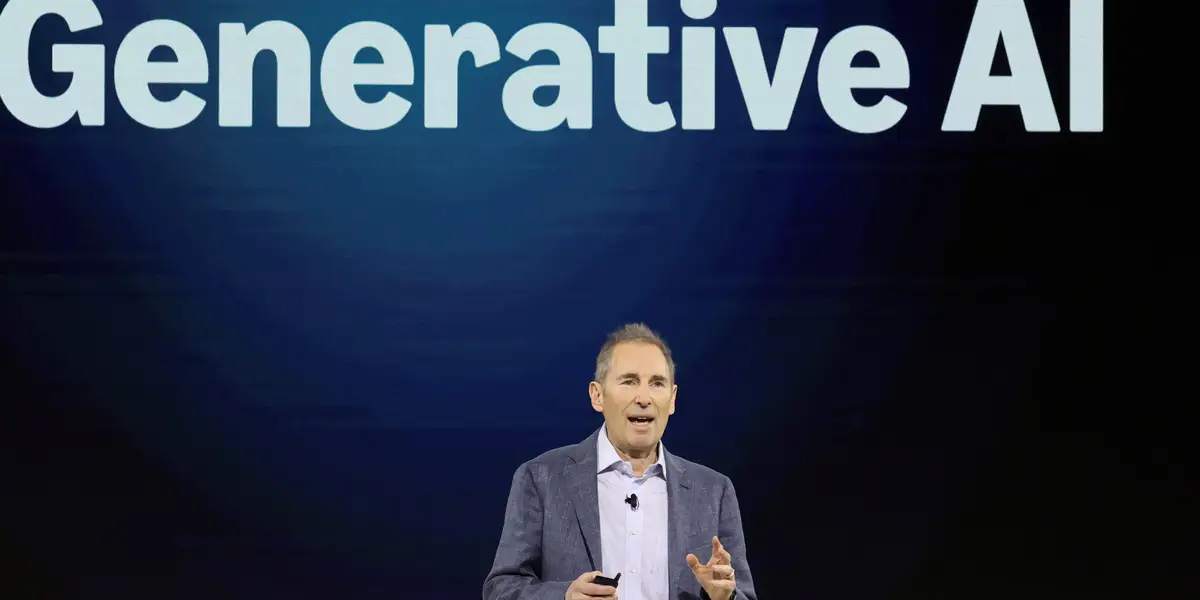
A former Amazon engineer, Shahad Ishraq, discusses his perspective on Amazon's CEO Andy Jassy's memo about AI and job impacts, emphasizing that AI is currently a tool to augment rather than replace software engineers, and advising employees to adopt AI skills to stay relevant. Ishraq notes that AI adoption varies within Amazon, and while AI can increase productivity, it still requires human oversight and development of guardrails. He believes the memo's optimistic tone is primarily for shareholder reassurance and encourages workers to embrace AI to enhance their careers.
Amazon software engineers report that AI is increasing their workload and pressure to code faster, transforming their roles into more assembly line-like tasks, with concerns about skill loss and job quality, despite company claims that AI is meant to augment rather than replace human workers.
Generative AI tools like ChatGPT, Microsoft's Copilot, and AWS Code Whisperer are revolutionizing software engineering by automating code generation, testing, and debugging. While these tools can handle repetitive tasks and streamline workflows, human expertise remains crucial for creative problem-solving and strategic design. As AI becomes more integrated into coding, software engineers will shift towards supervisory and strategic roles, requiring new skills in AI ethics, security, and prompt engineering. This evolution will enhance productivity and efficiency, making software developers even more valuable in business and industry.
Cognition's claim of creating "the first AI software engineer" named Devin has been debunked after accusations of lying about its performance in promo videos. The AI failed to understand and complete an Upwork task as showcased, with crucial details overlooked by its creators. The task was seemingly cherry-picked to showcase Devin's abilities, and it took the AI much longer to solve it compared to a human. Ultimately, the presentation of Devin's capabilities was marred by human error, casting doubt on its groundbreaking status.
German Microsoft software engineer Andres Freund discovered a potentially devastating cyber attack while conducting routine maintenance checks on the open-source database software PostgreSQL. He found malicious code in the XZ Utils software package, which could have allowed threat actors to access data from millions of users. After reporting the issue, a fix was developed within hours. The attack is believed to have been orchestrated by a hacker group using the pseudonym Jia Tan, who infiltrated the system by gaining the trust of developers and making subtle changes to the software.
Sahil Gaba, who landed a $300,000 job at Google, shared the résumé that got him in the door at big tech companies like Meta, Uber, and Google. He taught himself programming and secured his first job at a small fintech before moving to Amazon. Gaba highlighted the changes he would make to his résumé today, including leading with experience rather than skills, focusing on recent achievements, simplifying language, de-emphasizing education, and retaining the "interests" section. He currently works as a software engineer at Google's Seattle office.