Experts have proposed innovative designs for interstellar generation ships, including jellyfish-shaped crafts and 3D-printed habitats, to support multi-generational space travel, emphasizing sustainability, psychological resilience, and evolving social structures, with the Chrysalis design winning for its detailed plan to enable crew survival and flourishing over centuries.
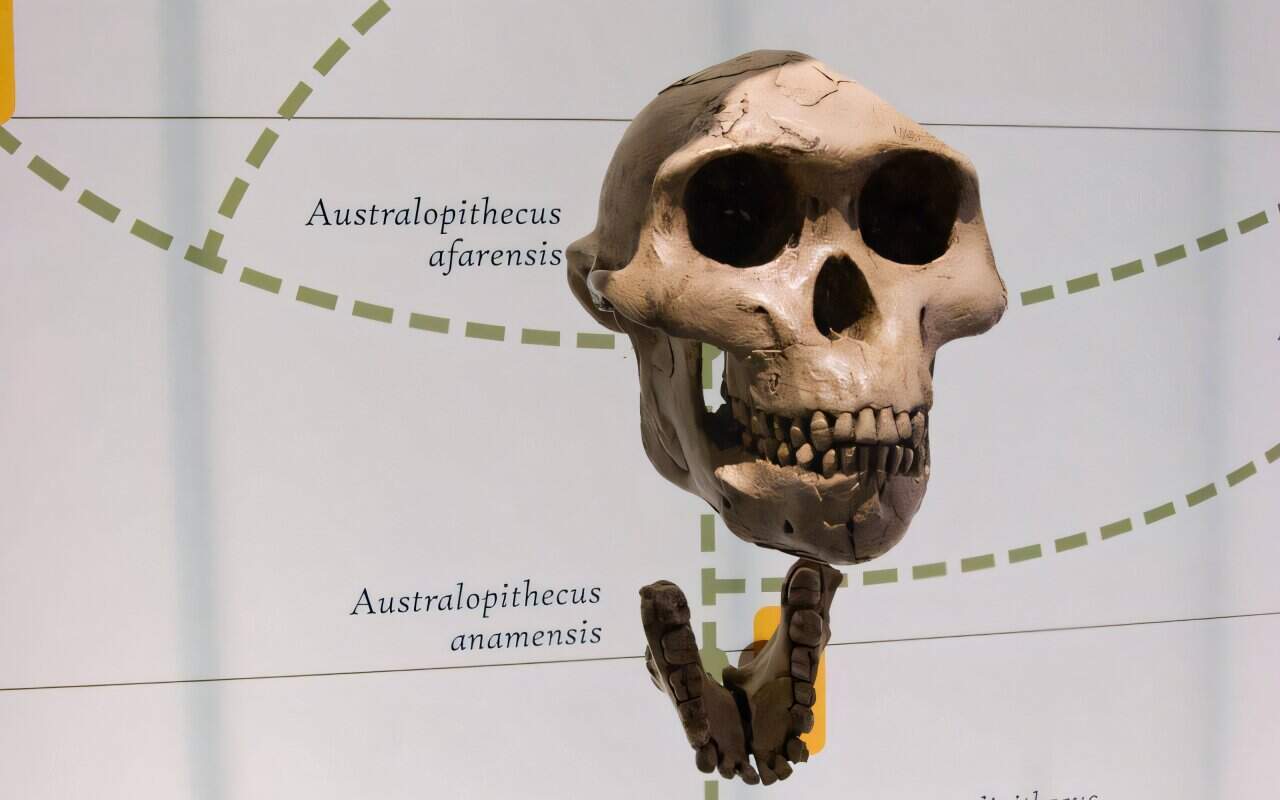
A new study reveals that early human ancestors like Australopithecus afarensis exhibited extreme size differences between males and females, suggesting intense male competition and diverse social structures, with implications for understanding human evolution.
New research reveals that early human ancestors like Australopithecus afarensis and A. africanus exhibited extreme sexual size differences, suggesting intense male competition and complex social dynamics, challenging previous assumptions about their social organization and evolution.
Recent research by Ocearch suggests that great white sharks, typically thought of as solitary creatures, may actually travel in pairs. Two juvenile white sharks, named Simon and Jekyll, have been tracked together for over 4,000 miles along the Atlantic coast. The researchers are testing their blood samples to determine if they are biologically related, which could provide insights into the social structures of sharks. While it is unclear why these two sharks are swimming together, it is possible that having a companion benefits them in various ways, such as fending off competitors or predators, capturing prey, and mating. This discovery challenges the perception that sharks are solely focused on hunting and reveals a potentially richer social life among these creatures.