New insights into a powerful and luminous quasar discovered by astronomers.
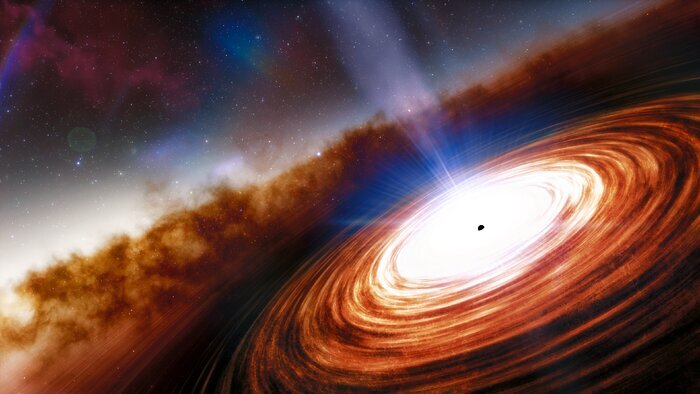
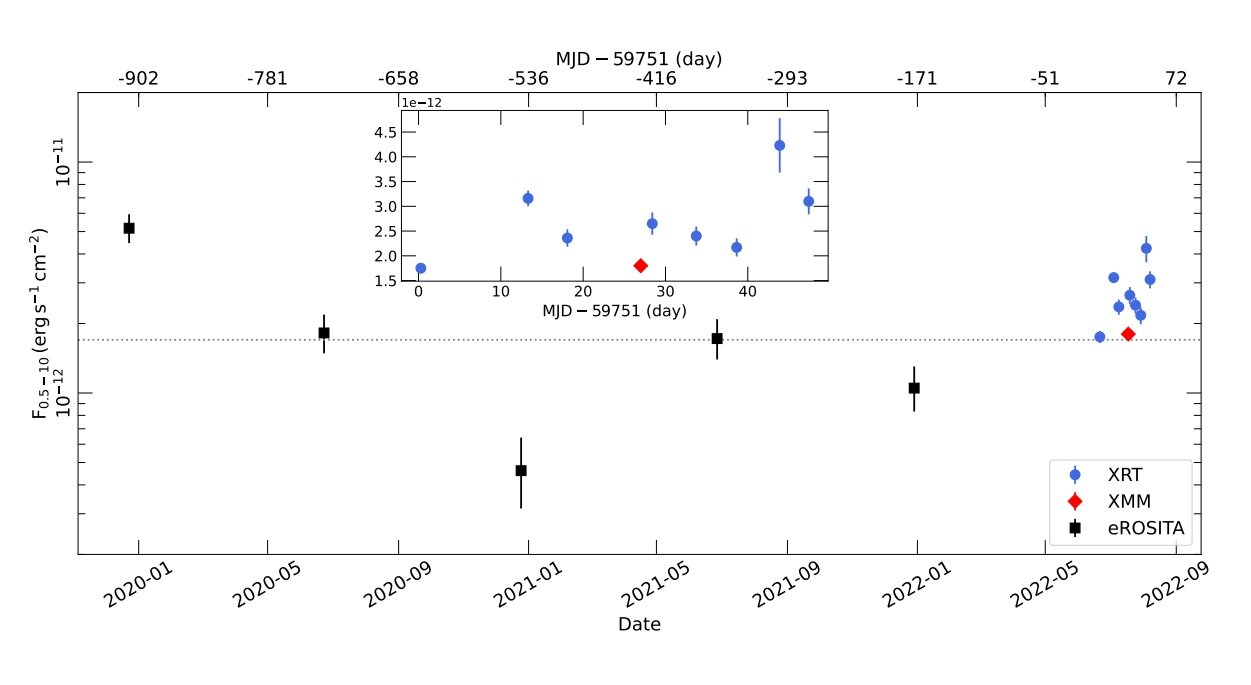
An international team of astronomers has used various space telescopes to observe a recently detected luminous quasar known as SMSS J114447.77-430859.3, or J1144 for short. J1144 has a bolometric luminosity of about 470 quattuordecillion erg/s, making it the most luminous quasar over the last 9 billion years of cosmic history. The researchers found that J1144 exhibits an X-ray variability by a factor of about 10 within a year, and the observations indicate that J1144 seems to accrete at a rate larger than 40% of the Eddington limit. The authors of the paper added that deeper X-ray and ultraviolet/optical observations of J1144 are needed to draw final conclusions about the nature of this source and its variability.