Scientists have successfully sequenced the entire genome of an ancient Egyptian man from over 4,500 years ago, providing new insights into early Egyptian ancestry, health, and occupation, with implications for understanding the genetic history of ancient Egypt.
The skeletal remains of a man and a woman, possibly a married couple, were discovered buried next to each other in Germany. The woman's skeleton was found without facial bones, but further analysis revealed that her skull was damaged later due to shallow burial. The man was buried with various grave goods, suggesting he may have been a noble figure. The woman's grave lacked burial items, possibly due to robbery or her conversion to Christianity. Archaeologists are conducting further analysis to learn more about their identities and cause of death.
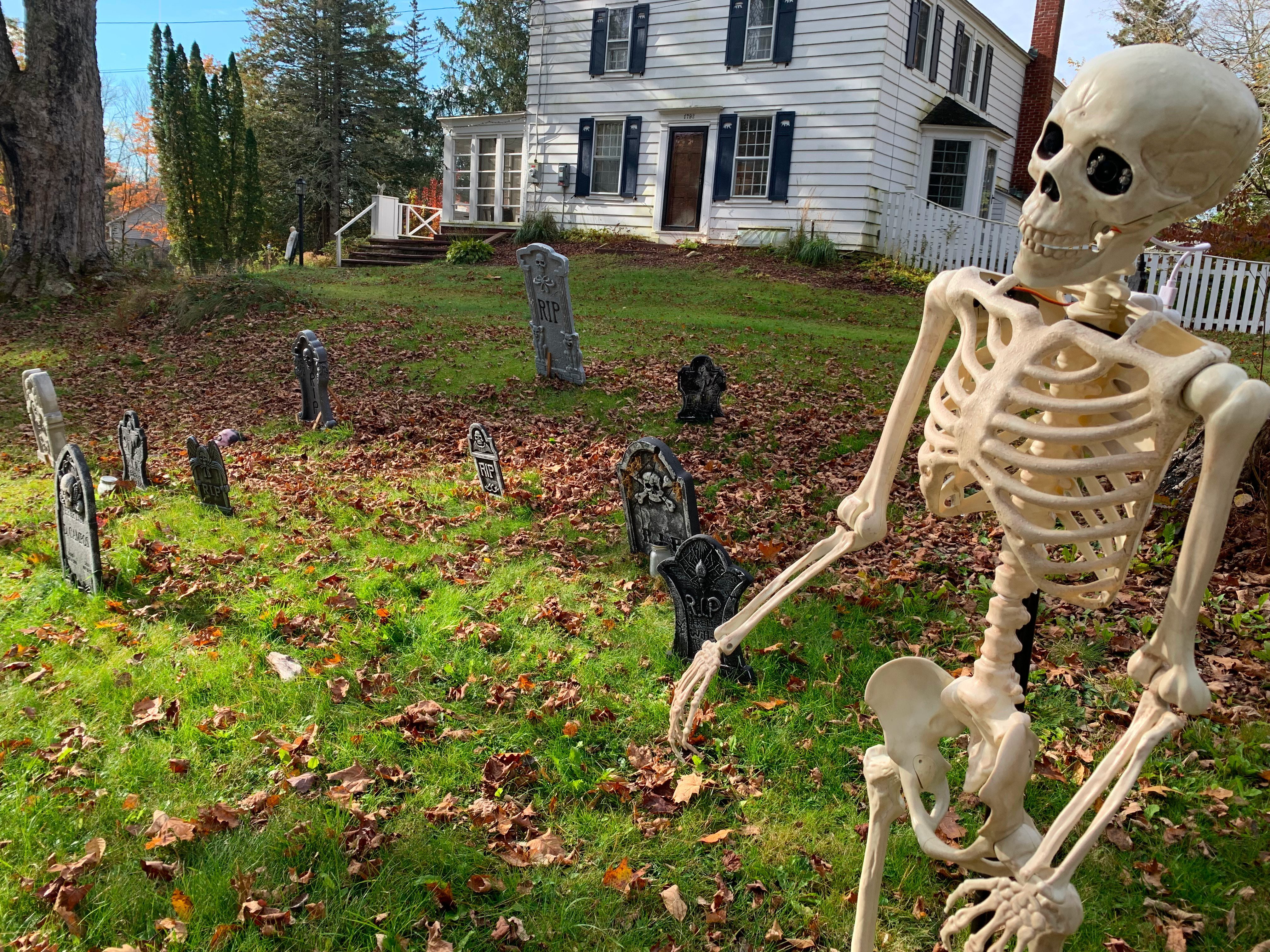
A DIY enthusiast named Matt Vella has created a Halloween project called Hack Skellington, a posable skeleton equipped with an eye socket-mounted camera, speaker, and servos that can scare trick-or-treaters or anyone who gets too close. Using ChatGPT and an AI-generated voice, Hack Skellington can recognize people, welcome them by name, make eye contact, and move its arm. The project is powered by a Radxa Zero SBC programmed in Viam, and the total cost was around $150.
Officials in Grantsville, Utah demanded that a Halloween display featuring a skeleton pole-dancing on a street sign be removed due to city code violations. The display was moved to a front yard, where it now includes a new pole, more skeletons, lights shaped like a stage, and a tip jar. The display has divided the community, with some finding it inappropriate while others have contributed their own decorations and left money in the tip jar. The creator of the display plans to make it more elaborate in the future.
Officials in Grantsville, Utah demanded that a Halloween display featuring a skeleton pole-dancing on a street sign be removed due to city code violations. The display was moved to a front yard, where it now includes a new pole, more skeletons, lights shaped like a stage, and a tip jar. The display has sparked a community divide, with some finding it inappropriate and others contributing their own decorations and leaving money in the tip jar. The creator of the display plans to make it even more elaborate in the future.
A well-preserved dinosaur skeleton, named Barry, is set to be auctioned in Paris next month. The Camptosaurus, dating back 150 million years, was discovered in Wyoming in the 1990s and has undergone restoration work by Italian laboratory Zoic. With a height of 2.1 meters and a length of 5 meters, the skeleton is considered rare due to its high level of preservation. Dinosaur specimens are infrequently sold on the art market, and the auction house expects Barry to fetch up to €1.2 million ($1.28 million) when it goes on sale on October 20.
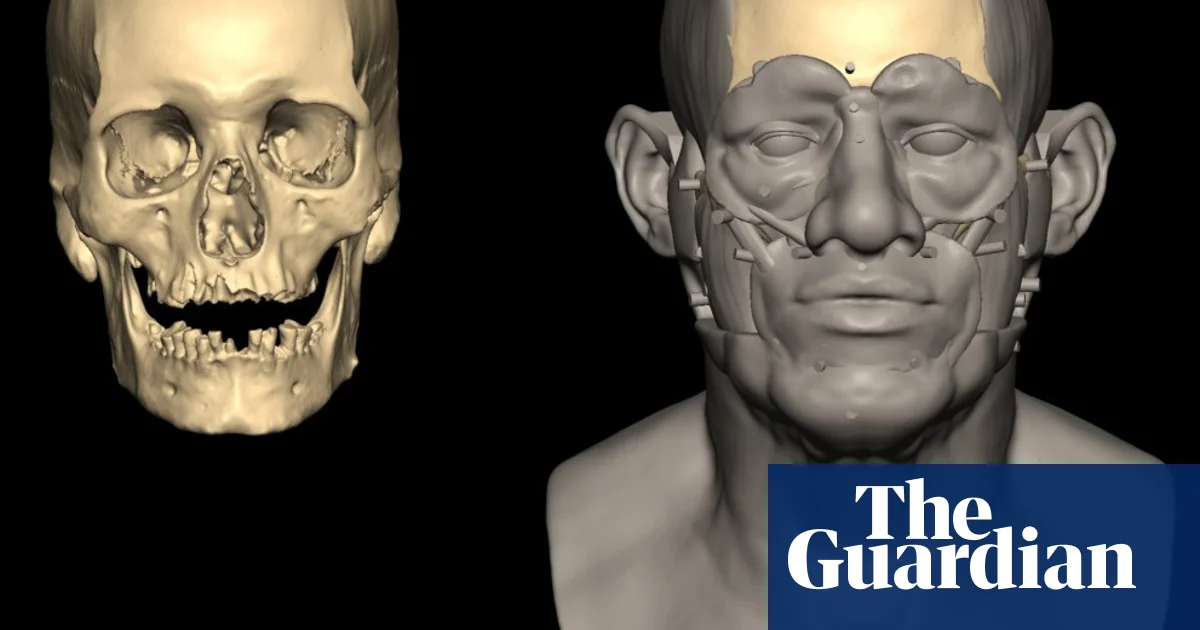
The mystery surrounding a 19th-century skeleton found buried in Connecticut in 1990 has intrigued scientists for decades. The skeleton, believed to be that of a vampire, had its skull and thigh bones arranged in a skull-and-crossbones motif on top of its ribcage. DNA analysis and genealogy research revealed the man's name as John Baker, a 55-year-old who died of tuberculosis in 1826. The positioning of the skeleton suggests that it was believed to prevent the deceased from walking around and attacking the living. AI modeling and 3D scanning were used to reconstruct the man's face, revealing fair skin, brown or hazel eyes, brown or black hair, and some freckles. The discovery sheds light on the "vampire panic" that swept New England in the early 1800s.
Archaeologists in Maryland have discovered the skeleton of a teenage boy who may have been an early colonist who voyaged to the New World around 400 years ago. However, it appears that the boy didn't get a typical burial. When the researchers took a closer look at the skeletal remains of the adolescent, who was of European heritage and likely died between 14 and 16 years of age, they noticed certain physical characteristics that didn't align with regular burial practices, particularly with how the body was positioned. The researchers think that the skeleton's odd body positioning could be attributed to rigor mortis, which is when a body's muscles and joints stiffen after death.
A composite skeleton of a Tyrannosaurus rex, made up of 293 bones from three sites in the US, sold for $5.3m at an auction in Switzerland, below the expected price range of $5m to $8m. The skeleton, named "Trinity," measured 11.6 meters long and 3.9 meters high and was crafted into an open-mouth pose. The skull was particularly rare and well-preserved, with "original bone material" comprising more than half of the restored skeleton. The buyer was a European private collector, according to the auction house.
Anthropologists have discovered a 3-inch long "rope-like" extra bone growth on the skeleton of an adult female in Constância, Portugal. The bone growth was caused by trauma and is the first documented case of myositis ossificans traumatica on the area of the pectineus muscle. The extra bone growth would have been extremely painful and would have made it hard for the woman to move around. The researchers found that the extra bone growth was between 6 weeks and a year old.