

Tag

Sirtuins

All articles tagged with #sirtuins

"Uncovering the Role of Human Cell Proteins in Accelerating Aging"

Originally Published 1 year ago — by Interesting Engineering

Featured image for "Uncovering the Role of Human Cell Proteins in Accelerating Aging"
Source: Interesting Engineering

Scientists have found that an increased level of the protein PAPPA, driven by a family of signaling proteins called sirtuins, accelerates aging in various human cells. This discovery was made by researchers from the Chinese Academy of Sciences, shedding light on the mechanisms behind aging in humans.

"Unlocking the Secrets to Longevity: Advances in Anti-Aging Research"

Originally Published 2 years ago — by Neuroscience News

Featured image for "Unlocking the Secrets to Longevity: Advances in Anti-Aging Research"
Source: Neuroscience News

Scientists at the Boyce Thompson Institute and Cornell University have discovered a new family of metabolites, acylspermidines, which are linked to sirtuins, enzymes involved in aging and disease. This connection could lead to new therapeutic strategies for extending health span and longevity. The findings, which show the presence of these metabolites in both the model organism C. elegans and mammals, suggest a conserved role in lifespan regulation and cell proliferation, offering a deeper understanding of the biochemical pathways involved in aging.

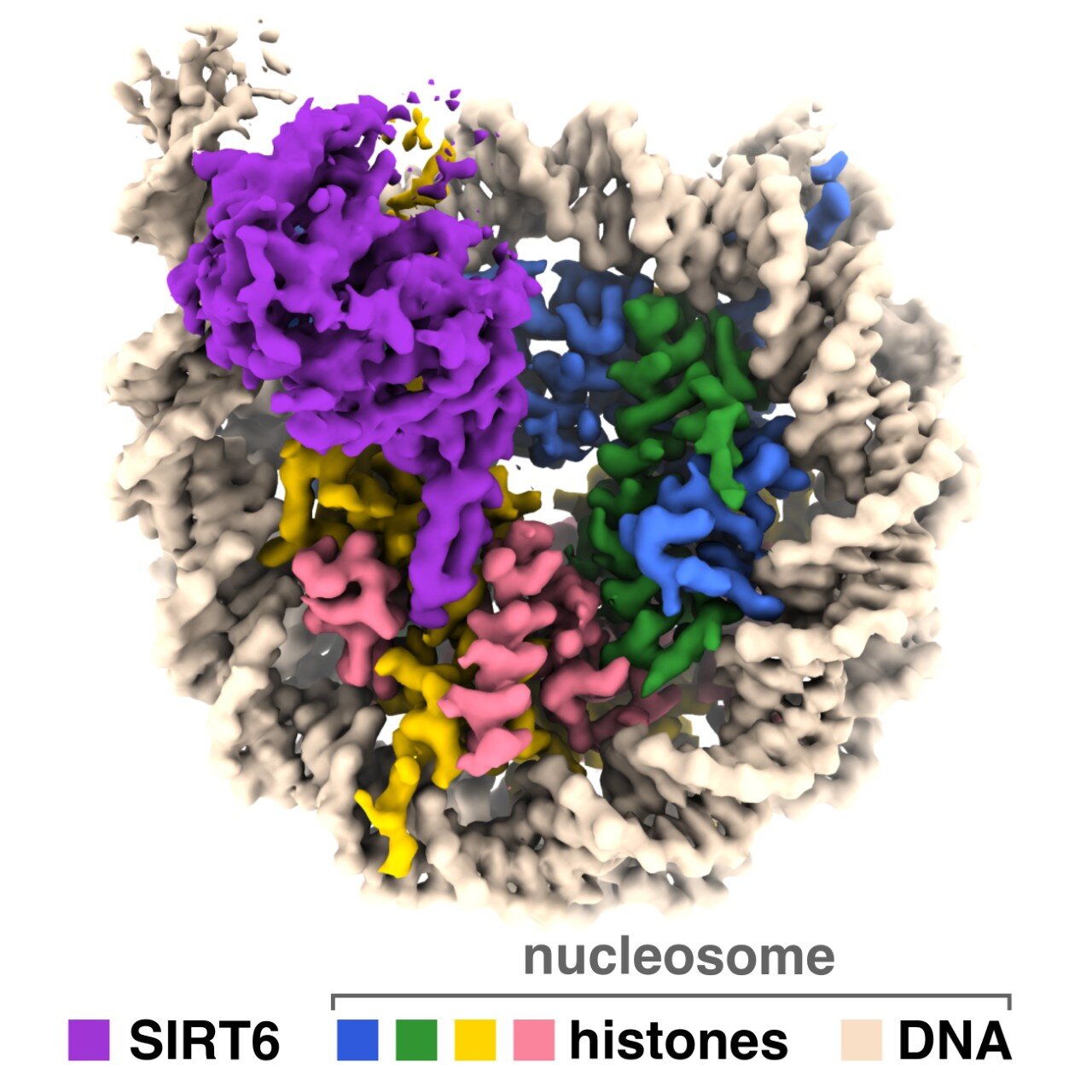
Unraveling the Mechanism of Aging-Associated Enzyme's Interaction with Genetic Material.

Originally Published 2 years ago — by Phys.org

Featured image for Unraveling the Mechanism of Aging-Associated Enzyme's Interaction with Genetic Material.
Source: Phys.org

New research provides insight into how the SIRT6 sirtuin enzyme, which regulates aging and other metabolic processes, accesses genetic material to modulate gene expression within the cell. The enzyme navigates the nucleosome complex to access both DNA and histone proteins, clarifying how it functions in humans and other animals. The researchers identified how SIRT6 positions itself on the nucleosome in order to remove an acetyl group from the K9 position on the histone called H3.