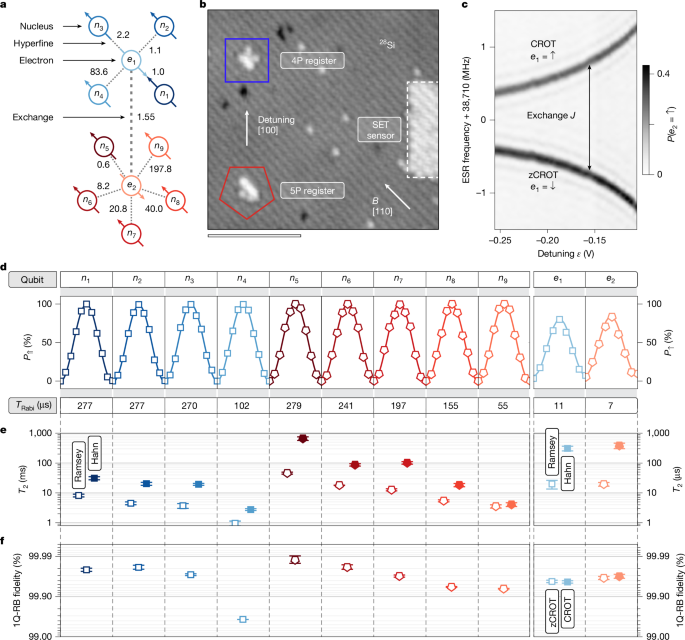
Researchers have developed an 11-qubit atom processor in silicon, demonstrating high-fidelity single- and two-qubit gates, and the ability to generate entanglement across multiple nuclear spins within and between registers, marking a significant step towards scalable quantum error correction in silicon-based quantum processors.
Intel is developing a new quantum processor to catch up with rivals in the field of quantum computing. The company aims to stay close to conventional computers, enabling large qubit counts and potentially revolutionizing industries such as batteries, finance, AI, and encryption. Intel's approach involves using silicon qubits, leveraging its expertise in microprocessor manufacturing. The company is focused on improving the quality of qubits, increasing connectivity, and addressing error correction. While it's too early to determine if Intel will be a market leader, analysts believe their approach shows promise.
Intel is developing a sequel to its Tunnel Falls quantum processor as it aims to surpass rivals in the race for quantum computing. While Intel currently lags behind in terms of qubit count, the company believes its strategy of using silicon qubits and staying close to conventional computing will eventually pay off. The goal is to achieve large qubit counts to enable advancements in areas such as battery technology, finance, AI, and encryption. However, scaling quantum computers to millions of qubits and implementing error correction remains a challenge. Analysts see promise in Intel's approach but note that the quantum computing landscape is still evolving with various competing technologies.