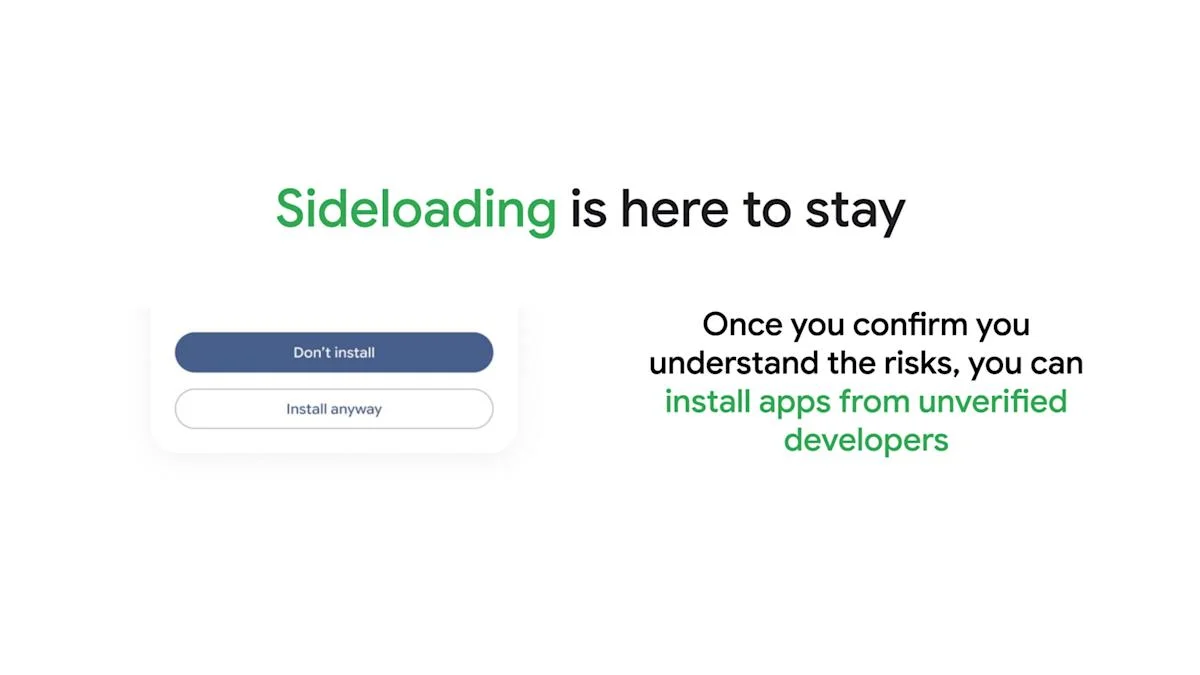
Google is relaxing some of its recent rules for Android app developers, allowing experienced users to sideload unverified apps with warnings, and is working on a simplified registration process for hobbyists and students, though full implementation is still pending.
Google is enhancing Android's app security by requiring developer verification and is developing a new flow that allows experienced users to sideload unverified apps at their own risk, with safeguards against coercion and clear warnings, aiming to balance security with user choice.
Originally Published 2 months ago — by Hacker News
The author defends the right to install software on devices, criticizes Google's restrictions on sideloading via ADB, and discusses broader issues of software freedom, market practices, and the impact of subscription models and proprietary ecosystems. They emphasize that 'sideloading' is a standard, non-deviant activity, and express concern over Google's efforts to limit it, which could threaten user control and open source communities like F-Droid.
Amazon has announced Vega OS, a new operating system for Fire TV devices that replaces Android, promising improved performance and security, but notably removing sideloading capabilities, and currently launching only on the new Fire TV Stick 4K Select.
Google is ending the era of unrestricted sideloading on Android devices by requiring developer verification to enhance security, aligning Android more closely with iOS, and reducing malware risks, though it may impact users who enjoy installing apps from unverified sources.
Originally Published 4 months ago — by Hacker News
The article discusses the increasing restrictions on app installation on Android devices by Google, the debate over the terminology and legality of sideloading, and the broader implications for user freedom, device openness, and market control, with comparisons to other platforms like iOS and alternative operating systems like SailfishOS.
Originally Published 4 months ago — by Hacker News
The article discusses the tension between allowing sideloading of apps on devices and ensuring user safety and privacy. It argues that current policies by companies like Google and Apple, driven by government regulations and control motives, restrict user ownership and freedom, while also questioning the effectiveness of app store vetting and security measures. The debate highlights the trade-offs between security, user autonomy, and societal control, with some advocating for more open systems and others emphasizing the need for safety and regulation.
Google will soon restrict sideloading on Android devices by requiring developer verification to enhance security, aligning Android more closely with iOS. This change aims to reduce malware from unverified sources but will limit the ability to install apps from outside the Google Play Store, marking the end of one of Android's last major differences from iOS.
Google is ending the ability to sideload unverified apps on Android devices to enhance security and ensure all app developers are verified, marking a shift away from a key feature that distinguished Android from iOS.
The article discusses Google's upcoming requirement for Android developers to register and verify their identity, which will restrict sideloading of apps from unknown sources, effectively turning Android into a more closed platform similar to iOS, and raising concerns about the loss of the open, customizable nature of smartphones.
Google is set to require developer verification, including ID verification, for all Android apps, including sideloaded ones, starting in 2025-2027, aiming to enhance security but potentially limiting open-source and hobbyist development.
Google is implementing a new 'Developer Verification' system to verify all Android developers, aiming to reduce malware from sideloaded apps outside Google Play. The program will start in October 2023 for early access, become mandatory in 2026 for certain countries, and globally in 2027, primarily affecting certified devices from major manufacturers. Non-certified devices will not be subject to these restrictions.
Google is implementing new security measures requiring Android developers distributing apps outside the Play Store to verify their identities, starting in select countries in September 2024 and expanding globally by 2027, to enhance security and prevent malicious apps.
Google will require developers to verify their identity to enable sideloading of unverified Android apps, aiming to reduce malware from internet sources. The verification process, similar to an ID check, will be implemented starting late 2026 in select countries with a global rollout planned later.
Google will start blocking the installation of unverified Android apps on certified devices from 2026, requiring developers to verify their identities through a new console, as part of broader changes influenced by antitrust rulings and efforts to enhance security, potentially impacting app distribution and user choice.