Dan Ives considers Apple one of the top AI stocks for 2026 despite its 'invisible' AI strategy, emphasizing its potential to monetize AI through existing user base and shareholder returns, while noting its distinct approach compared to other tech giants.
Chevron is shifting its strategy to prioritize shareholder returns and cost efficiency over production growth, aiming for modest volume increases and significant free cash flow growth, while reducing capital expenditure and continuing share buybacks, contrasting with ExxonMobil's investment approach.
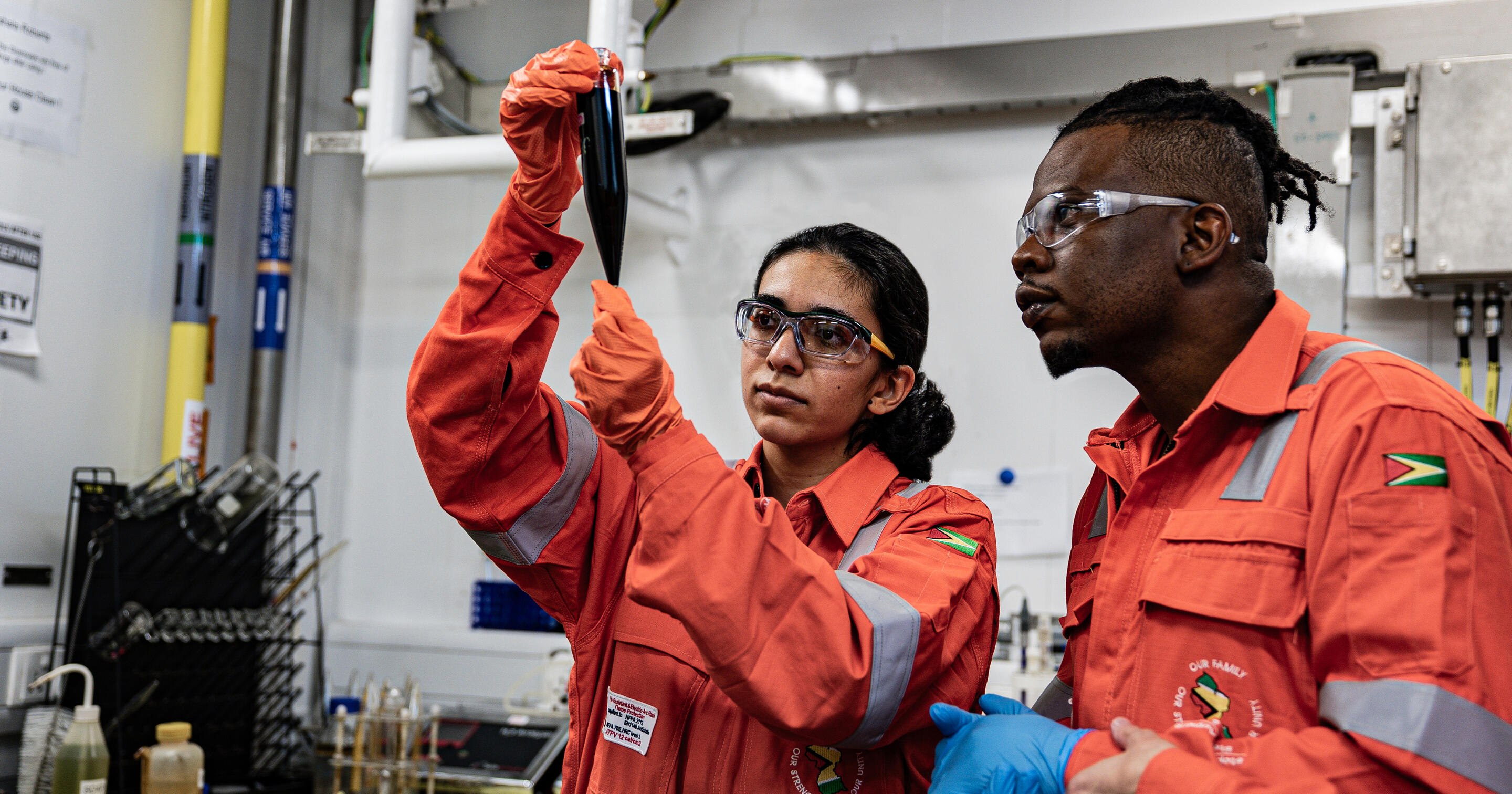
ExxonMobil reported strong Q3 2025 earnings of $7.5 billion, with record production in Guyana and Permian, ongoing project startups, and increased shareholder dividends, despite year-to-date earnings decline due to market factors. The company continues to focus on growth, cost savings, and technological innovation.
Broadcom's stock is approaching record highs, driven by strong growth prospects in AI chips, networking hardware, and potential share buybacks and acquisitions, leading analysts to raise their price targets and maintain a bullish outlook.
AT&T projects over $18 billion in free cash flow by 2027, driven by expanding its 5G and fiber services across the U.S. The company plans to double fiber internet availability, enhance its 5G network, and offer bundled discounts, aiming to reach over 50 million locations with fiber by 2029. AT&T also plans to return more than $40 billion to shareholders through dividends and share repurchases over the next three years, with annual capital investments around $22 billion. The company raised its 2024 earnings forecast and expects low-single-digit annual service revenue growth from 2025 to 2027.
AT&T has announced a strategic plan focused on expanding its 5G and fiber networks to drive sustainable growth and enhance shareholder returns. The company aims to reach over 50 million fiber locations by 2029 and modernize its 5G network by 2027. AT&T plans to return more than $40 billion to shareholders through dividends and share repurchases over the next three years, supported by a $50 billion financial capacity. The strategy includes significant capital investments and a focus on customer-centric services to maintain its leadership in connectivity.
Asian countries are adopting a Japan-inspired strategy called 'Value Up' to enhance shareholder returns, corporate governance, and market valuations. This approach, which has contributed to Japan's stock market success, is being implemented by governments and regulators across the region, including in South Korea and India.
IHG, the owner of hotel chains like Holiday Inn and Crowne Plaza, announced plans to return over $1 billion to shareholders in 2024 after a successful 2023, with annual room revenue and adjusted operating profit exceeding $1 billion for the first time. The company aims for high single-digit growth in fee revenue by increasing revenue per room and the number of hotels annually, and raised its final dividend by 10% while launching a new $800 million share buyback program. CEO Elie Maalouf highlighted the long-term demand drivers in the travel industry and expressed confidence in the brand portfolio's ability to drive revenue and system size growth.
Chevron's fourth-quarter profits fell due to impairment charges, but the company still managed to return a record $23.6 billion to shareholders in 2023 through dividends and share buybacks. Despite a 40% profit decline, Chevron raised its quarterly dividend by 8% to $1.63. The company's stock rose about 1% in early trading. Chevron's net income fell 65% to $2.3 billion, with U.S. oil and gas assets recording a loss of $1.35 billion. The company reported an adjusted profit of $3.45 per share, beating Wall Street's estimate.
Meta Platforms Inc. surprised Wall Street with its first dividend, signaling a monumental move in Silicon Valley that could prompt other tech giants like Amazon and Alphabet to follow suit. The 50 cents-a-share quarterly dividend, set to begin in March, positions Meta alongside Apple and Microsoft as Big Tech dividend payers. The announcement led to a surge in Meta's stock, reflecting investor enthusiasm. While the move may enhance Meta's standing on Wall Street, it also signifies the company's transition to a more mature, balanced approach to shareholder returns.
Deutsche Bank reported a fourth-quarter net profit of 1.3 billion euros, surpassing expectations, and announced plans for 1.6 billion euros in shareholder returns for 2024. The bank also revealed a 50% increase in share buybacks and dividends, with a focus on operational efficiency and cost reduction. CEO Christian Sewing emphasized the bank's strong performance and capital generation, expressing confidence in meeting 2025 targets. Despite merger speculation, Sewing stated that acquisitions were not a priority for the bank.
Visa Inc reported a 9% increase in net revenues to $8.6 billion and a 17% rise in GAAP net income to $4.9 billion in Q1 2024. The company also saw an 8% growth in payments volume and a 9% increase in processed transactions. Visa returned $4.4 billion to shareholders through repurchases and dividends. The company's strategic acquisitions and focus on operational efficiency position it well for future growth in the dynamic payments landscape.
Shell plans to increase shareholder distributions to 30% to 40% of cash flow from operations, up from 20% to 30% previously, including raising the dividend per share by an expected 15% from the second quarter and executing at least $5 billion of share buybacks in the second half of the year. The company will maintain oil production at current levels through to the end of the decade as part of a bid to generate more cash from its oil division, while simultaneously reiterating its commitment to climate targets. Shell's focus on performance and capital discipline comes as the company seeks to close the growing gap in valuations between European and U.S. oil majors.
Petrobras reported strong Q1'23 results, beating market expectations despite a slight decline in revenue and gross profit. The company proposed another large dividend distribution for Q1'23 and signaled intentions to add share buybacks to its shareholder return policy. Debt remains manageable, and the market may start reducing the political risk discount as fears of radical changes in the company's governance seem largely exaggerated. Petrobras remains deeply undervalued compared to its peers, presenting an attractive entry point for investors willing to bear the risks.