"Unraveling the Sensory Secrets of Hummingbird Hawk Moths' Proboscis Control"
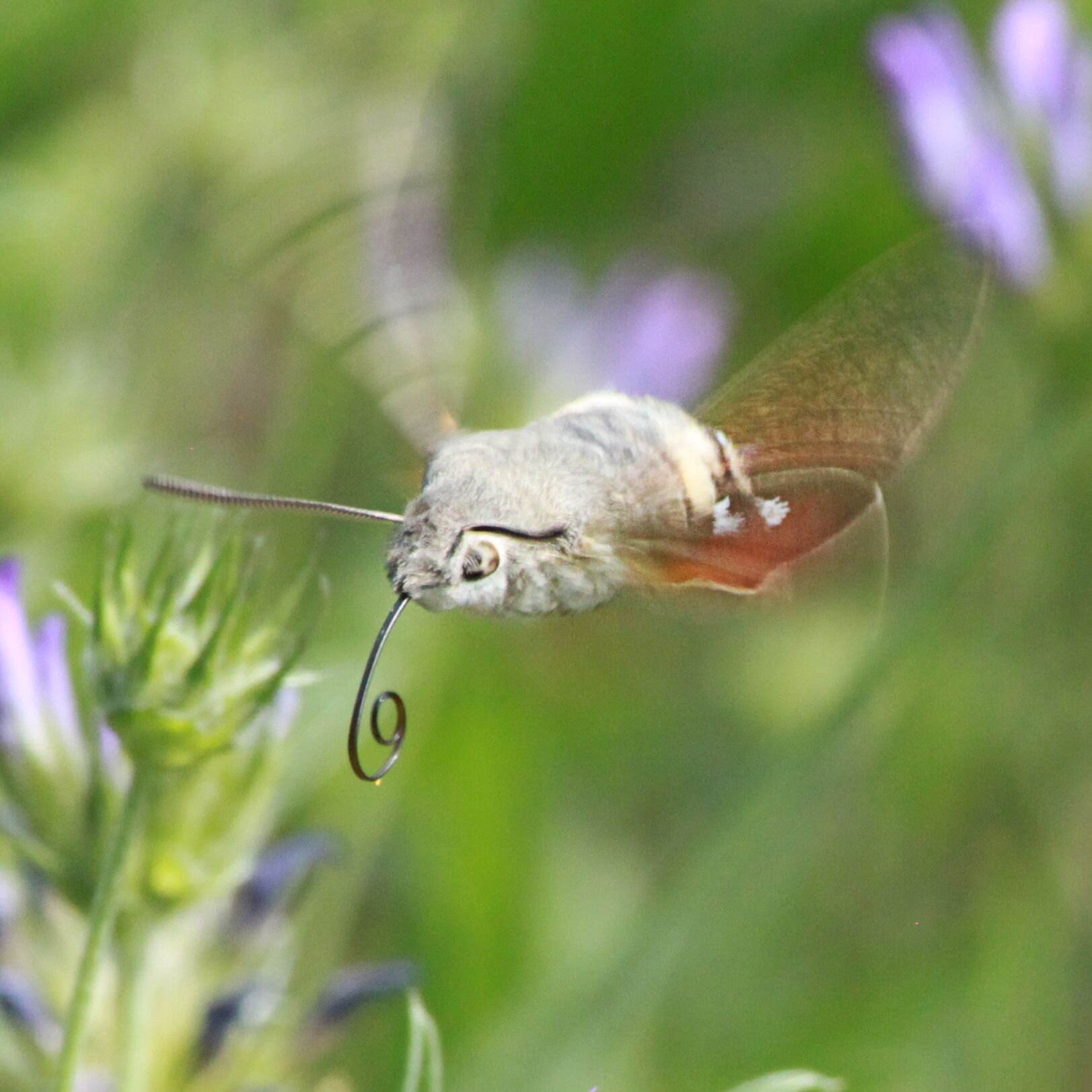
Biologists from the University of Konstanz have studied the sensory information that hummingbird hawk moths use to control their long proboscis when searching for nectar. They found that the moths rely on their sense of sight to precisely move and adjust their proboscis, similar to how humans use visual feedback to grasp objects. High-speed camera recordings revealed that the moths primarily move their entire bodies to control the rough positioning of the proboscis, while smaller movements of the proboscis itself are used for precise targeting. This real-time coordination between visual input and proboscis movement is computationally complex, especially considering the moths' relatively simple nervous system, making them an interesting model for research into visual control of appendages and potential applications in robotics.