Instagram's new Map feature allows users to share their real-time location with selected friends, but privacy experts are concerned about potential safety risks and data exposure, especially for younger users. The feature is off by default and requires user opt-in, but confusion and social pressures may lead to unintended sharing. Experts advise caution when using location-sharing features on social media.
Methylene blue, a synthetic dye with historical medical applications, is being promoted online as a nootropic to enhance cognitive function, but current evidence supporting its benefits is limited and mostly from animal studies. While it has some medical uses like treating certain blood disorders and protecting mitochondria, its safety profile includes serious risks such as interactions with medications and potential harm during pregnancy. Larger, more comprehensive studies are needed to confirm its efficacy and safety for brain health.
The FAA's outdated and underfunded air traffic control system caused significant outages at Newark Airport, risking safety and causing delays, highlighting the urgent need for modernization amidst ongoing systemic issues.
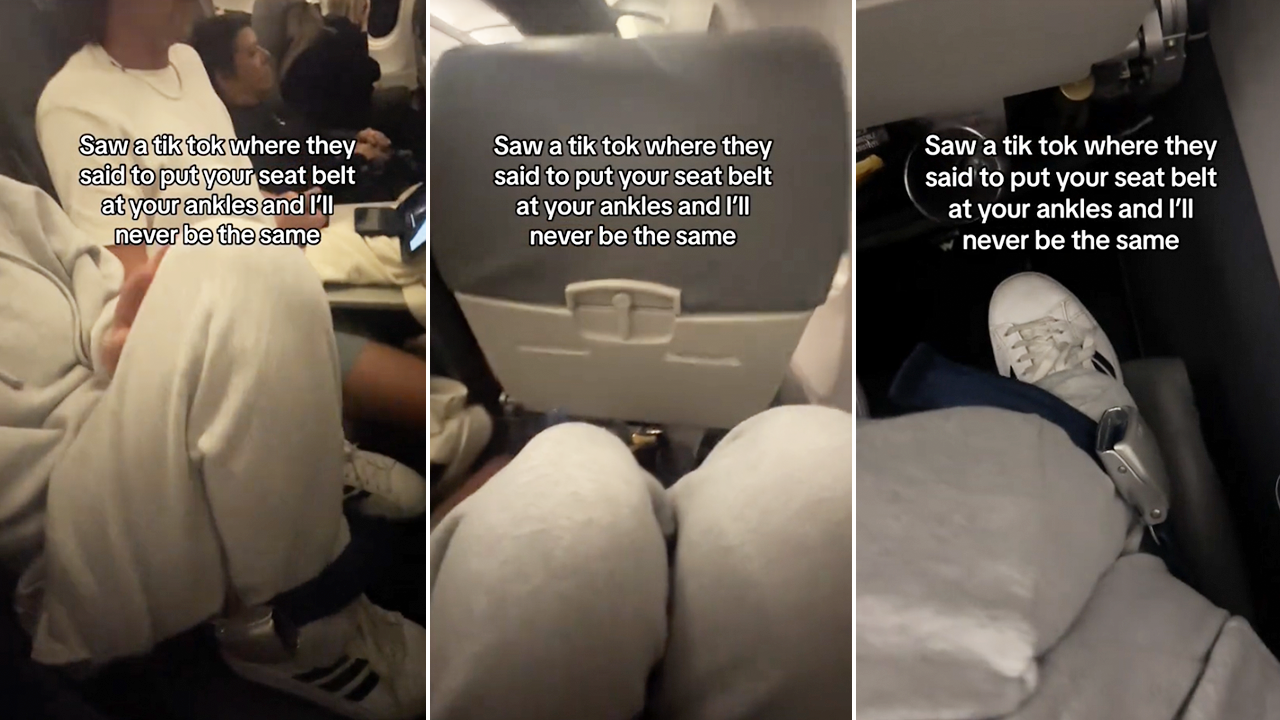
A new TikTok trend has airplane passengers wrapping their seat belts around their ankles for extra comfort, but experts warn that it's "incredibly dangerous." While some TikTok users find the trend smart, flight attendants and travel experts caution against it, emphasizing that in the event of turbulence, having the seat belt secured around the waist is crucial for safety. The trend could lead to life-threatening situations, poor circulation, and even blood clots, making it a risky choice for long-haul flights.
The Southeastern Conference has fined LSU $100,000 for fans storming the court after the Tigers' victory over No. 17 Kentucky, citing safety risks and a revised access to competition area policy, with fines escalating for subsequent offenses.
After a series of court-storming incidents in college basketball, including a collision between Iowa star Caitlin Clark and an Ohio State fan, experts are calling for an end to the tradition due to safety risks. ESPN analyst Jay Bilas and others advocate for fans to be benched, suggesting consequences for those who participate. Security measures and fines have been implemented, but concerns remain about the potential for negative outcomes and the need for stricter enforcement to prevent fan-player altercations.
Court storming incidents have come under increased scrutiny following the collision between Iowa star Caitlin Clark and an Ohio State fan. ESPN analyst Jay Bilas has called for an end to the tradition, emphasizing the safety risks and the need for stiffer penalties. Instances of court storming have continued, prompting discussions about the effectiveness of fines and the need for clearer policies and consequences for violators. Experts suggest measures such as facial recognition technology and improved security to prevent court storming, while some coaches and officials express concerns about the potential for escalated emotions and conflicts.
Honda is recalling over 2.5 million vehicles in the U.S. due to a fuel pump defect that can lead to engine failure or stalling while driving. The improperly molded fuel pump impeller used in certain Acura and Honda vehicles can deform and interfere with the fuel pump body, resulting in an inoperative fuel pump. This recall poses crash and injury risks, although no incidents have been reported so far. Honda will replace the fuel pumps at no cost in separate phases, with the first batch of owner notification letters being sent in February.
The Federal Aviation Administration (FAA) plans to form a panel to investigate the potential risks posed by exhaustion among air traffic controllers, following a series of close calls this year. The FAA acknowledges the seriousness of the fatigue issue and aims to identify and mitigate any risks associated with it. The panel's formation comes in response to a New York Times investigation that revealed a nationwide shortage of air traffic controllers, resulting in an overworked and demoralized workforce prone to dangerous mistakes. The FAA is also addressing the staffing shortage and working to hire more controllers.
The FIA has allowed Formula 1 drivers to conduct extra practice starts at the pit exit in Las Vegas after concerns were raised about the lack of practice due to red flags during FP1 and FP3. Teams were given permission to carry out practice starts during their final reconnaissance laps and were also allowed to cross the pit exit white line if necessary. Some teams expressed concerns about the start and the low level of grip on the track, but overall, the focus is on ensuring a good launch and surviving the first set of corners.
Ketamine, a decades-old surgical drug now used as a psychedelic therapy, is increasingly being prescribed for hard-to-treat pain, depression, anxiety, and other conditions. However, there is limited research on its effectiveness against pain, and experts are concerned about the potential for overprescribing a drug with significant safety and abuse risks. Patients receiving ketamine have reported side effects such as hallucinations and visual disturbances, and it has not been shown to reduce opioid prescribing. The booming ketamine industry, fueled by venture capital investors, for-profit clinics, and telehealth services, operates in a regulatory "wild west" with little oversight.
Ketamine, a decades-old surgical drug known for its psychedelic effects, is increasingly being prescribed as a treatment for hard-to-treat pain, depression, anxiety, and other conditions. However, there is limited research on its effectiveness against pain, and some experts are concerned about the potential for overprescribing a drug with significant safety and abuse risks. Patients receiving ketamine have reported side effects such as hallucinations and visual disturbances, and it has not been shown to reduce opioid prescribing rates. The booming ketamine industry, driven by for-profit clinics and telehealth services, has led to shortages of manufactured ketamine and a rise in compounded versions. While there is more evidence for ketamine's use in depression, its use for pain is not well-supported by scientific literature. The current regulatory landscape is described as a "wild west," with little oversight over prescribing practices and compounded versions of ketamine.
Ketamine, a decades-old surgical drug known for its psychedelic effects, is increasingly being prescribed as a treatment for hard-to-treat pain, depression, anxiety, and other conditions. However, there is limited research on its effectiveness against pain, and experts are concerned about the potential for overprescribing a drug with significant safety and abuse risks. Patients receiving ketamine have reported side effects such as hallucinations and visual disturbances, and it has not been shown to reduce opioid prescribing rates. The booming ketamine industry, driven by for-profit clinics and telehealth services, operates in a regulatory gray area, with compounded versions of the drug being sold without FDA approval. Despite warnings from the FDA, the agency has limited leverage over physicians promoting ketamine, and it is unlikely that regulators will take further action in the near future.
Shipbroker Poten & Partners warns that Russia's use of non-ice class tankers to increase oil flows through the Arctic via the Northern Sea Route (NSR) compromises safety. While the NSR offers time and fuel savings, the unpredictable weather and potential for quick freeze-ups pose significant risks. Ice-class vessels and ice breaker escorts are preferred for the NSR passage, but the use of non-ice class tankers has raised concerns about oil spills and environmental hazards. The decision to allow non-ice class vessels reflects Russia's willingness to take risks to expand NSR shipments and maintain oil revenues despite sanctions.
A detailed investigation into the death of a 27-year-old man with Duchenne muscular dystrophy who received a CRISPR-based gene therapy treatment suggests that he likely died from an adverse effect of the virus used to deliver the therapy. The virus, known as adeno-associated virus (AAV), is generally considered benign but can cause side effects and, in rare cases, deaths at high doses. The patient experienced an acute respiratory distress syndrome (ARDS) triggered by an immune response to the virus. The study highlights concerns about giving high doses of AAV, particularly to older patients, and underscores the need for safer delivery methods in gene therapy.