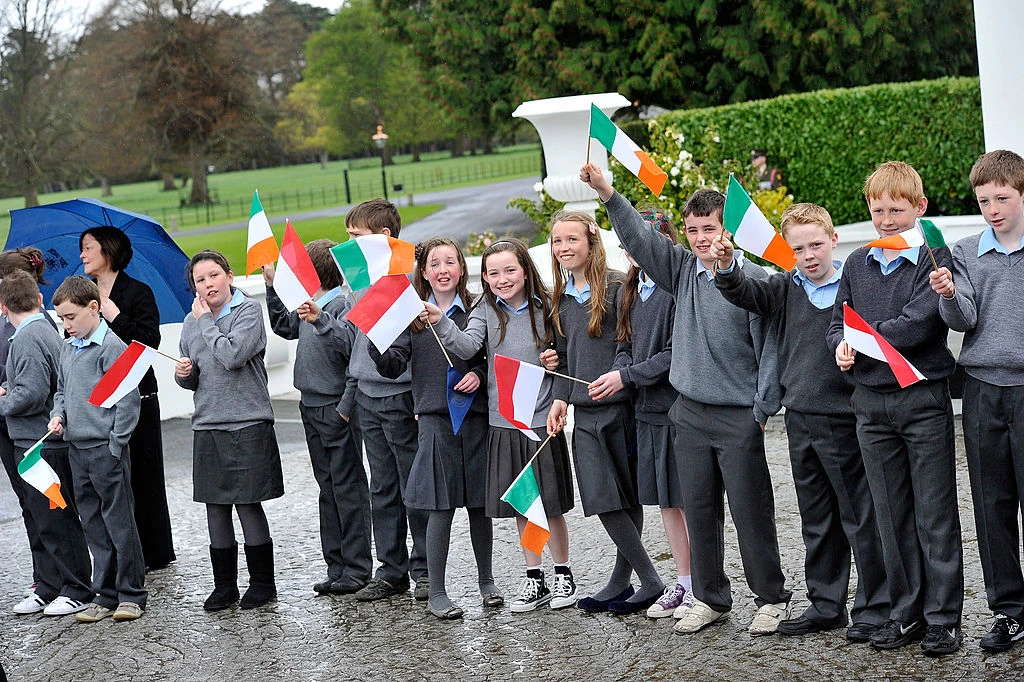
The UK Supreme Court ruled that Christian religious education in Northern Ireland schools is unlawful due to its lack of objective, critical, and pluralistic framework, sparking responses from religious leaders who emphasize Christianity's foundational role in Western society and call for a balanced approach to religious education. The ruling affects non-Catholic schools' curricula but not Catholic schools, prompting discussions on religious values and education reform.
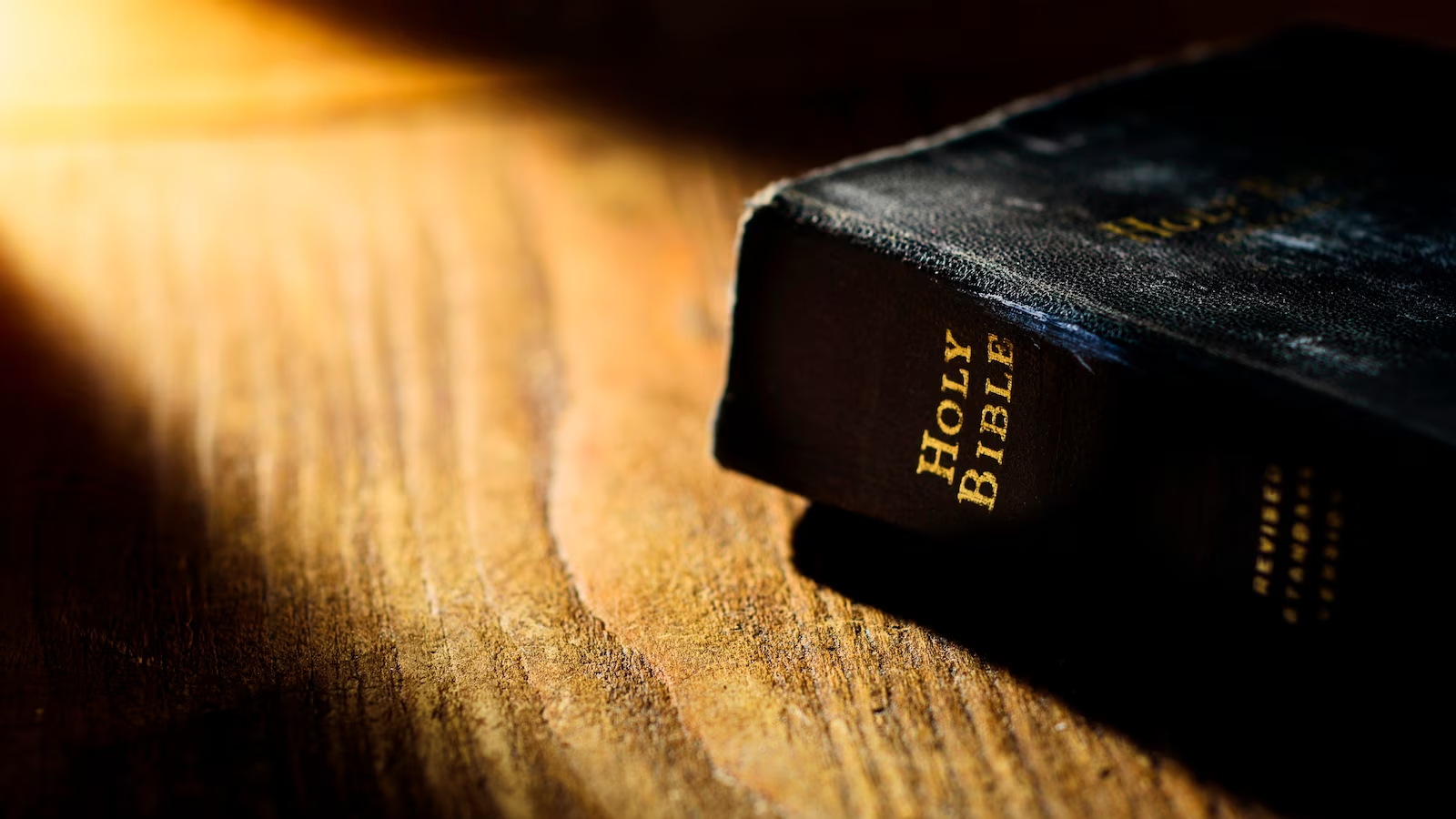
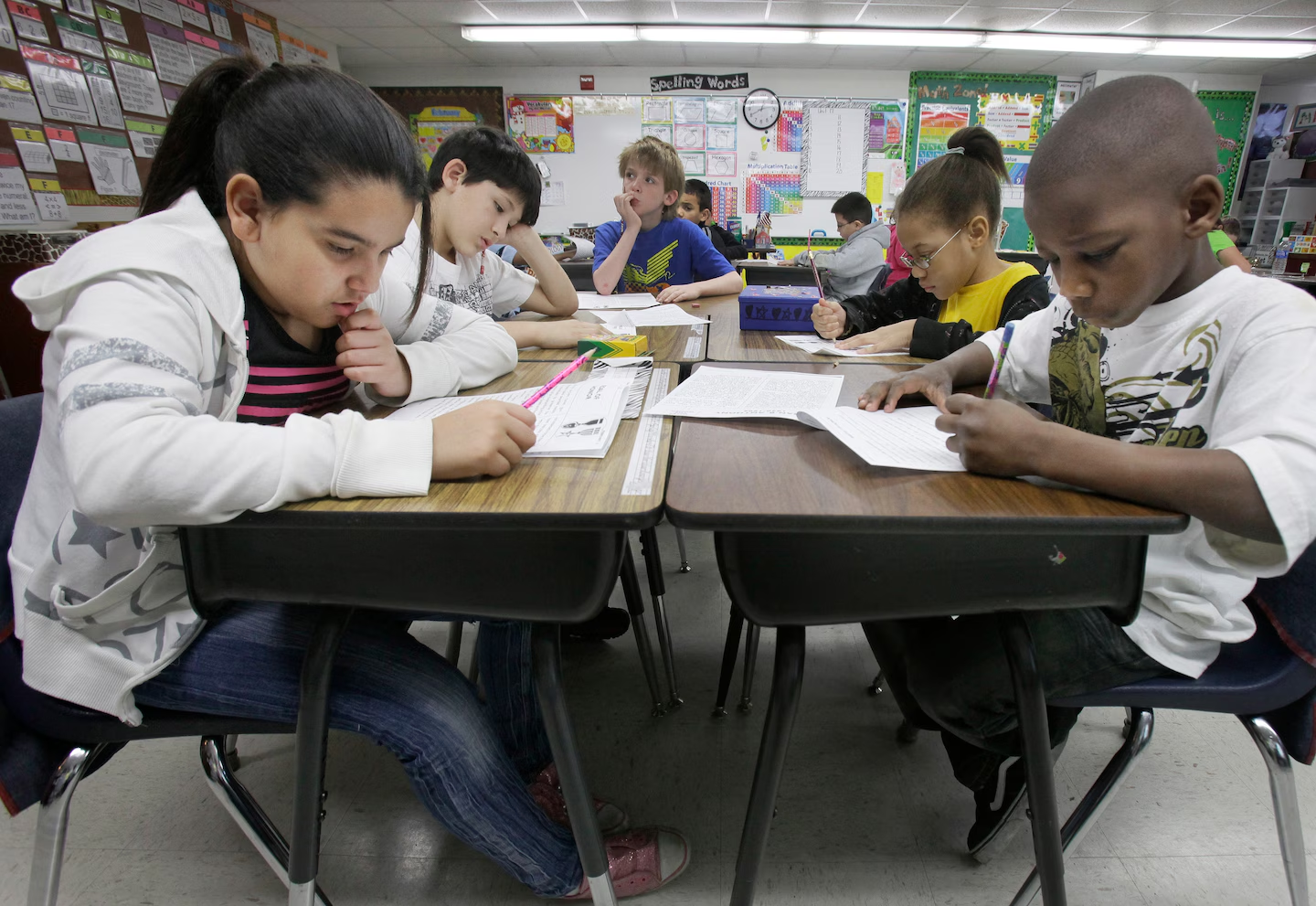
The Texas Board of Education has approved a new optional K-5 curriculum that incorporates Bible teachings, including lessons on Moses and the Good Samaritan, developed by the state under the Bluebonnet Learning program. While supporters argue it provides historical context and moral values, critics, including the Freedom From Religion Foundation, claim it violates the First Amendment by promoting Christian instruction in public schools. Texas Governor Greg Abbott supports the initiative, emphasizing its role in understanding historical events. The curriculum has sparked debate over the separation of church and state in education.
The Texas education board has preliminarily approved an optional elementary school curriculum that includes Bible-based lessons, sparking debate over the promotion of Christian beliefs in public schools. The 8-7 vote, which will be finalized on Friday, follows a bill signed by Governor Greg Abbott requiring the creation of a statewide curriculum. Supporters argue it provides a comprehensive understanding of historical events, while opponents claim it violates the separation of church and state. If approved, districts can adopt the curriculum in 2025, with incentives offered per student.
The approval of the first religious charter school in the US, St. Isidore of Seville Catholic Virtual School in Oklahoma, is challenging the definition of charter schools as strictly public schools. While the school's supporters argue that excluding religious groups amounts to discrimination, opponents argue that charter schools are public schools and should not discriminate. The move has also sparked debate within the charter school movement itself, with some arguing that charter schools are more like private actors. The issue may ultimately be decided by the US Supreme Court, which is weighing whether to take up a case on directing taxpayer money to private religious schools.