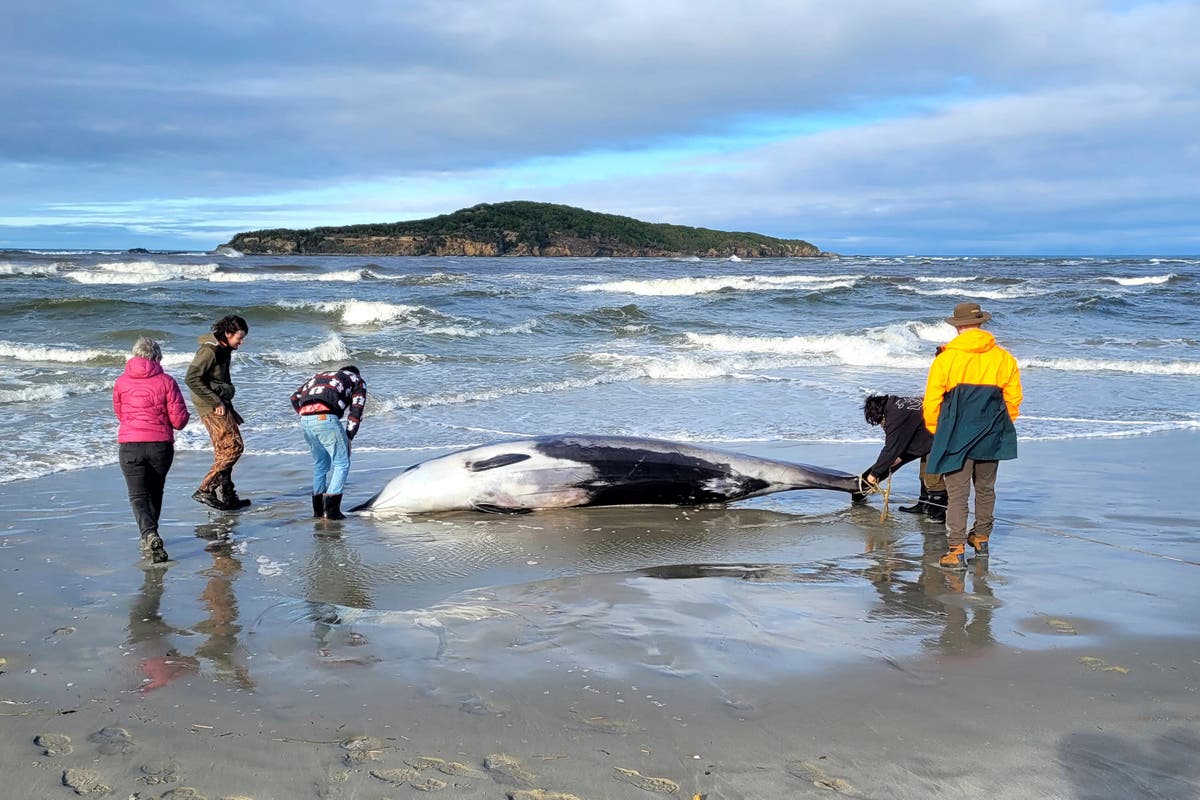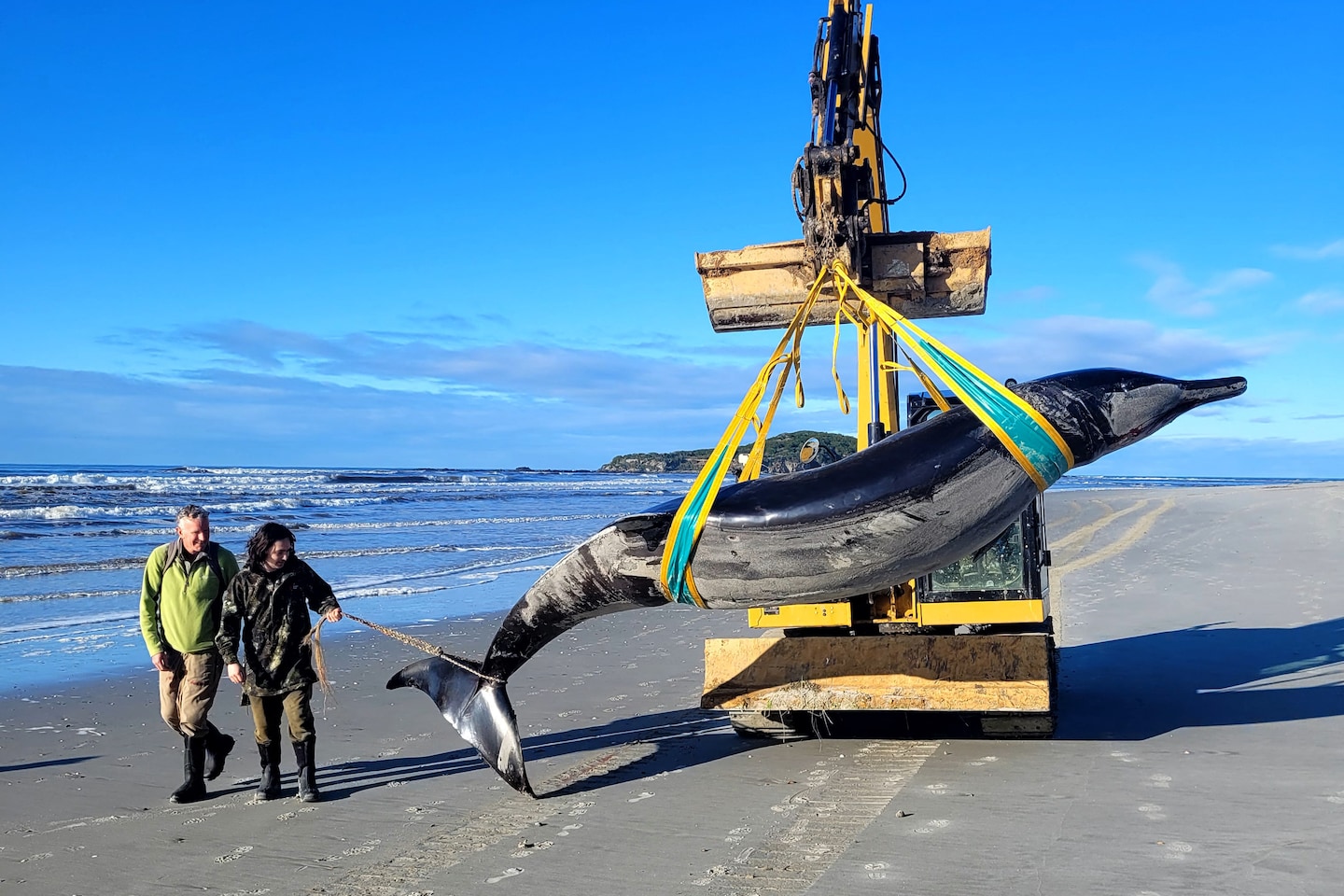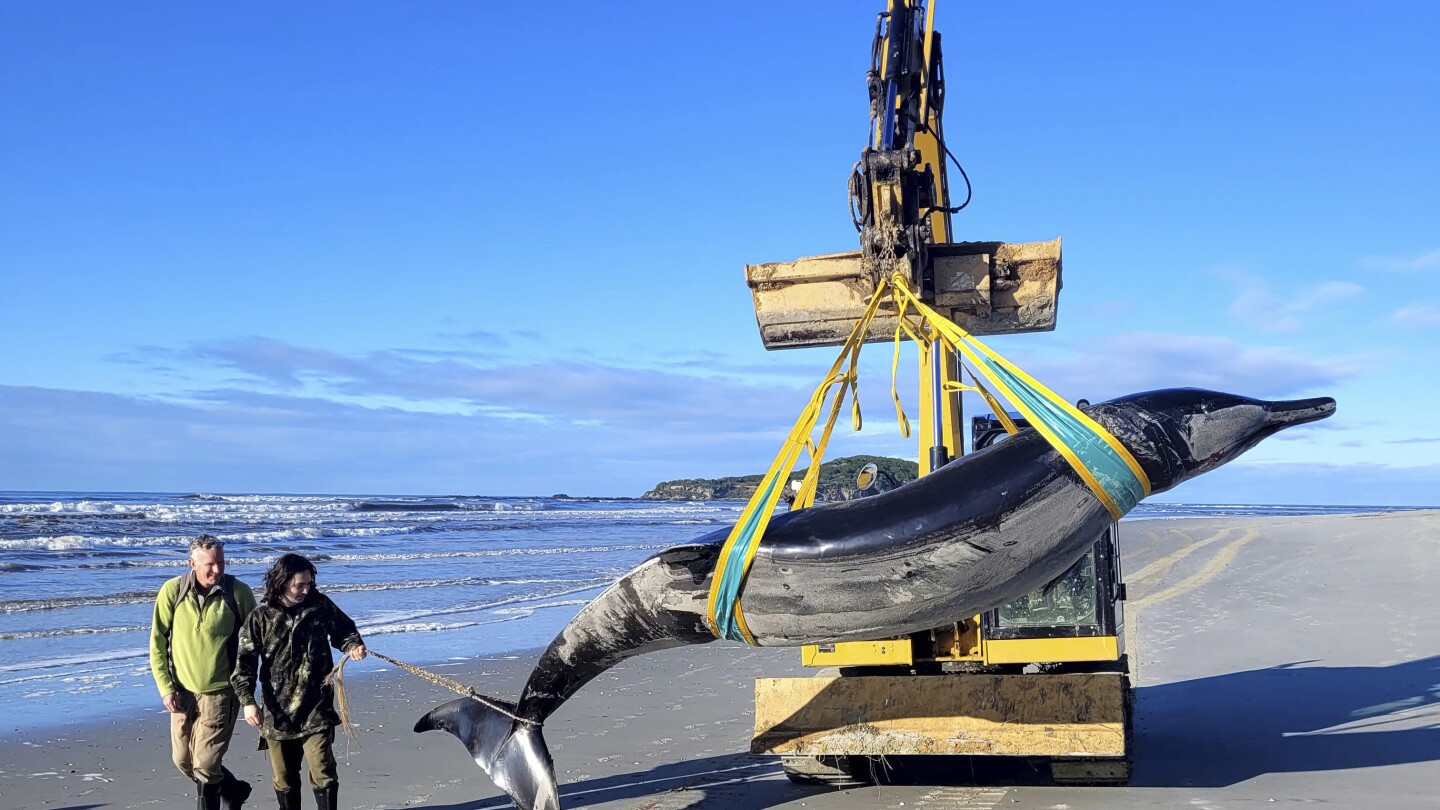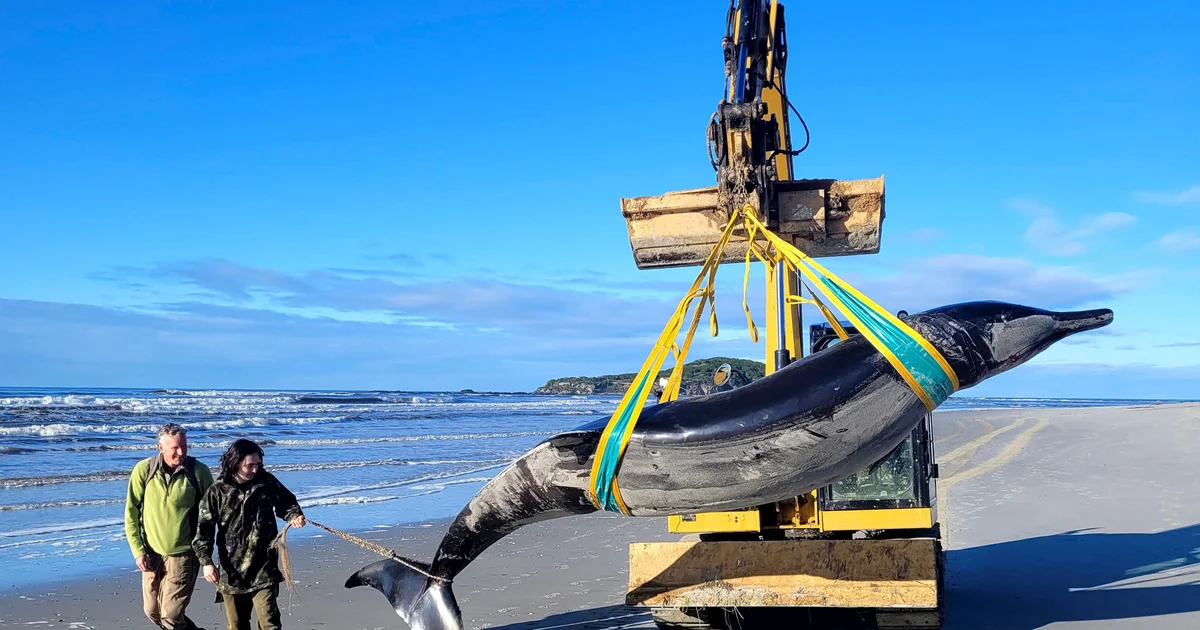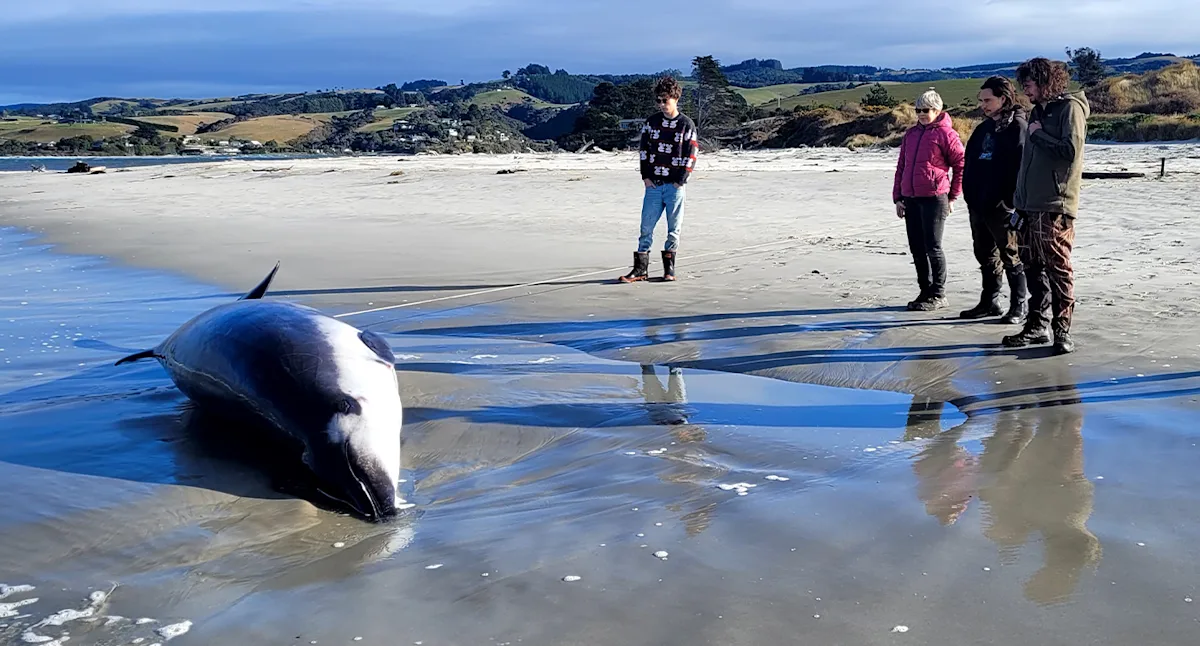
Scientists in New Zealand may have made a breakthrough in studying the world's rarest whale, the spade-toothed whale, after a specimen washed ashore on Otago beach. This discovery could provide unprecedented insights into the species, which has never been seen alive and is known from only a few previous finds. Genetic testing and collaboration with local Māori iwi will help confirm the whale's identity and allow for detailed scientific examination.
Scientists in New Zealand are excited about a potential sighting of the elusive spade-toothed whale, a species rarely seen and never observed alive. If confirmed, this would be only the seventh specimen ever studied. The whale's remains are being analyzed to learn more about its characteristics and diet, with the involvement of local Maori people due to the whale's cultural significance. This discovery highlights the vast unknowns of ocean life.
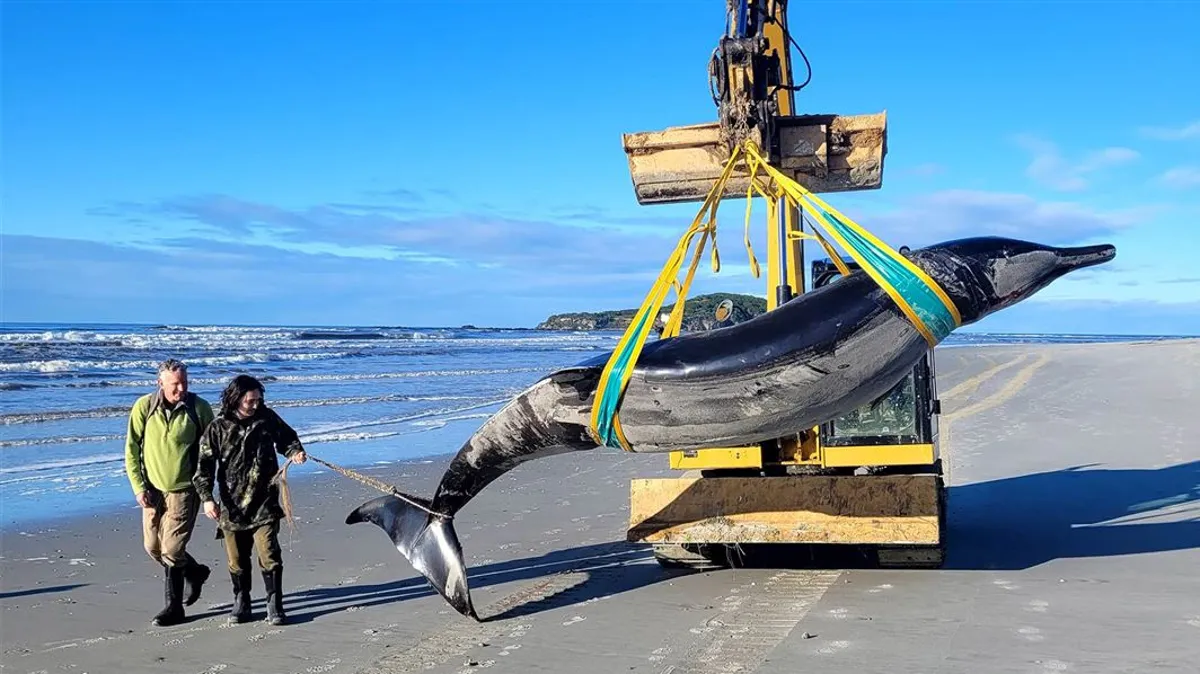
A sea creature that washed up on a New Zealand beach may be the world's rarest whale, the spade-toothed whale, with only six specimens ever studied. The 16-foot male whale's remains are being preserved while genetic tests are conducted to confirm its species. This discovery could provide significant scientific insights into the poorly understood species.
A dead whale found on a New Zealand beach has been identified as a spade-toothed whale, one of the world's rarest species, never seen alive. The five-meter-long whale's identity was confirmed through its physical characteristics, and DNA testing is underway. This discovery could provide crucial information about the species, with only six samples documented worldwide. Local Māori communities will participate in deciding the whale's fate, as whales are considered sacred treasures.
A rare spade-toothed whale, the world's least observed whale species, has washed up on a New Zealand beach, offering scientists a unique opportunity to study the elusive creature. Identified by its distinct physical features, the whale's discovery could provide groundbreaking insights into its diet, habitat, and population. The specimen has been preserved for detailed examination, with local Māori iwi involved in the process. Genetic testing to confirm the whale's identity may take months.
A rare spade-toothed whale, the world's rarest whale species, may have washed up on a New Zealand beach, offering scientists a unique opportunity to study the elusive creature. Identified by its distinct features, the whale's discovery could provide crucial insights into its diet, habitat, and population. The specimen has been preserved for examination, with local Māori iwi involved in the process, highlighting the cultural significance of whales in New Zealand.
A rare spade-toothed whale, the world's rarest whale species with no live sightings ever recorded, has washed up on a beach in New Zealand. This discovery offers a unique opportunity for scientists to study the elusive creature, potentially providing groundbreaking insights into its diet, habitat, and behavior. The whale has been transported to cold storage for examination, with local Māori iwi involved in the process. Genetic testing to confirm the whale's identification could take months.
A rare spade-toothed whale, one of the world's least known and most elusive marine mammals, has washed up on a beach in New Zealand's South Island. This discovery could provide scientists with a unique opportunity to study the species, which has never been seen alive and is known from only a few specimens. The whale has been preserved for examination, and genetic testing will confirm its identification. This event could lead to significant scientific breakthroughs regarding the whale's diet, habitat, and population.
A rare spade-toothed whale, one of only six ever examined, was found washed up near a remote fishing village in Otago, New Zealand. The whale's body has been placed in cold storage for further study, with the discovery being hailed as significant for both scientific and cultural reasons.
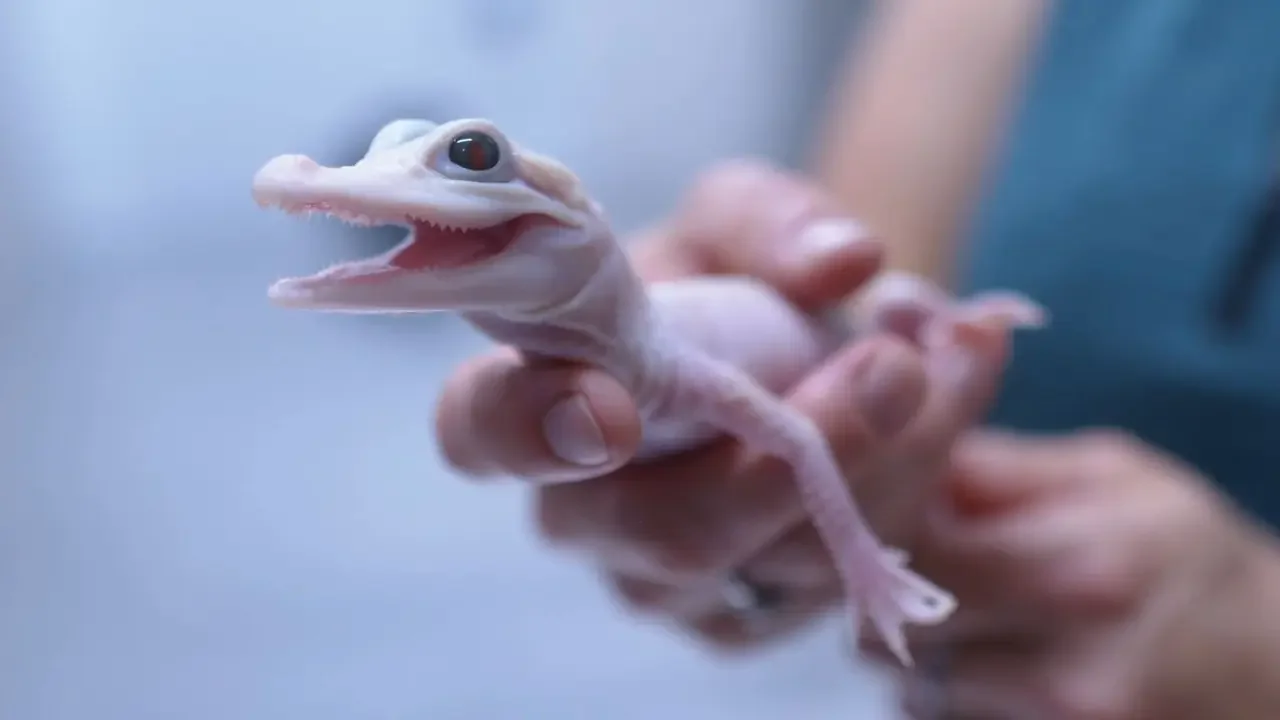
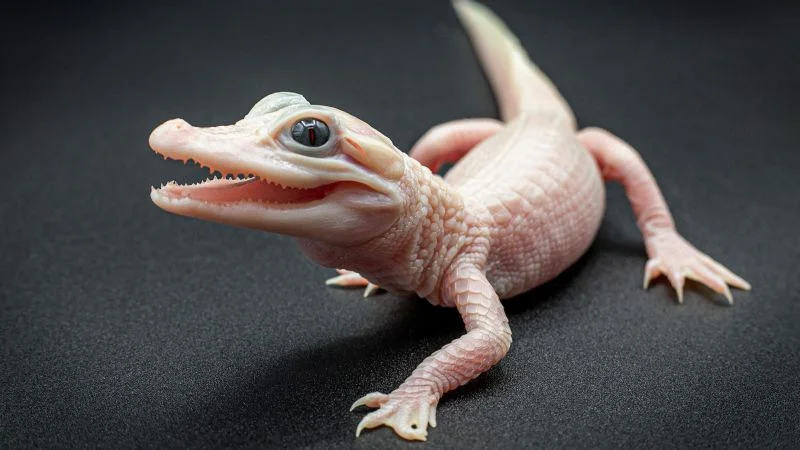
Gatorland in Florida has announced the birth of an extremely rare leucistic white alligator, making it one of only eight in the world. This is the first-ever alligator of its kind to be born in human care, solidifying Gatorland's position as the owner of the largest collection of rare leucistic alligators globally. Leucistic alligators have white coloration with patches of normal coloration and blue eyes, and they require protection from direct sunlight due to their lack of pigmentation. The baby alligators will be displayed to the public in early 2024, and Gatorland is seeking help from social media users to name them.
Gatorland in Orlando has announced the birth of an extremely rare white leucistic alligator, the first of its kind born in human care and one of only eight known in the world. Leucistic alligators have a white coloration with patches of normal coloration and blue eyes, distinguishing them from albino alligators. The baby alligator, a female, is in good health and will be on display at the park next year. The American alligator population, once endangered, now numbers around 5 million.
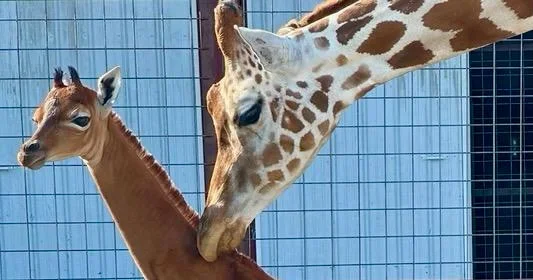
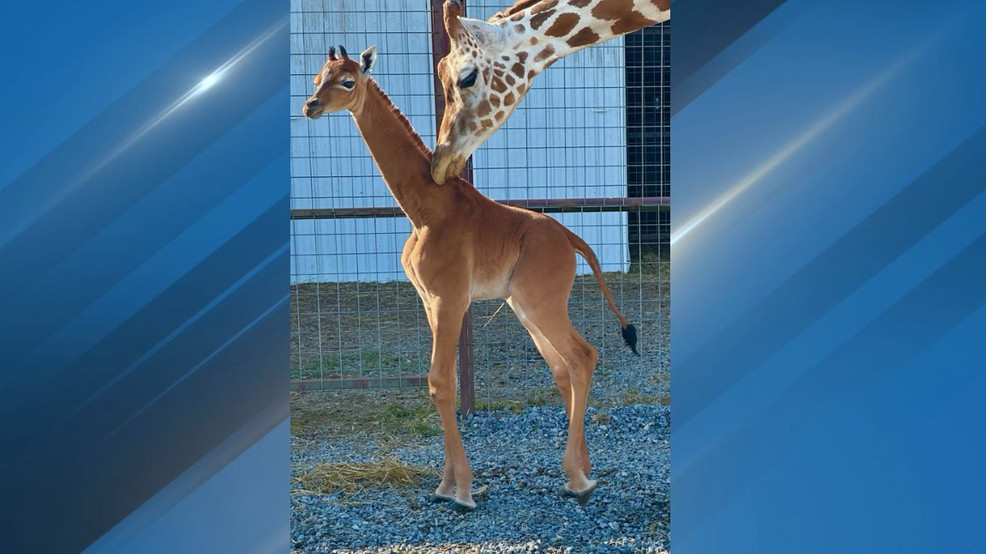
Brights Zoo in Tennessee has announced the birth of a rare spotless giraffe, believed to be the only solid-colored reticulated giraffe in the world. The zoo has opened a naming contest for the baby giraffe, hoping to raise awareness about the challenges faced by the species in the wild. Reticulated giraffes are listed as endangered, with 40% of the wild population lost in the last three decades. In 1972, the last recorded spotless giraffe was born in Tokyo.
Bright's Zoo in Limestone, Tennessee, has welcomed the birth of a rare solid brown giraffe, believed to be the only one of its kind in the world. The baby giraffe, standing at six feet tall, is thriving under its mother's care. The zoo is seeking help from the public to choose a name for the giraffe through a naming contest on their Facebook page. The attention garnered by the unique giraffe has shed light on the importance of giraffe conservation, as wild populations have declined by 40% in the last three decades.
The world's only spotless giraffe was recently born at Brights Zoo, making it the rarest of its kind. Officials are inviting the public to participate in a naming contest for the newborn.
A rock pooler in South Cornwall discovered a Rainbow Sea Slug, marking only the fourth time the rare creature has been seen in the UK. The Rainbow Sea Slug is usually seen off the coast of Spain, Portugal, and France. The rock pooler, Vicky Barlow, found the creature under a heavy rock covered in seaweed and gathered fellow "nudibranch enthusiasts" to observe the rare creature. The Rainbow Sea Slug is known for its bright coloring and has a unique personality, rearing up to get a better look at its surroundings.