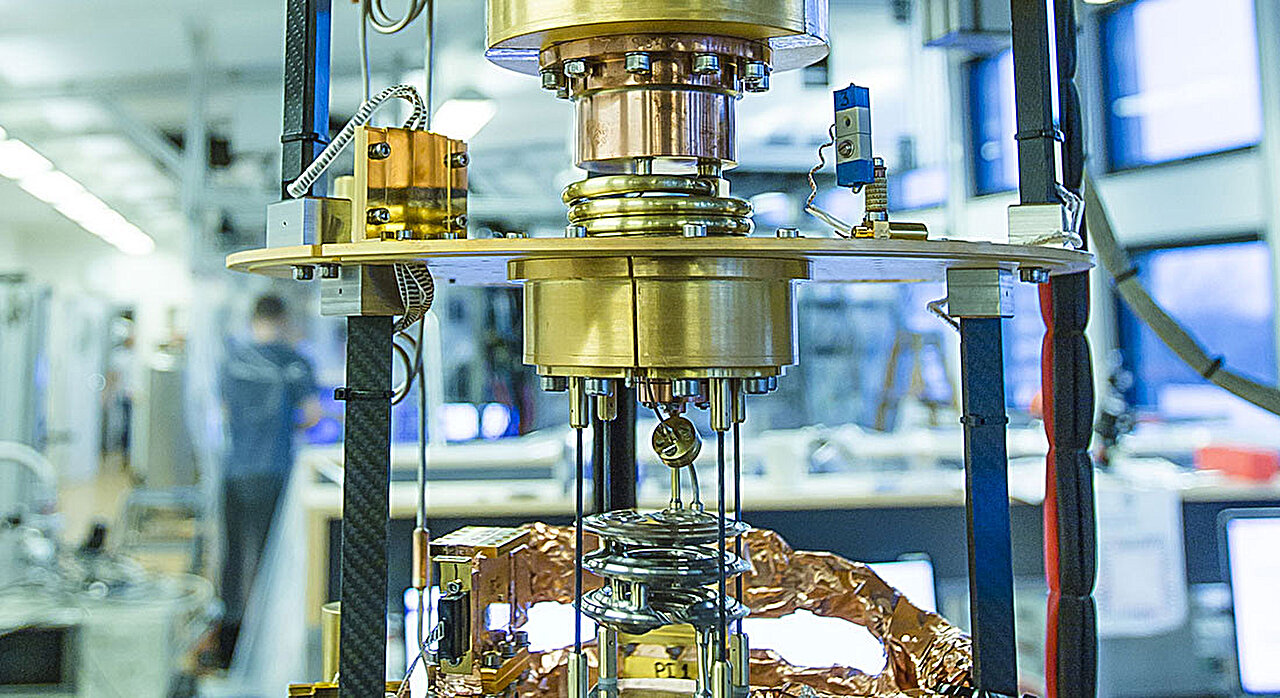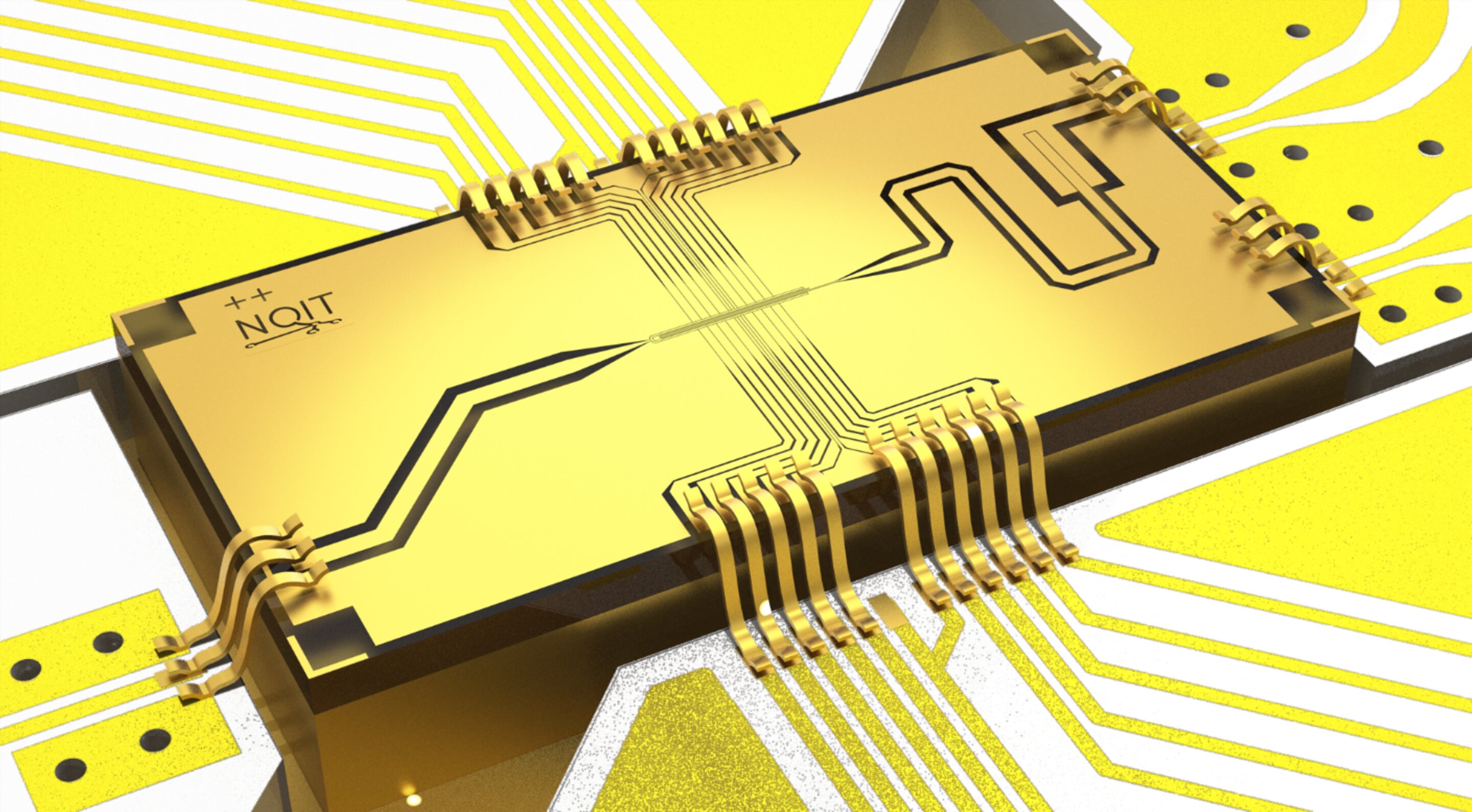
Oxford physicists set a new world record for qubit operation accuracy with an error rate of just 0.000015%, significantly advancing the development of practical quantum computers by reducing the need for error correction and using room-temperature, electronic control of calcium ion qubits.

D-Wave has unveiled its new 4,400-qubit Advantage2 quantum processor, claiming it is 25,000 times faster than its predecessor. The processor is designed for complex applications like AI and materials science, offering significant improvements in speed, accuracy, coherence time, energy scale, and qubit connectivity. These enhancements enable the Advantage2 to solve intricate problems more efficiently, supporting advancements in fields such as cryptography and logistics.
Researchers at the Niels Bohr Institute have developed a method to use noise to process quantum information, increasing the performance of qubits by 700%. By continuously monitoring and adapting to environmental changes in real time, they have demonstrated a new approach to quantum computing that could lead to more powerful computers in the future. This interdisciplinary effort involves the integration of a singlet-triplet spin qubit with FPGA-powered qubit controllers and has the potential to revolutionize quantum computing by actively adjusting for environmental noise.
Researchers have achieved quantum coherence at room temperature, a crucial step in the development of quantum computers, by creating an entangled quintet state in electrons using a chromophore embedded in a metal-organic framework. This breakthrough could lead to more efficient generation of multiexciton state qubits and open doors to room-temperature molecular quantum computing and quantum sensing technologies with higher resolutions and sensitivities.
Researchers at the Institute for Quantum Optics and Quantum Information (IQOQI) in Vienna have developed a universal mechanism to invert the evolution of a qubit with a high probability of success. The protocol can propagate any target qubit back to the state it was in at a specific time in the past, and can be applied to any qubit, irrespective of its natural time evolution or what state it is when the protocol is used. The researchers found that their universal quantum rewinding mechanism has a high probability of success, namely of 1.
Scientists at Yale University have extended the lifespan of a qubit, the workhorse of quantum computing, by keeping it in its ideal state for twice as long as normal. They achieved this by demonstrating the practicality of quantum error correction (QEC), a process that keeps quantum information intact for longer by introducing redundancy and error removal. The experiment also introduced machine learning AI algorithms to tweak the error correction routine. The research validates a cornerstone assumption of quantum computing and paves the way for practical quantum computers.