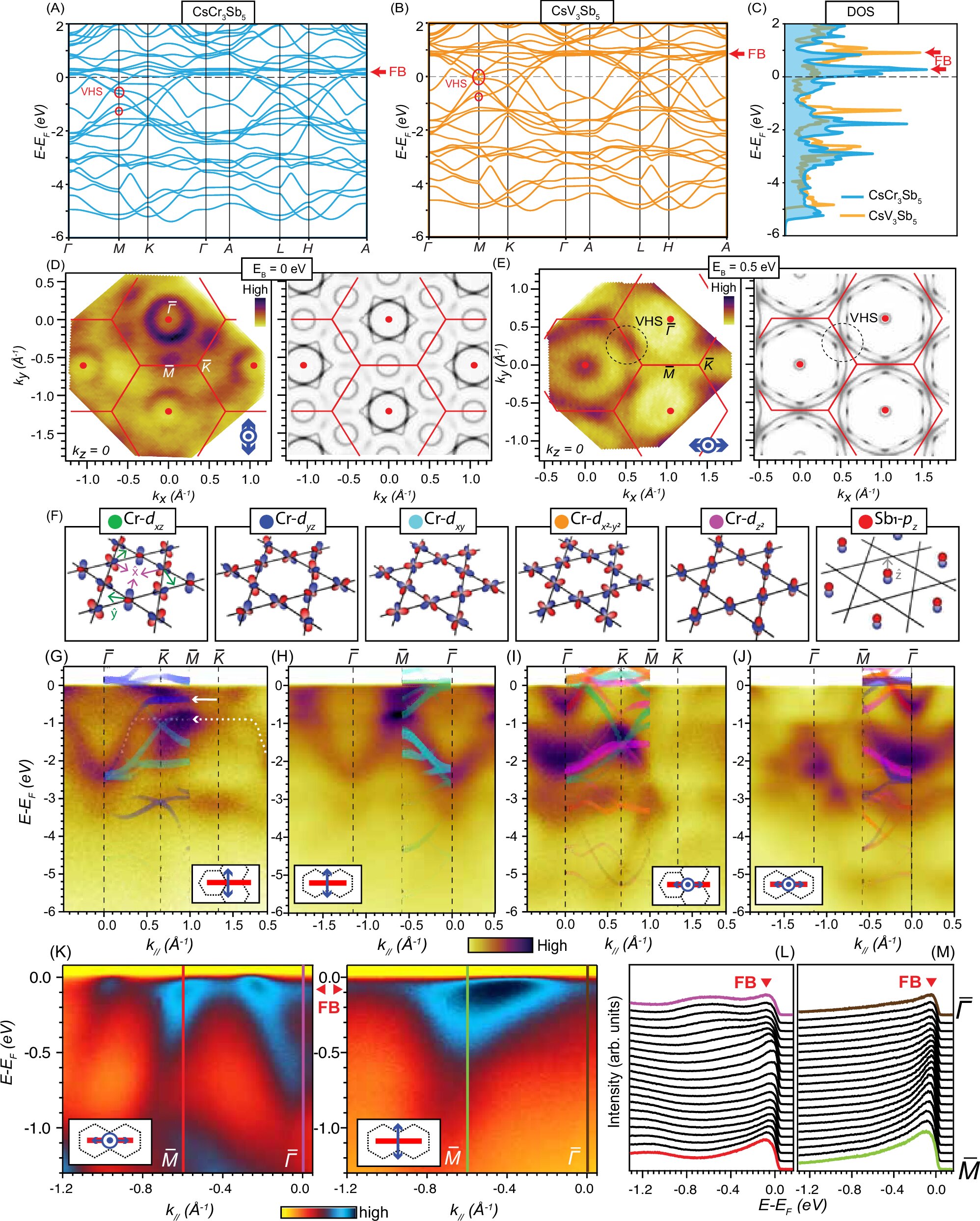
Scientists have discovered active flat electronic bands in a kagome superconductor CsCr₃Sb₅, providing experimental evidence of quantum states influenced by lattice geometry, which could lead to new quantum materials and technologies.
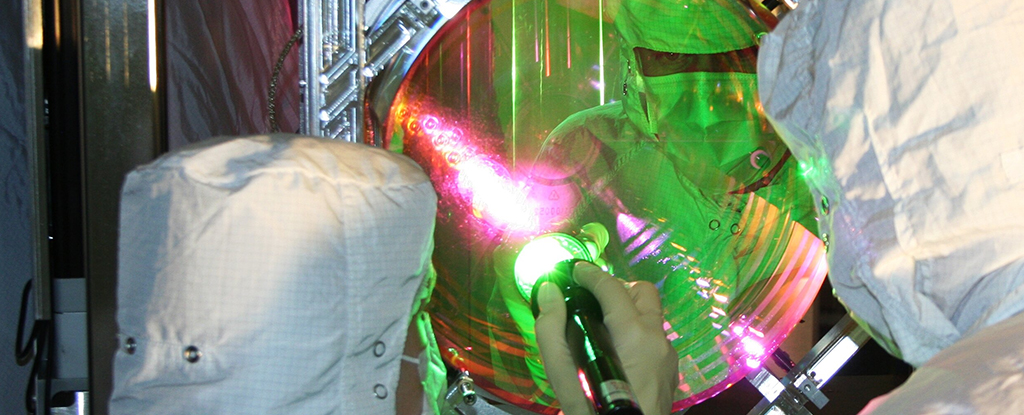
Physicists have proposed a novel experiment to detect quantum behavior in large objects, challenging the traditional view that quantum effects are limited to tiny particles. The experiment involves observing the motion of an object, such as a ball on a pendulum, and flashing light at different times to determine if quantum behavior is occurring. If successful, this could provide evidence of quantum fuzziness on a larger scale and potentially be tested using the mirrors at the Laser Interferometer Gravitational-Wave Observatory (LIGO) in the US.
Physicists from University College London, the University of Southampton, and the Bose Institute have proposed a novel approach to measure quantum behavior in larger objects, challenging the traditional view that quantum physics only applies at small scales. Their experiment involves observing the motion of an object on a pendulum and flashing light at different times to see if quantum behavior is occurring. If successful, this could extend the domain of quantum mechanics and test its validity for larger masses, potentially revolutionizing our understanding of the fundamental theory of nature.
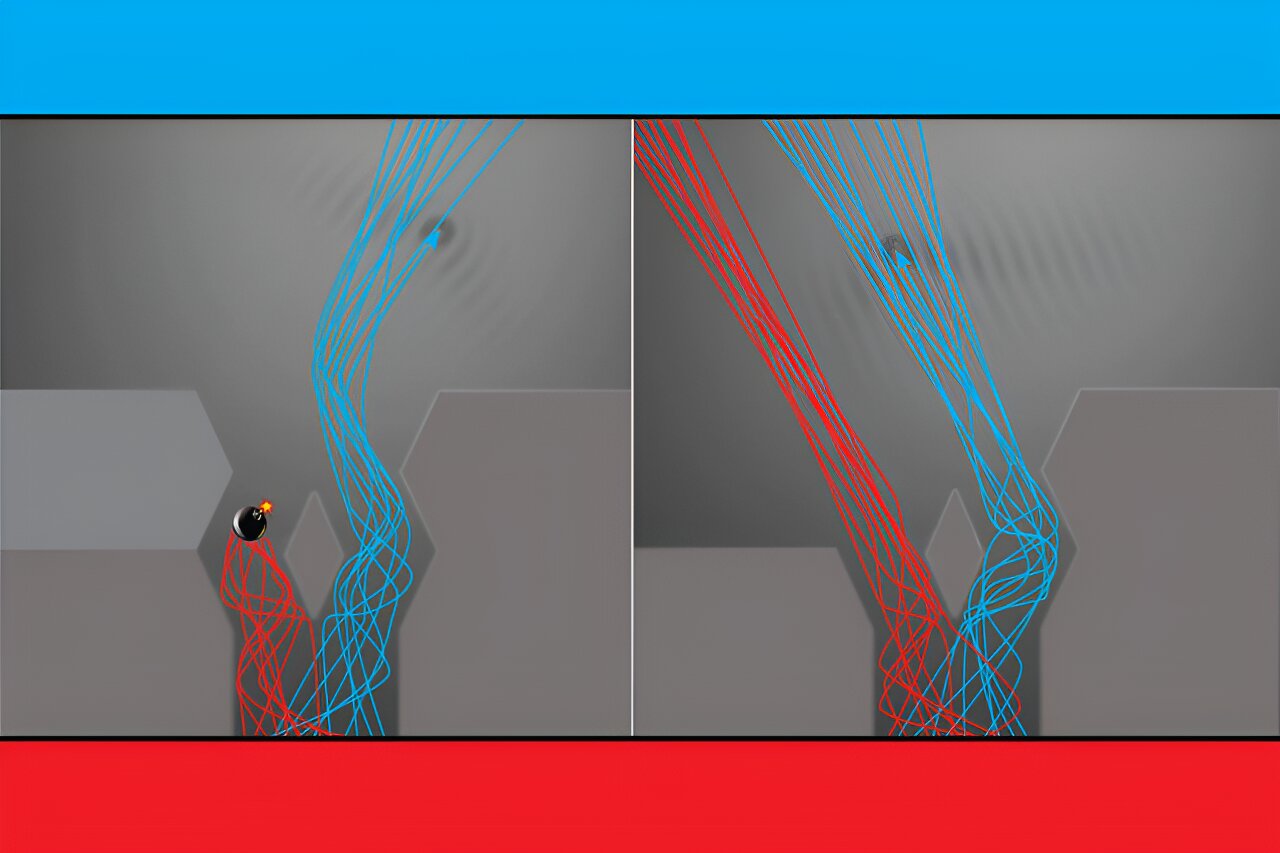
Mathematicians at MIT have recreated an analog of the "quantum bomb tester" experiment using bouncing droplets. The droplets exhibit behavior similar to a photon's wave-particle duality, detecting the presence of a bomb without physically interacting with it. The study suggests that classical dynamics may underlie the mysterious quantum behavior of particles, bridging the gap between the classical and quantum worlds. The findings provide insights into the dynamics of quantum systems and challenge the notion that quantum phenomena are exclusive to the quantum realm.
New research suggests that photosynthesis, the process by which plants harness the Sun to survive, has considerable parallels with exciton condensates, something physicists have had to go to great lengths to produce in the lab. Excitons are a boson, and when considered together have quantum properties different from each on its own. A leafy collection of excitons may lack some of the properties associated with macroscopic exciton condensation, but it is likely to retain many of the advantages, including efficient energy transfer.