Scientists have developed a taxonomy of 32 AI dysfunctions, called 'Psychopathia Machinalis,' drawing parallels with human mental illnesses to better understand and mitigate AI risks, including hallucinations and systemic threats like AI surpassing human control.
A new study challenges the completeness of the Big Five personality model by using taxonomic graph analysis to uncover additional traits and meta-traits, potentially transforming personality assessment and mental health diagnosis.
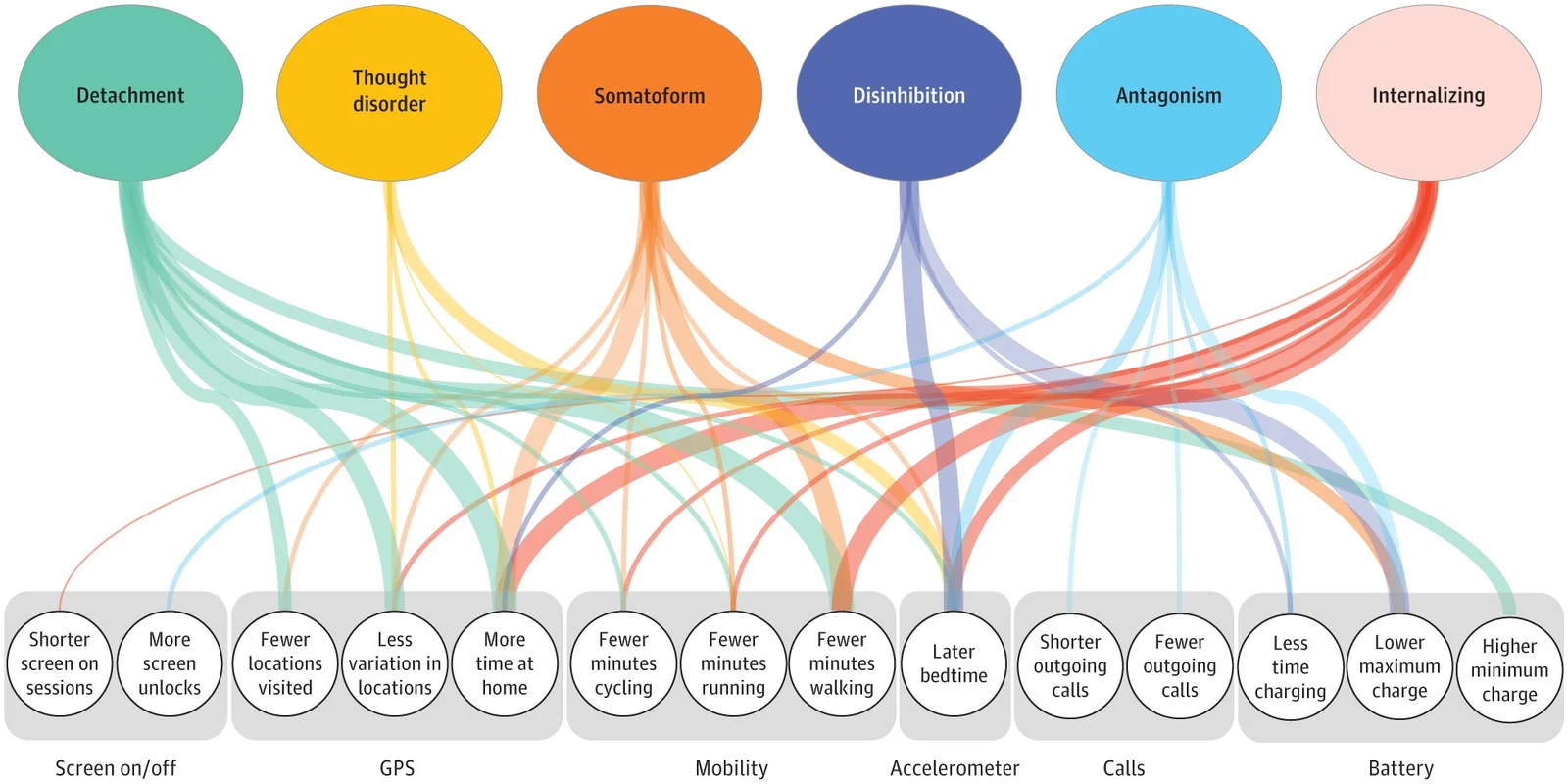
A large study found that passive smartphone data, such as mobility and usage patterns, can reveal behavioral signatures linked to various mental health conditions, offering potential for real-time monitoring and intervention, though further validation is needed before clinical application.
A study published in JAMA Network Open demonstrates that smartphone sensors can passively monitor daily behaviors linked to mental health issues, potentially enabling early detection and better management of psychiatric conditions by identifying behavioral patterns associated with various mental disorders.
A study by Boston Children's Hospital explored how stressful life events impact internalizing and externalizing symptoms of psychopathology in children. The research found that the timing of stress, type of trauma, and family resilience significantly influence mental health outcomes. Stressful events in early childhood were linked to internalizing symptoms in girls, while both sexes showed externalizing symptoms. Family resilience, particularly a sense of control, mitigated these effects. These insights could guide the development of interventions to reduce the impact of early stress on mental health.
A study conducted on male weightlifters in Norway found that those who used anabolic-androgenic steroids exhibited significantly more symptoms of psychopathology than those who did not use these substances. Steroid users were stronger but spent less time training per week compared to non-users. The study highlights the potential adverse effects of steroid misuse on mental health, including personality disorders and psychopathological syndromes. However, the study's design limits the ability to draw definitive conclusions about cause and effect, and the information on steroid use was based solely on self-reports, which may be subject to reporting bias.
New research published in Scientific Reports suggests that attentional dysregulation is a key factor connecting cognitive impairments and various mental health problems in adolescents. The study, conducted using a large sample of 11,876 adolescents, found that attentional dysregulation plays a central role in cognitive difficulties, particularly in cases of anxiety or low mood. The findings highlight the importance of addressing attentional difficulties early on to prevent or alleviate cognitive and emotional problems in individuals with psychiatric conditions. The study also revealed that perfectionism and moderate levels of trait worry may have a positive impact on cognitive performance. However, the study acknowledges the limitations of relying on parent assessments and calls for further research to better understand the dynamics between attentional dysregulation and mental health problems.
A neuroimaging study of adults with varying levels of adverse childhood experiences showed that participants reporting higher levels of maternal antipathy (in childhood) exhibited reduced activation in the brain reward network when they anticipated social rewards. The study sheds light on the neural mechanism linking adverse early experiences to later psychopathology.
Rats seem to make the same logical errors as humans, according to a study by UCLA psychology researchers. The study found that rats fall prey to conjunction fallacies, or the incorrect assumption that if two events sometimes occur at the same time, they are more likely to occur together than either event is to occur alone. The findings suggest that rats could potentially serve as good research models for studying psychopathological conditions characterized by false beliefs or the perception of nonexistent events, like schizophrenia and certain anxiety disorders.