Tag

Proxies

All articles tagged with #proxies

Iranian Proxies Could Target U.S. Interests Abroad If Strikes Escalate, Officials Warn
world3 days ago

Iranian Proxies Could Target U.S. Interests Abroad If Strikes Escalate, Officials Warn

Western security officials warn Iran could direct proxies—such as the Houthis, Hezbollah, and Al Qaeda affiliates—to attack American targets in Europe and the Middle East if President Trump orders large-scale strikes, though no specific plots have been confirmed. Increased chatter suggests planning and coordination, including possible attacks on Western shipping and on U.S. bases or embassies abroad. The threat complicates war planning, leads to defensive postures, and has sparked calls for a clear U.S. strategy to avoid a wider regional conflict and economic disruption.
Iran War Risk: A Quick Strike Could Drag On Much Longer
world4 days ago

Iran War Risk: A Quick Strike Could Drag On Much Longer

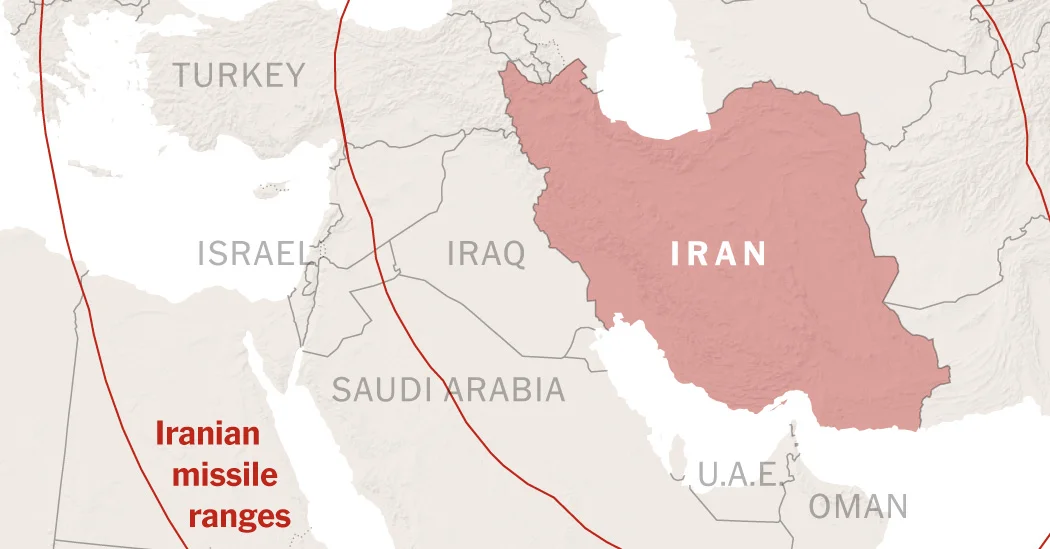
The New York Times argues that any U.S. attack on Iran could be far more complex and protracted than similar operations in Venezuela, due to Iran’s missile capabilities, its regional network of proxies, and a multi-layered leadership structure, with interactive graphics illustrating missile ranges, proxies, and governance to highlight the higher, longer-range risks.

Iran lays out a multi-front, enduring war strategy against the U.S.
middle-east20 days ago

Iran lays out a multi-front, enduring war strategy against the U.S.

Iran published a detailed concept for war with the United States, detailing missile barrages, proxy escalation, cyber operations, and threats to global oil flows. The plan envisions US strikes followed by Iranian counter-barrages, relies on hardened underground networks, and a saturation strategy that taxes defenses while expanding attacks via proxies like Hezbollah and the Houthis. It also leverages cyber missions targeting transport, energy, finance, and military communications, and uses the Strait of Hormuz to pressure markets, aiming for a costly, prolonged conflict rather than a quick defeat of the US. The concept surfaced amid ongoing US-Iran talks in Muscat and reactive rhetoric from Iranian leaders.

"Iran's Regional Armed Network: Unveiling Control and Allies"
international-relations2 years ago

"Iran's Regional Armed Network: Unveiling Control and Allies"

The Biden Administration's approach to Iran's support for various Shia militant groups in the Middle East as mere proxies fails to recognize their autonomy and local legitimacy, leading to a flawed strategy. These groups, including Hezbollah, Hamas, the Houthis, and PMF, have evolved into quasi-state actors with deep roots in their respective countries, and their actions are not solely directed by Iran. Targeting them only strengthens their resistance credentials and worsens the political and security conditions that gave rise to them. Instead of pressuring Iran to rein in its "proxies," the U.S. should reconsider its strategy and address the broader regional dynamics, including reining in Israel, to prevent further escalation.

"Iran's Unyielding Proxy Warfare Amid U.S. Airstrikes"
international-relations2 years ago

"Iran's Unyielding Proxy Warfare Amid U.S. Airstrikes"

Despite U.S. airstrikes targeting Iranian-backed militants, Iran continues to supply weapons and intelligence to its proxies in the Middle East, leading to attacks on U.S. forces and commercial ships. The Biden administration has initiated airstrikes in response, aiming to deter further assaults. However, Iran's ongoing support for its proxies suggests that the airstrikes have not yet curbed its efforts. The U.S. Navy recently seized a shipment of missile components intended for Houthi rebels in Yemen, and Iran's involvement in supporting Houthi forces threatening commercial trade routes has raised tensions in the region.

Iran's Dilemma: Avoiding a Regional War with Israel
international-relations2 years ago

Iran's Dilemma: Avoiding a Regional War with Israel

The US intelligence community believes that Iran and its proxies are currently trying to avoid a direct conflict with Israel or the US while still inflicting costs on their adversaries. However, concerns remain about the control Iran has over its proxies, particularly Hezbollah, which is an ally of Hamas. The US officials are worried that internal politics within Hezbollah may lead to an escalation of tensions. While Iran knows that an escalation could provoke devastating counterattacks, the lower-level attacks by proxy groups have already caused significant military deployments by the US and Israel. The US officials believe that this is a coordinated strategy, but caution that it carries the potential for miscalculation and could lead to a wider conflict.

Retaliatory U.S. Airstrikes Spark Middle East Proxy Conflict
international-relations2 years ago

Retaliatory U.S. Airstrikes Spark Middle East Proxy Conflict

Following U.S. airstrikes on facilities used by Iran's Islamic Revolutionary Guards Corps and its proxies in Syria, the proxies retaliated by launching an attack drone at U.S. forces in western Iraq. The drone was shot down, and rockets fired into northern Syria missed American troops. The airstrikes aimed to deter further attacks, but questions remain about their effectiveness. Critics argue that the strikes were not sufficient to deter Iran and its proxies, while Biden administration officials believe that Iran does not want a war with the United States but may miscalculate due to the U.S.'s reluctance for military involvement in the region.