Scientists have discovered that the amino acid leucine enhances mitochondrial energy production by stabilizing key proteins on the organelle's outer membrane, which could have implications for treating metabolic disorders and cancer.
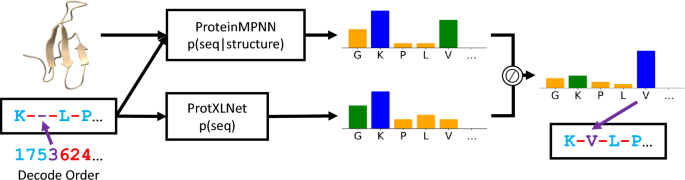
Researchers propose a new approach called BayesDesign for protein sequence design that maximizes the Boltzmann probability objective function \(p(\text {structure}|\text {seq})\) without relying on gradient descent or MCMC optimization techniques. The study mathematically formalizes protein design objectives for stability and conformational specificity and shows how they relate to the Boltzmann probability objective. The BayesDesign algorithm is evaluated on two model systems, NanoLuciferase enzyme and the WW beta sheet motif, and the designed sequences show increased stability and conformational specificity compared to the native sequences. The approach offers a faster and more reliable way to design proteins with desired properties.
A new high-throughput technique has been developed that can analyze the folding stabilities of nearly one million protein sequences at a time. This method, which is fast, accurate, and scalable, provides valuable data for understanding protein folding and improving machine learning models. By measuring stability for 1.8 million sequences, researchers obtained 776,000 high-quality folding stabilities. The large dataset is already proving useful for developing machine learning models to predict protein folding stability and understanding the impact of genetic variants on protein stability.