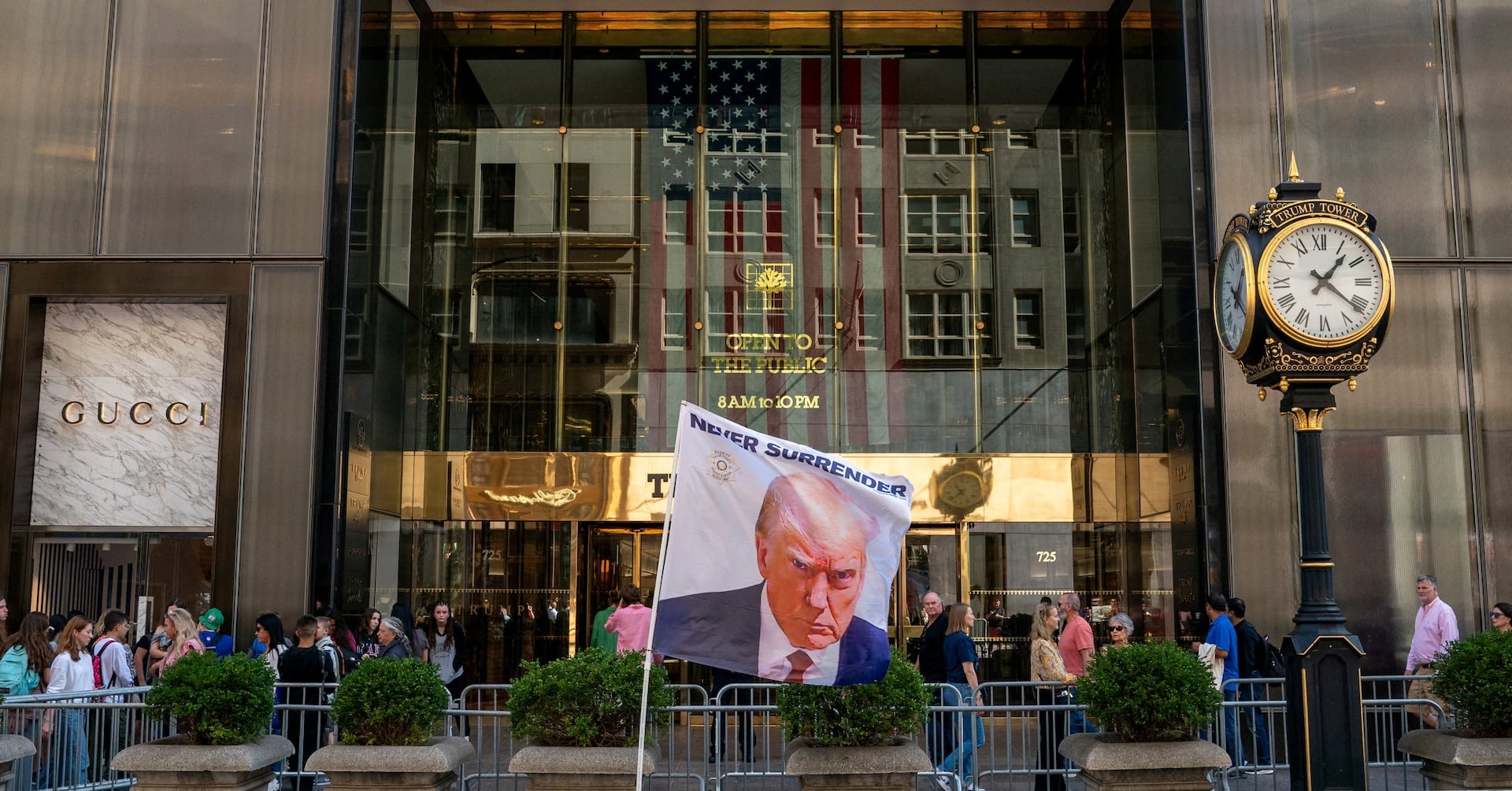
Donald Trump faces a Monday deadline to cover a $454 million civil fraud judgment or risk New York state seizing some of his properties, including Trump Tower and 40 Wall Street. Trump must either pay the money or post a bond while he appeals the judgment. The case, brought by New York Attorney General Letitia James, alleges Trump manipulated his net worth and property values to deceive lenders and insurers. Trump's financial worries also include lagging campaign fundraising and other legal challenges, including criminal charges.

NY Attorney General Letitia James may seek the sale of 13 Trump properties, including the Seven Springs estate and Westchester Golf Club, if Donald Trump fails to pay his $457 million fraud judgment by the March 25 deadline. The properties, located across Manhattan and Westchester County, could be auctioned off by county sheriff's departments if Trump does not pay, secure an appeal bond, or declare bankruptcy.
Former President Donald Trump is reportedly "very concerned" about the New York prosecutor's efforts to seize his properties as part of an ongoing investigation, according to journalist Maggie Haberman.
Former President Trump is facing difficulty in securing a $454 million appeal bond to prevent the seizure of his properties by the New York Attorney General following a civil fraud judgment. Trump's lawyers claim that obtaining the bond is practically impossible as the Trump Organization has been turned down by around 30 surety companies, with none willing to accept property as collateral. The Attorney General has threatened to begin seizing Trump Organization properties if the bond is not secured by Monday, while Trump's attorneys argue that the bond requirement is unprecedented for a private company.
Russian lawmakers have passed a bill allowing authorities to seize the property of those convicted of discrediting the army or spreading "fakes" about it, as well as those found guilty of inciting extremist activity or calling for anti-Russian sanctions. The bill, which must still be approved by the Federation Council and signed by President Putin, aims to punish those who criticize the military, with the maximum jail sentence for spreading "fakes" about the army being up to 15 years.
Russian lawmakers are considering a bill that would allow the state to seize property from individuals who criticize Vladimir Putin's invasion of Ukraine, even if they have left the country. The proposed law, dubbed "the scoundrel law" by a close Putin ally, aims to impose harsher penalties on those who speak out against the war. Critics have likened the move to the tactics of Soviet dictator Josef Stalin and fear it could impact thousands of Russians who have opposed Moscow's actions in Ukraine.
Russia has promised a "harsh" response and consequences for Poland's interests in Russia after Polish authorities seized a building near Moscow's embassy in Warsaw, which Russia labeled "illegal." The building, used as a high school for the children of diplomats, belongs to the Warsaw city hall, and Polish authorities acted on a bailiff's order. However, Russia's foreign ministry slammed the move as a "hostile" act in violation of the Vienna Convention on Diplomatic Relations and as an encroachment against Russian diplomatic property in Poland.
The Supreme Court is hearing a case on whether property seizures for unpaid taxes that result in someone other than the homeowner keeping more money than the taxes owed violate the "Takings Clause" of the constitution's Fifth Amendment. Property seizures like this are legal and happening in 11 states and Washington D.C., according to Pacific Legal Foundation. Homeowners altogether lost more than $860 million in the 8,950 homes that localities and private investors foreclosed on then resold for more money than what was owed in taxes from 2014 to 2021.
The Supreme Court heard arguments on the constitutionality of allowing states to keep all proceeds from the sale of confiscated property, even when they far exceed the taxpayer's debt. The case in question involves a 94-year-old woman in Minnesota who owed $2,000 in taxes and $13,000 in penalties and interest on her condo, which was sold at auction for $40,000. The county kept the entire amount, including the surplus. The justices expressed skepticism about the county's actions and questioned the historical basis for retaining the entire value of confiscated property.
The US Supreme Court is set to hear a case involving a 94-year-old woman's battle with a Minnesota county government that seized and sold her condominium to cover her unpaid property taxes and kept the proceeds beyond the amount she owed. The case tests constitutional checks on excessive fines and property seizure. The dispute concerns Minnesota's tax regime under which the state takes "absolute title" of a property if an owner fails to pay property taxes for five years. Tyler has accused the county of violating the U.S. Constitution's Fifth Amendment bar on the uncompensated taking of private property by a government for public use and Eighth Amendment protection against excessive fines.
The Mexican military and local state police have seized an American company's quarry facility in Mexico, sparking outrage among former and current government officials. Vulcan Materials, the largest producer of construction aggregates in the US, accused the Mexican navy and police of forcing the company to allow CEMEX, a Mexican-owned materials company, to unload a shipment of cement from a ship in the port. Vulcan has been in tension with Mexico for months after Mexican President Andrés Manuel López Obrador forced a shutdown of the quarry's operations in May 2022. The seizure could have significant geopolitical and economic implications for the US.
US Senator Katie Britt has condemned Mexico's seizure of a port facility owned by Birmingham-based Vulcan Materials in Quintana Roo, calling it "unlawful and unacceptable." Vulcan has been in NAFTA arbitration with Mexico since 2018 over its investments in the country, including a limestone quarry near Playa del Carmen. The Mexican government is negotiating a settlement of a $1.1 billion lawsuit by Vulcan over an effort to shutter that quarry. Mexico has accused Vulcan of extracting materials without proper permits. Britt has called on President Biden to raise the issue with President López Obrador and assure Americans that such actions will not be tolerated.
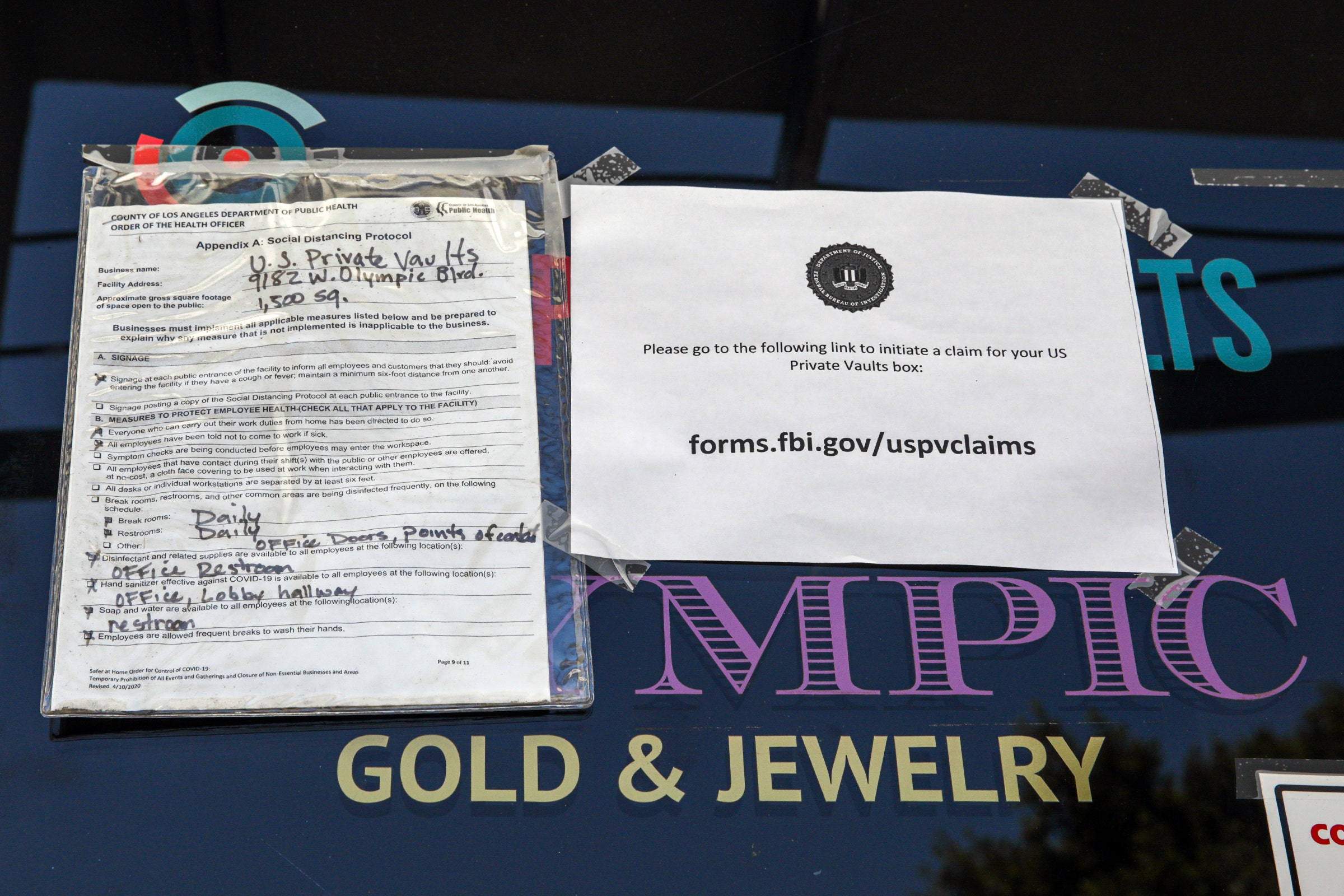
Linda Martin's life savings were seized by the FBI in a 2021 raid on U.S. Private Vaults, a Beverly Hills-based company. Martin and 1,400 other customers' safe deposit boxes were taken, including $40,200 she was saving for a down payment on a home. Martin has not been charged with any crime and is now filing a class-action lawsuit to recover her life savings. The lawsuit seeks to help anyone who has had property taken by a government agency in the last six years and received a deficient forfeiture notice. Civil forfeiture is a process in the United States where law enforcement can take property from people who have never been charged with a crime.