Tag

Primary Prevention

All articles tagged with #primary prevention

health2 years ago

The Underutilization of Statins: A Missed Opportunity for Health

A new study reveals that only about 35% of adults eligible for statin use to prevent cardiovascular disease are actually taking them. Despite guidelines expanding eligibility for statin use, many people with high cholesterol, diabetes, or a high risk of cardiovascular disease are not receiving the medication. Reasons for low uptake include concerns about side effects, lack of access to primary care, and misinformation about statins and cholesterol on social media. Clinicians can use a risk calculator to determine a patient's eligibility for statin use, and lifestyle changes can also help reduce the risk of cardiovascular disease.


health-and-wellness2 years ago

"Prescribing Exercise for Primary Prevention: A Comprehensive Guide"

Physicians should properly assess patients before prescribing exercise for primary prevention of cardiovascular disease. Exercise has numerous benefits but can also trigger complications, so a gradual and progressive approach is recommended. Patients should be classified based on their exercise habits and medical history, and diagnostic methods may be necessary for evaluation. Parameters such as frequency, intensity, time, and type of exercise should be considered when prescribing. Physicians need to be knowledgeable and motivating, identifying obstacles and patient interest. Personalized prescriptions and risk assessments are crucial, and involvement in self-care, diet, and hydration is emphasized. Collaboration with specialists may be beneficial.

health2 years ago

Primary Prevention: The 'Striking' Benefit of Lowering Lipids.

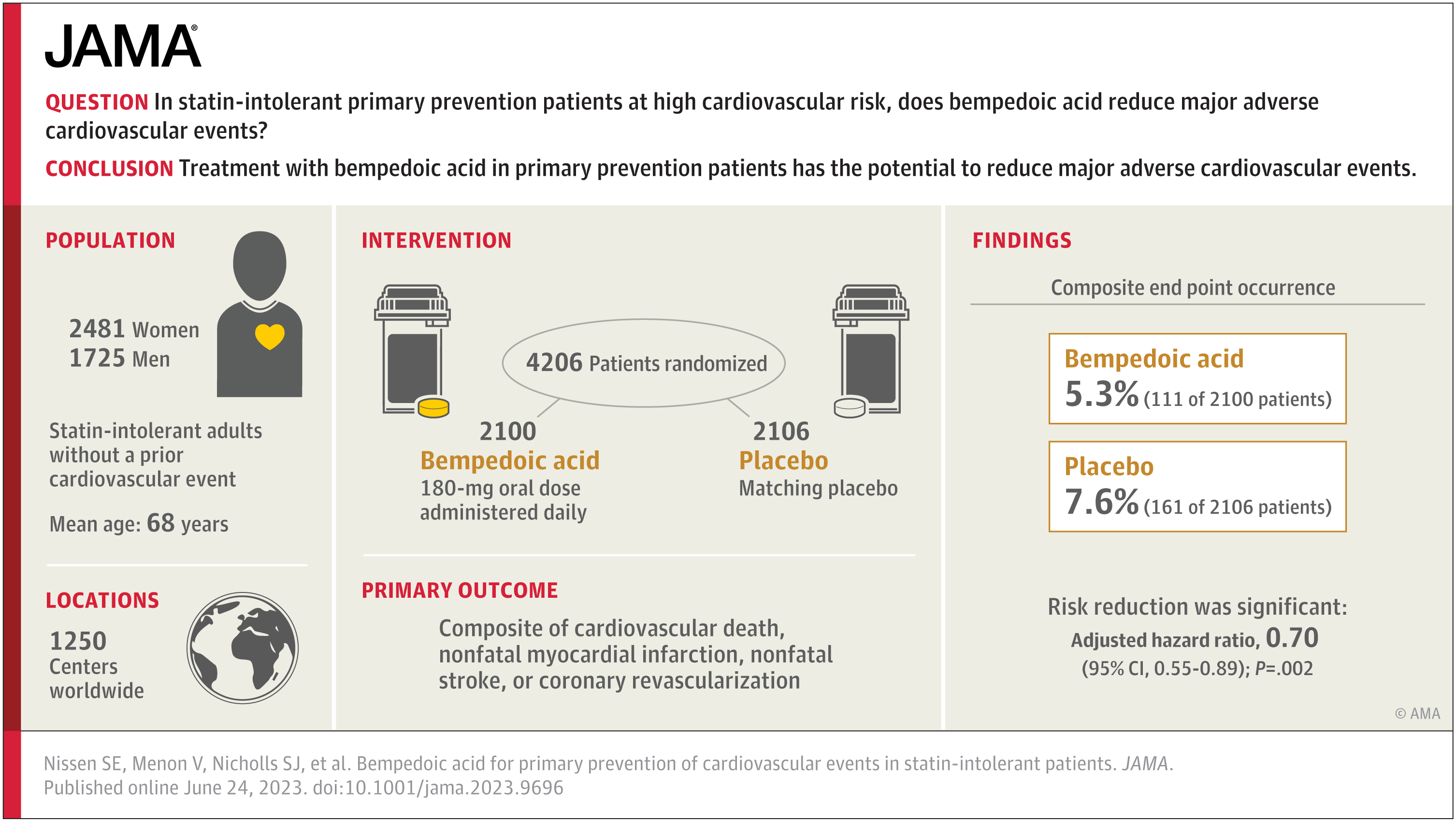
A new analysis of the CLEAR Outcomes trial of bempedoic acid has shown a 30% relative risk reduction in the composite of cardiovascular death, myocardial infarction (MI), stroke, or coronary revascularization in high-risk primary prevention patients, two thirds of whom also had type 2 diabetes. The study's lead investigator, Dr. Steve Nissen, called the results "frankly striking" and emphasized the need for more attention to be paid to this group of patients, who are often not well treated. Nissen recommends that high-risk primary prevention patients, particularly those with type 2 diabetes, should be treated with a lipid-lowering drug, such as a statin or bempedoic acid.

health2 years ago

Bempedoic Acid: A Promising Alternative for Cardiovascular Prevention.

Bempedoic acid, a new cholesterol-lowering drug, has been found to reduce the risk of major cardiovascular events in high-risk primary prevention patients who are intolerant to statins. In a randomized clinical trial of 13,970 patients, bempedoic acid treatment was associated with a significant reduction in major cardiovascular events, including cardiovascular death, nonfatal myocardial infarction, nonfatal stroke, or coronary revascularization. The drug reduced low-density lipoprotein cholesterol levels by 30.2 mg/dL and high-sensitivity C-reactive protein levels by 0.56 mg/L. However, adverse effects with bempedoic acid included a higher incidence of gout, cholelithiasis, and increases in serum creatinine, uric acid, and hepatic enzyme levels.

health2 years ago

Early Warning Signs of Dementia: What to Look Out For

Decreased muscle strength and slowed movement in older adults may signal a higher risk of late-life dementia, according to new research. Incorporating simple, inexpensive muscle function tests like grip strength and timed-up-and-go tests in clinical practice could help identify high-risk individuals and potentially prevent dementia through primary prevention programs. The study found that lower grip strength and slower timed-up-and-go test results were significant risk factors for presenting with dementia, independent of genetic risk and lifestyle factors such as smoking, alcohol intake, and physical activity levels. The findings suggest that if the decline in muscle strength and mobility can be halted, late-life dementias may be prevented.