
Paleontologists have discovered a new species of vampire squid, Simoniteuthis michaelyi, fossilized with prey in its arms, dating back 183 million years. The remarkably preserved specimen provides rare evidence of predator-prey interactions in the fossil record, shedding light on ancient marine life. Believed to resemble modern vampire squids, the creature was an active predator and likely fell prey to other predators in the shallow sea it inhabited. The find contributes to a better understanding of Jurassic marine life and provides valuable insights into prehistoric cephalopods.
Researchers have developed virtual reality (VR) goggles for mice to study how their brains respond to swooping predators. The VR goggles allow the mice to experience a simulated environment where they perceive a looming predator, triggering specific brain activity. This research aims to provide insights into the neural mechanisms underlying predator-prey interactions and contribute to our understanding of how animals perceive and respond to threats.
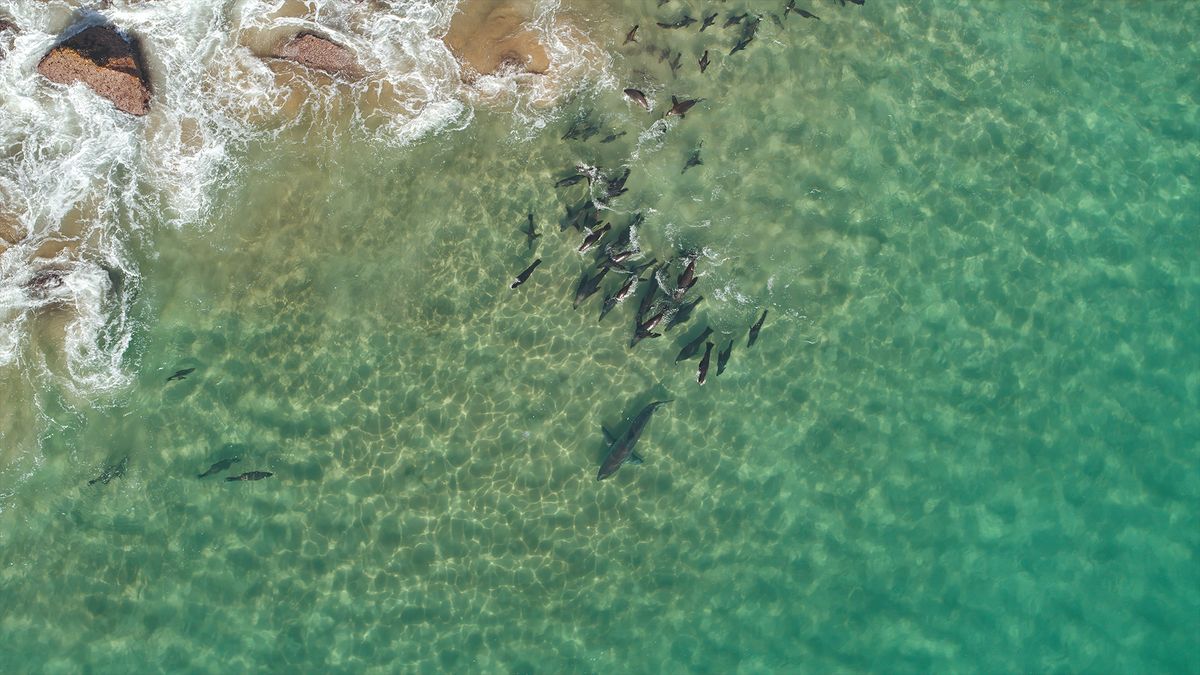
Spectacular footage from the new documentary series "Planet Earth III" captures a large group of seals mobbing and driving off a great white shark off the southern coast of Africa. The footage showcases the seals' aggressive defense behavior against the shark, with dozens of seals joining forces to chase the predator away. This intense and consistent mobbing behavior has been observed at the Robberg Peninsula, where the growing seal colony has attracted an increased frequency of great white shark sightings. The exact reasons behind the effectiveness of this mobbing technique are still not fully understood. The documentary series will be available to watch from November 4th.