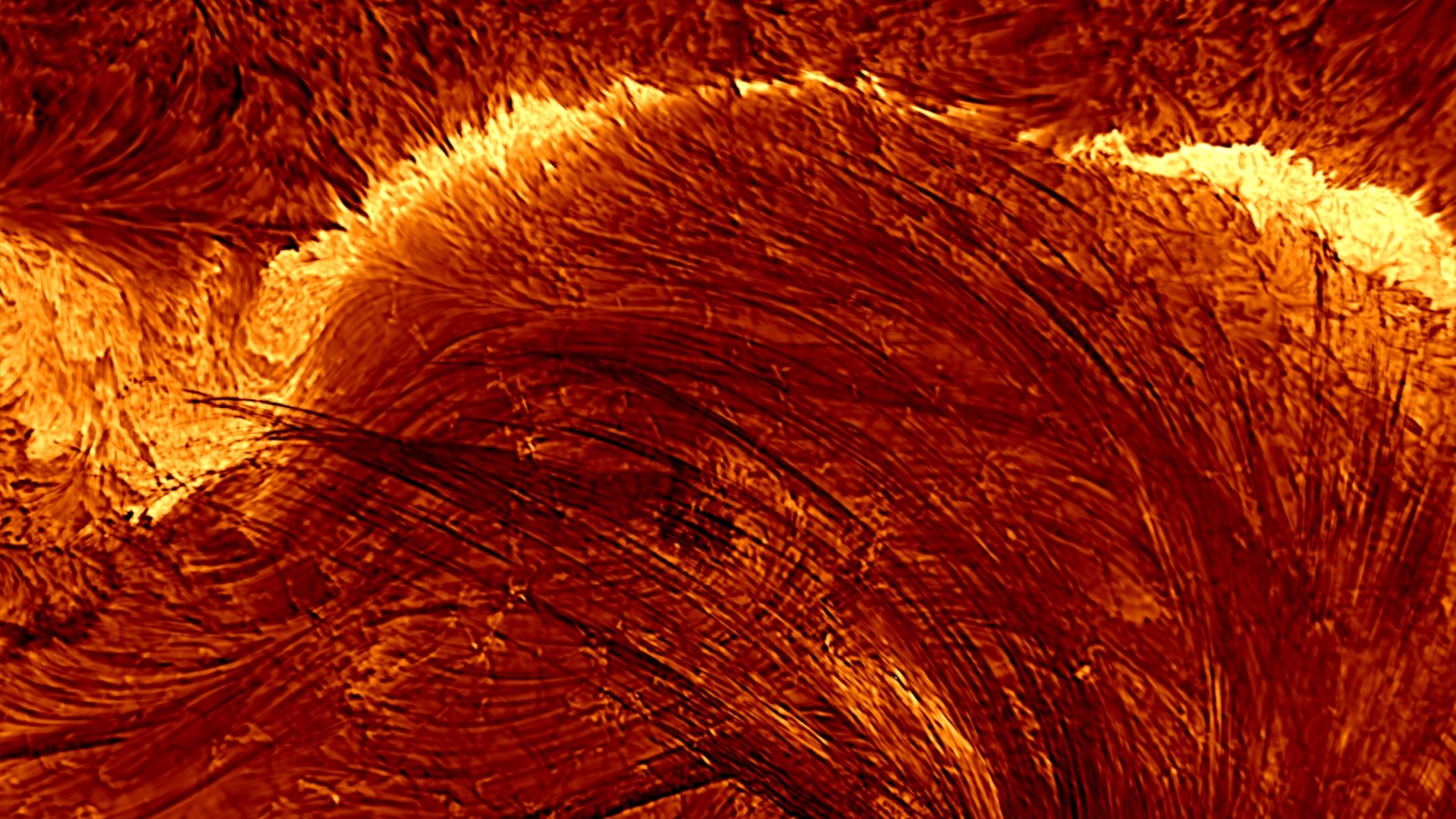
Scientists captured the most detailed images of a solar flare ever using the Inouye Solar Telescope, revealing plasma loops as small as 13 miles across, which could enhance understanding of solar flare mechanics and magnetic reconnection.
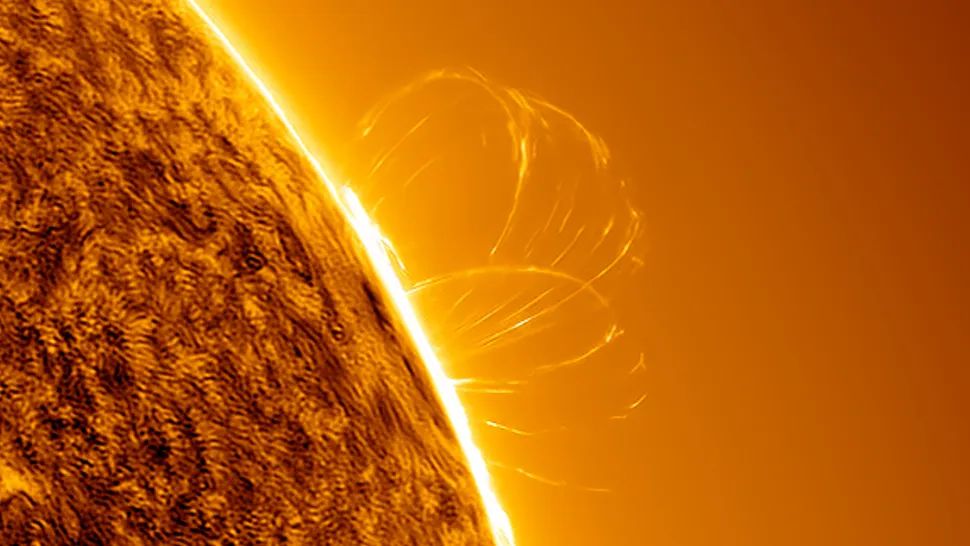
Ghostly plasma loops were observed above the sun following a powerful solar flare eruption, with the loops appearing as remnants of the solar storm. These post-flare loops (PFLs) are a puzzling phenomenon, and their formation is still not fully understood. The sun's increasing solar activity is expected to lead to more occurrences of PFLs in the coming years, providing opportunities for further study and insight into their formation.
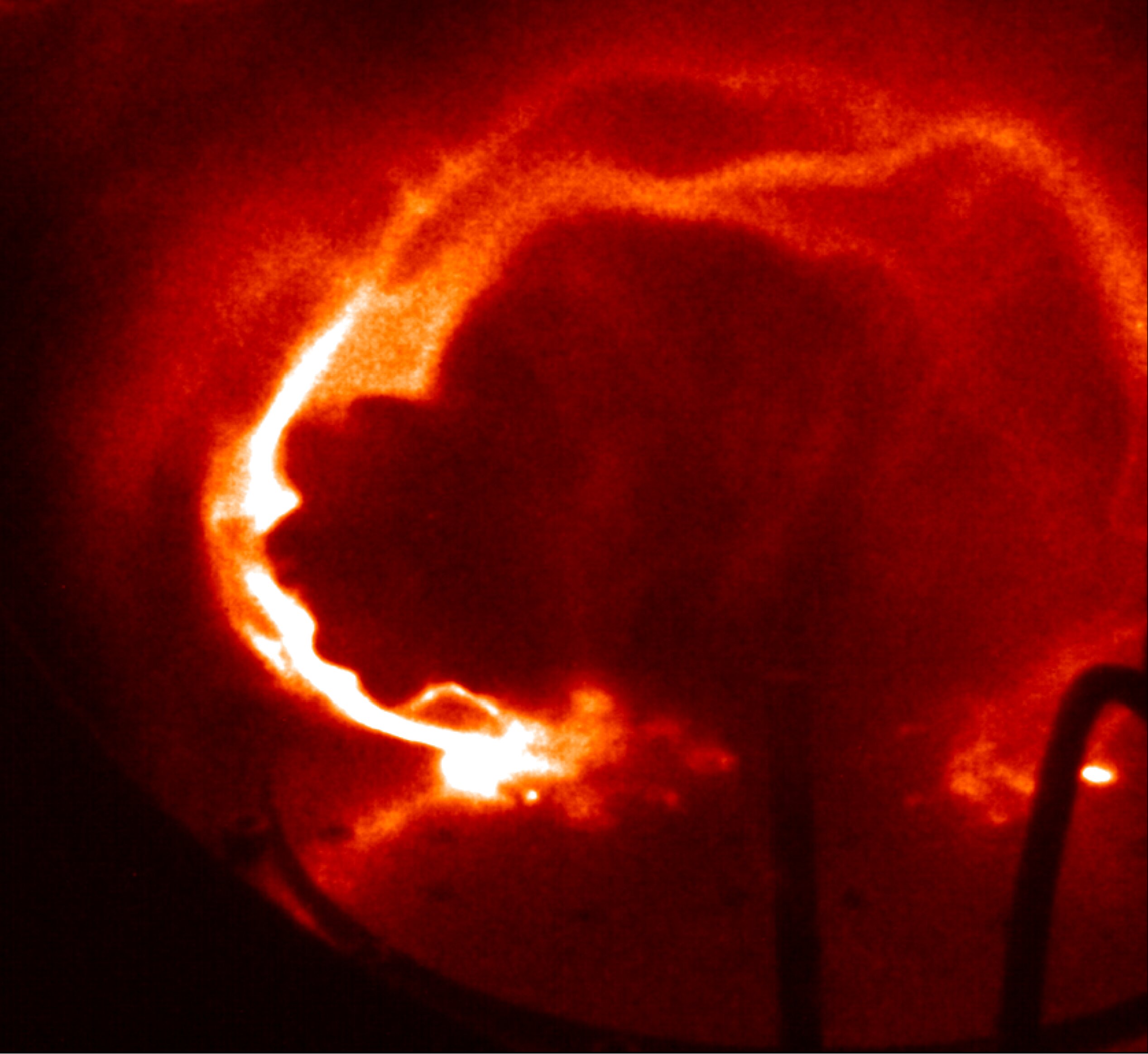
Researchers at Caltech have simulated solar flares in a lab to study the process by which these massive explosions blast potentially harmful energetic particles and X-rays into the cosmos. They discovered that solar corona loops are composed of fractally braided strands, and when too much current tries to pass through a loop, it develops a kink and individual strands start to break, leading to the generation of energetic particles and X-ray bursts. The team plans to explore how separate plasma loops can merge and reorganize into different configurations to learn whether there are also energy burst events during this type of interaction.