
Insights into Solar Flares from Laboratory Experiments
TL;DR Summary
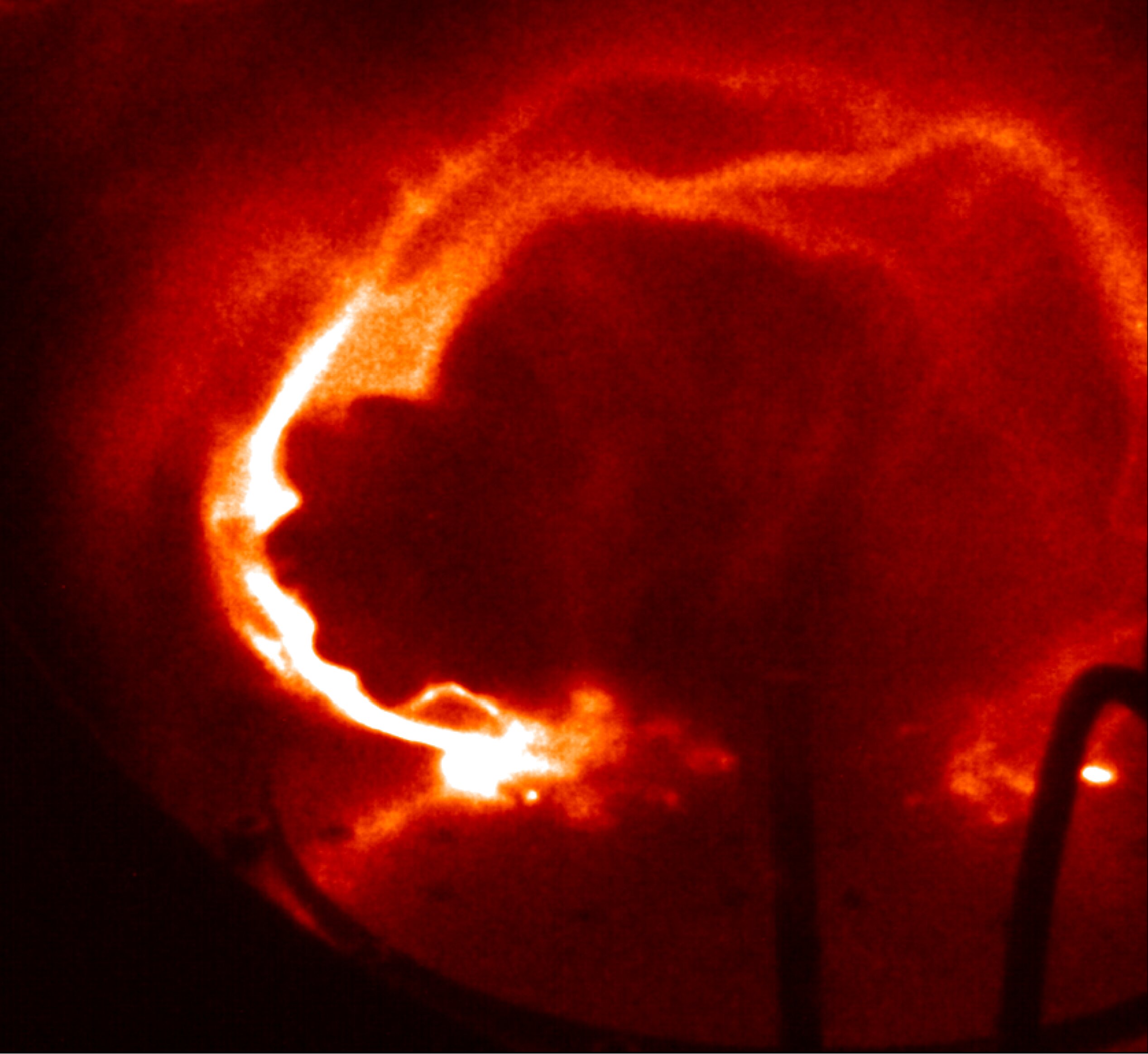
Researchers at Caltech have simulated solar flares in a lab to study the process by which these massive explosions blast potentially harmful energetic particles and X-rays into the cosmos. They discovered that solar corona loops are composed of fractally braided strands, and when too much current tries to pass through a loop, it develops a kink and individual strands start to break, leading to the generation of energetic particles and X-ray bursts. The team plans to explore how separate plasma loops can merge and reorganize into different configurations to learn whether there are also energy burst events during this type of interaction.
- Laboratory solar flares reveal clues to mechanism behind bursts of high-energy particles Phys.org
- Solar flares made in the lab could teach us about the real thing New Scientist
- Generation of laboratory nanoflares from multiple braided plasma loops Nature.com
- Solar nanoflares erupt from a laboratory experiment Nature.com
- View Full Coverage on Google News
Reading Insights
Total Reads
0
Unique Readers
0
Time Saved
4 min
vs 5 min read
Condensed
90%
981 → 102 words
Want the full story? Read the original article
Read on Phys.org