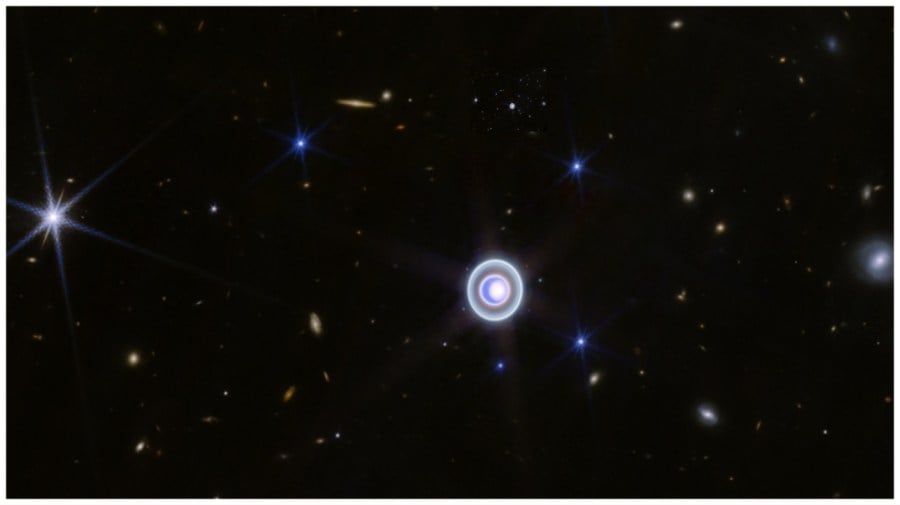
A study using Hubble observations over 20 years found that Uranus's structure and brightness have changed significantly, with complex atmospheric circulation patterns and variations in polar regions related to seasonal changes.
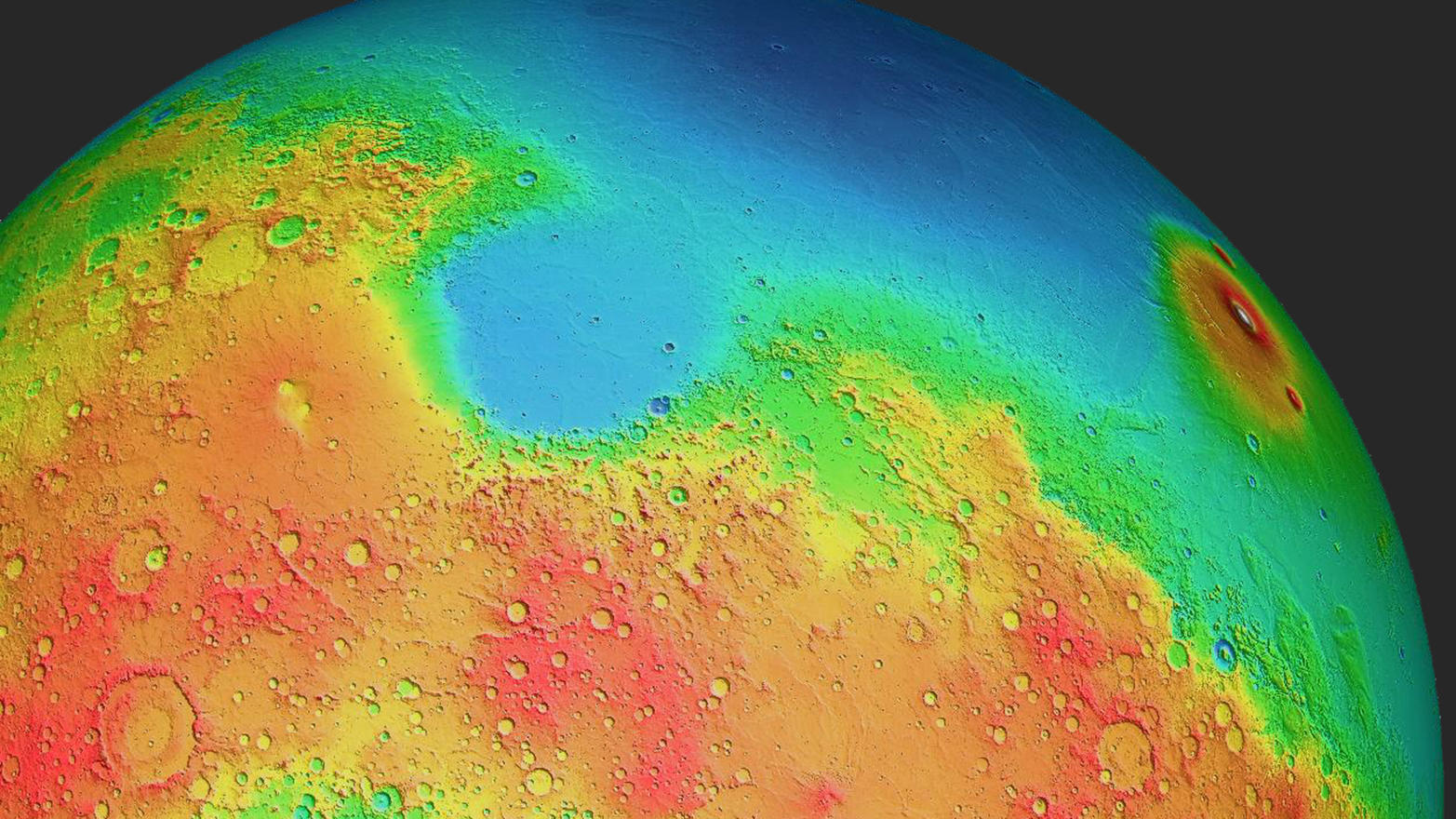
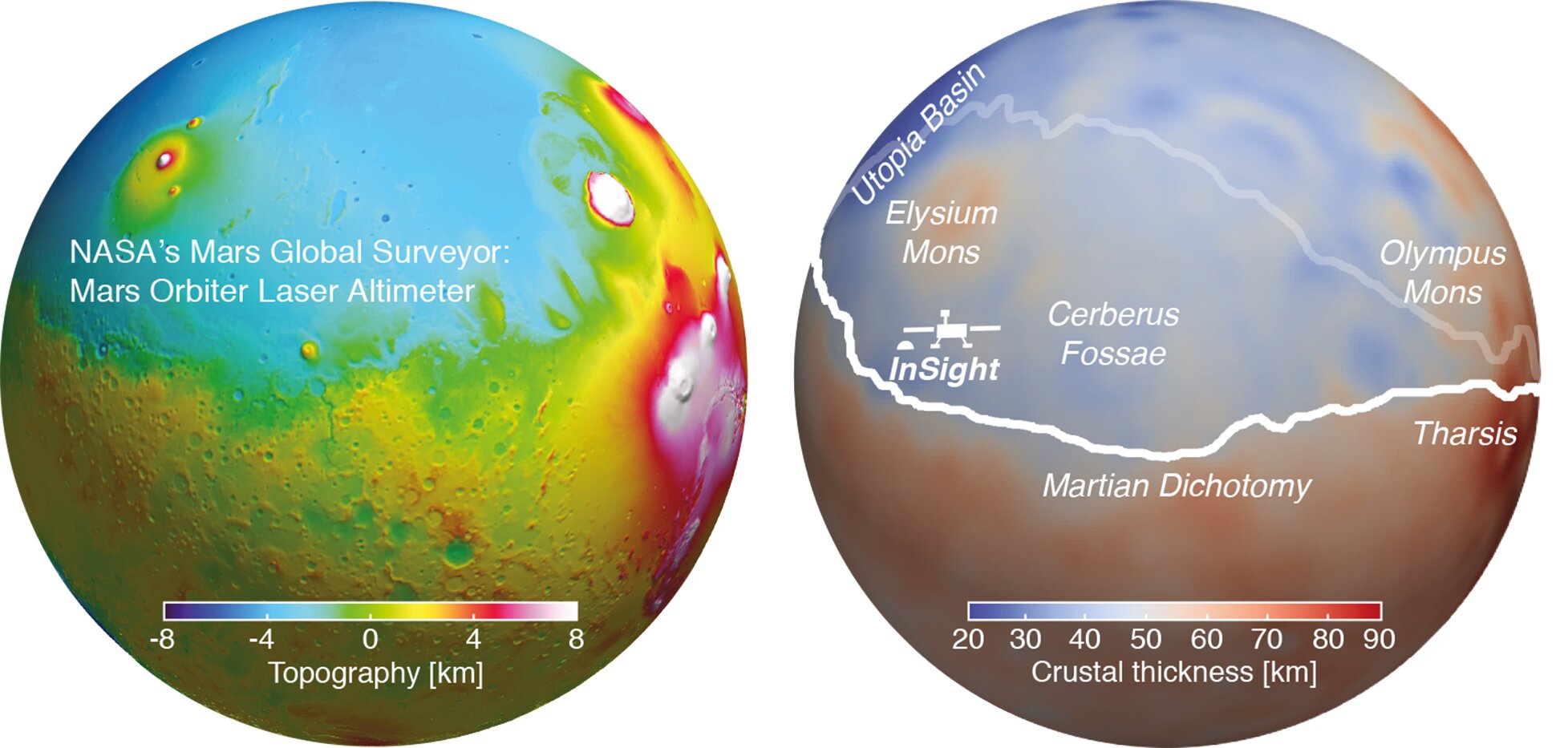
Researchers from ETH Zurich, using data from a large marsquake detected by the Mars InSight mission, have determined that the Martian crust is significantly thicker than that of Earth or the Moon, with an average thickness of 42 to 56 kilometers (26 - 35 miles). The seismic observations also revealed that the density of the crust in the northern lowlands and southern highlands of Mars is similar, suggesting that the composition of the crust is the same in both regions. Additionally, the study found that 50 to 70 percent of the heat-producing elements in Mars' interior are located in the crust, providing insights into the planet's thermal history.
Researchers at ETH Zurich used seismic waves from a Marsquake to determine the global thickness and density of the planet's crust. The Martian crust is much thicker than that of the Earth or the moon, with an average thickness of 42 to 56 kilometers. The study also found that 50% to 70% of the heat-producing elements in Mars are found in the crust, which could explain why there are local regions underneath where melting processes may still be taking place today.