Tag

Pandoras Cluster

All articles tagged with #pandoras cluster

astronomy1 year ago

"Dwarf Galaxies: The Key to Illuminating the Early Universe"

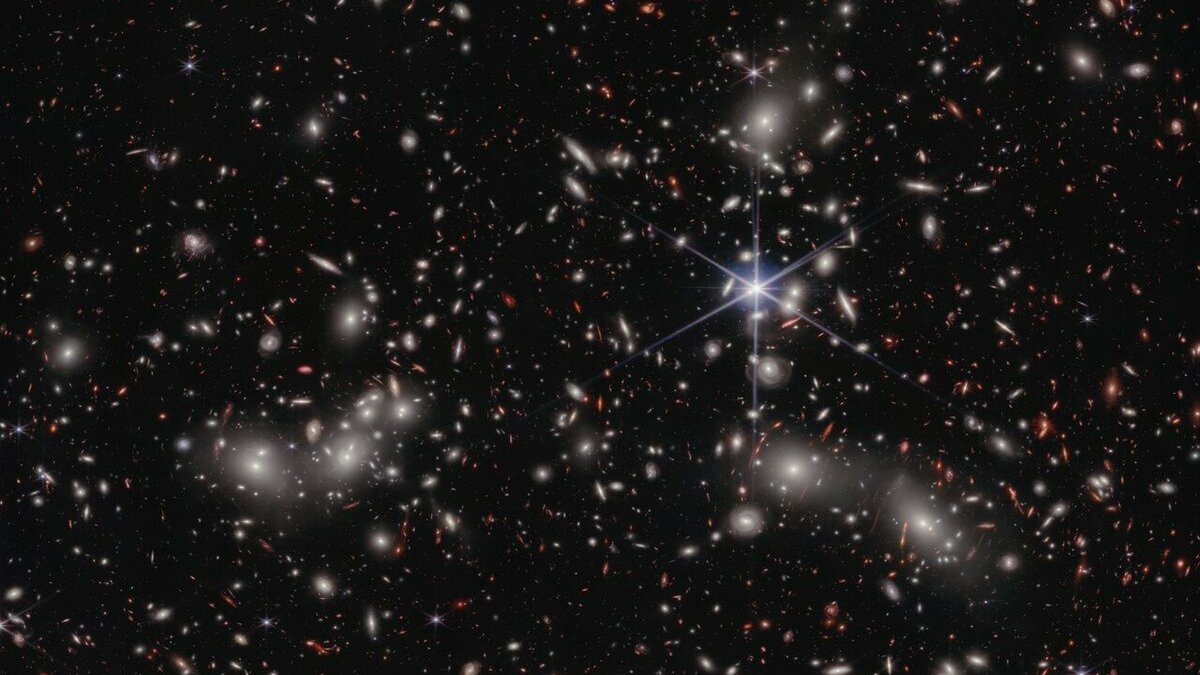
The James Webb Space Telescope has captured a stunning image of Pandora's Cluster, revealing how the universe transitioned from its Dark Ages to a clear, observable state. By observing faint, ancient galaxies through a natural gravitational lens, astronomers discovered that these galaxies were emitting significant amounts of ultraviolet light, enough to break down the dense gases suffocating space and reveal brilliant starlight. This breakthrough sheds light on the era of "reionization" and showcases the Webb telescope's unparalleled ability to peer into the early cosmos and study distant exoplanets.
astronomy1 year ago

"Pandora's Cluster: New Discoveries Unveiled by Researchers"

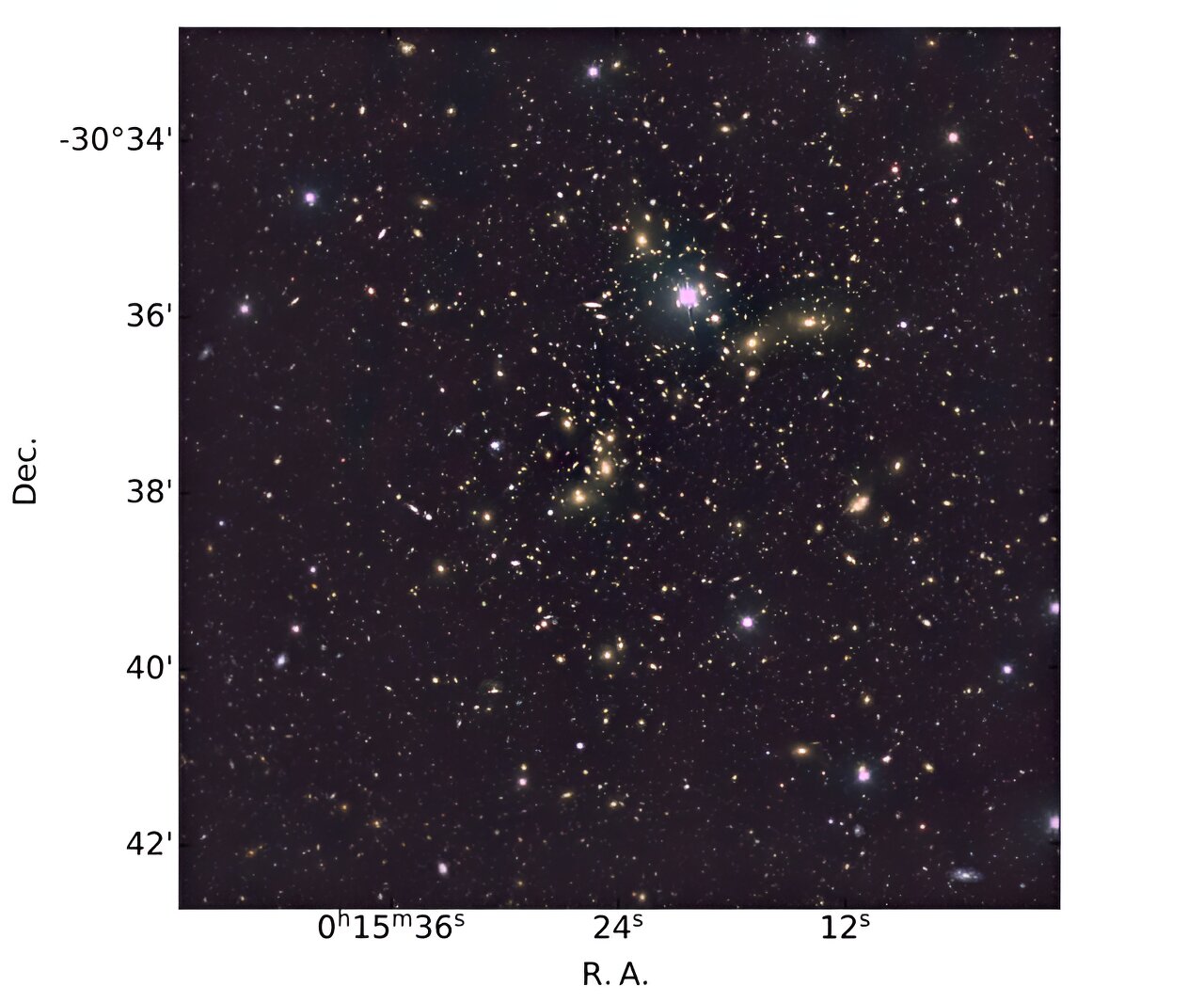
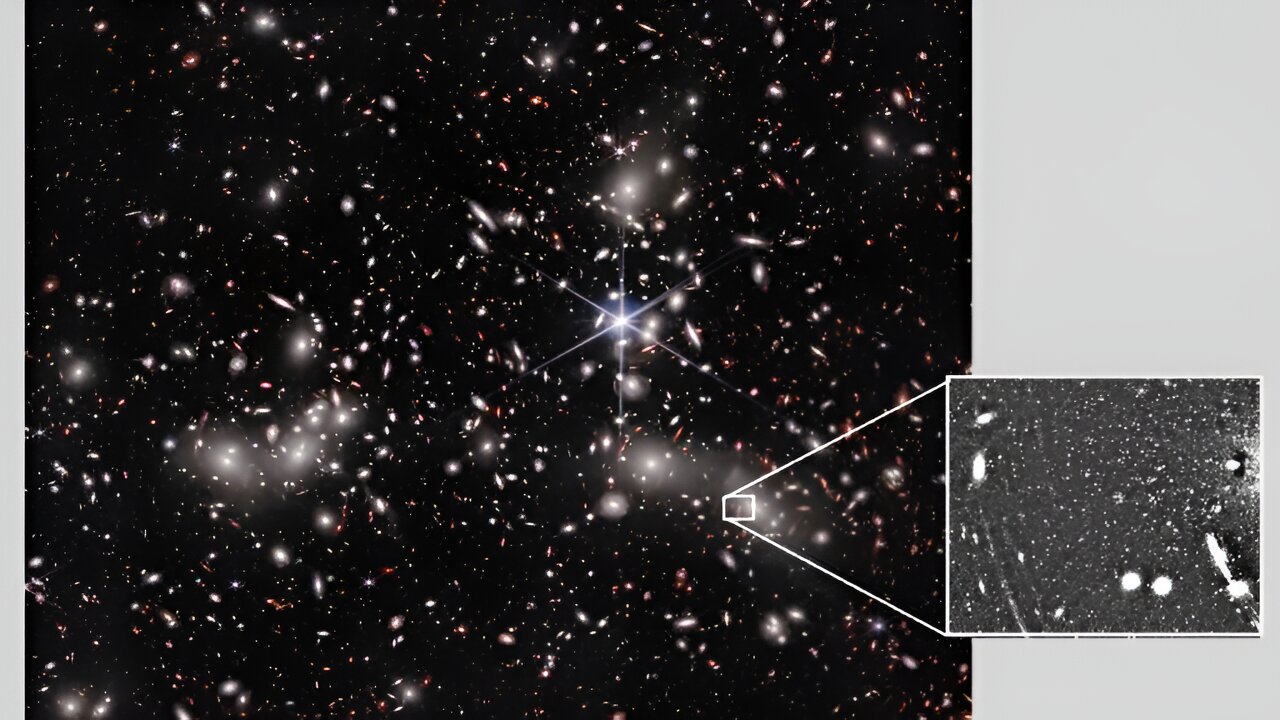
Italian astronomers used the Magellan Telescopes to observe the giant galaxy cluster Abell 2744, also known as Pandora's Cluster, and presented their findings in a paper. The cluster, estimated to be 4 trillion times more massive than the sun, is the result of a complex merger of at least four smaller galaxy clusters. The new observations revealed the cluster's projected total mass and uncovered the presence of three high-density peaks, confirming that it is undergoing a complex merger. This study provides valuable insights into galaxy evolution and cosmology.

astronomy2 years ago

Unveiling the Secrets of Pandora's Cluster: Astronomers Peer into Billions of Years Past

Astronomers have used data from the James Webb Space Telescope to study Pandora's Cluster, a remote giant cluster of galaxies located 3.5 billion light years away. Specifically, they focused on the old, compact clusters of stars known as globular clusters within the galaxies. By examining these clusters, they can gain insights into the past history and evolution of galaxies. The James Webb Space Telescope's deep imaging capabilities have allowed them to observe features of star clusters from 3.5 billion years ago, providing new tests for theoretical predictions and enhancing our understanding of galaxy histories.

astronomy2 years ago

JWST Uncovers Unprecedentedly Distant Galaxies

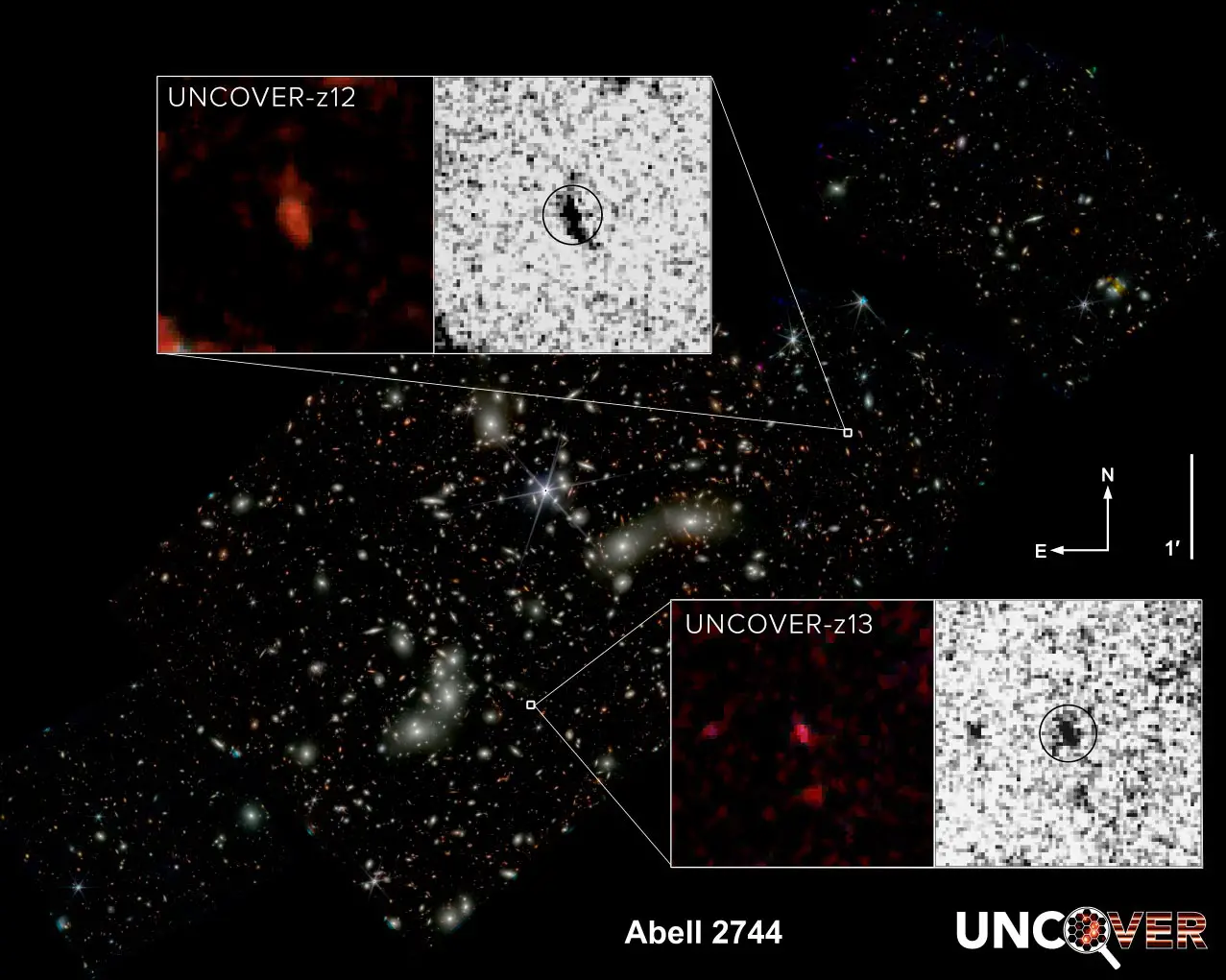
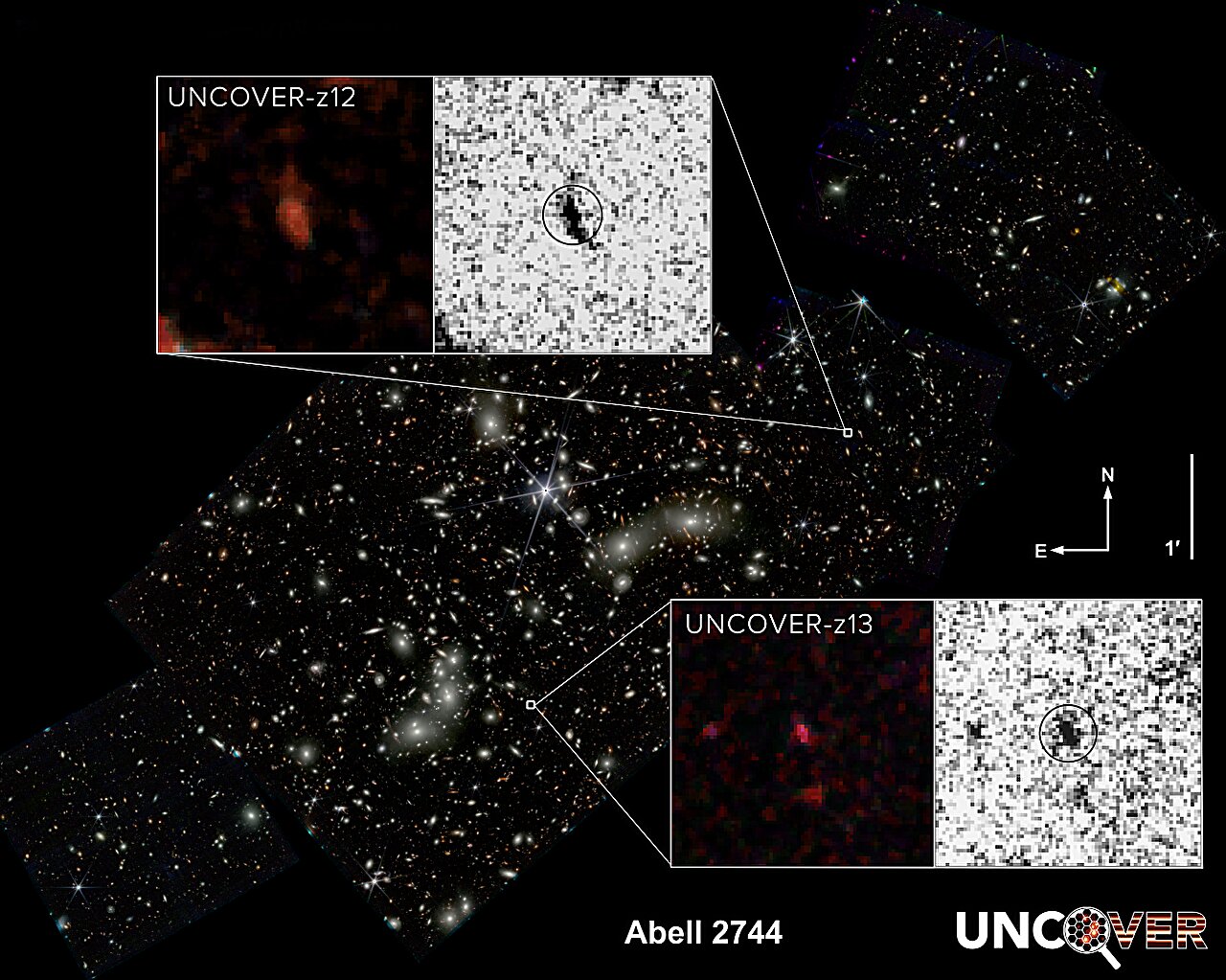
Using the James Webb Space Telescope, astronomers have discovered two of the most distant galaxies ever observed, located 33 billion light-years away behind the gravitational lens of Pandora's Cluster. These galaxies are larger than any previously detected at such distances and have unique shapes, resembling a "peanut" and a "fluffy ball." The light from these ancient galaxies, three times older than Earth, provides insights into the physics of the early universe near the cosmic dawn.

astronomy2 years ago

"James Webb Space Telescope Uncovers Distant Galaxies Defying Astronomical Theories"

The James Webb Space Telescope has discovered the second- and fourth-most distant galaxies ever observed, located in Pandora's Cluster. These galaxies challenge current theories of galaxy formation due to their unique size and appearance. The galaxies, which are nearly 33 billion light years away, offer insights into the early universe and provide valuable information about the formation and growth of galaxies during that time.

astronomy2 years ago

"James Webb Space Telescope Uncovers Second-most Distant Galaxy"

The James Webb Space Telescope (JWST) has confirmed the discovery of the second- and fourth-most distant galaxies ever observed, located in Pandora's Cluster. Using spectroscopic data from JWST, researchers were able to confirm the distance and properties of these ancient galaxies, shedding light on early galaxy formation. The galaxies, which are larger and have unique shapes compared to previously discovered galaxies at this distance, offer insights into the diversity of galaxies in the early universe. The light from these galaxies traveled for nearly 33 billion light years to reach Earth, providing a glimpse into the past and the physics that governed the early universe.

astronomy2 years ago

James Webb Telescope's Deep-Field Image of Pandora's Cluster Shatters Our Understanding of Galaxies.

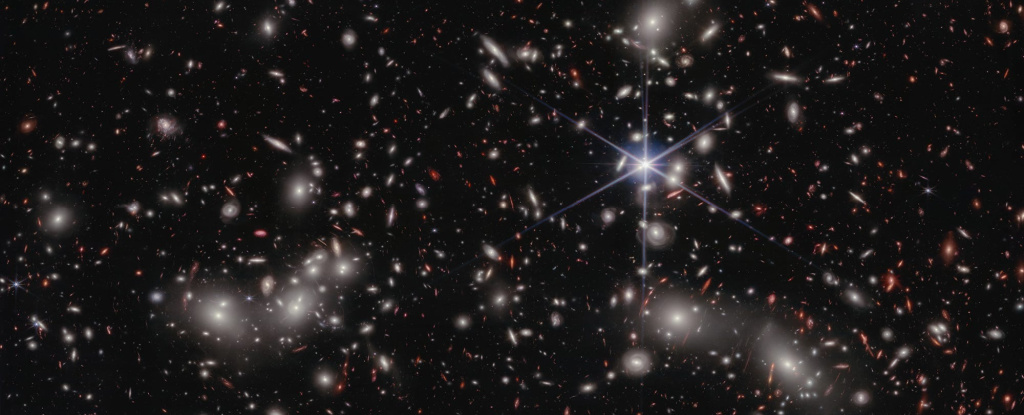
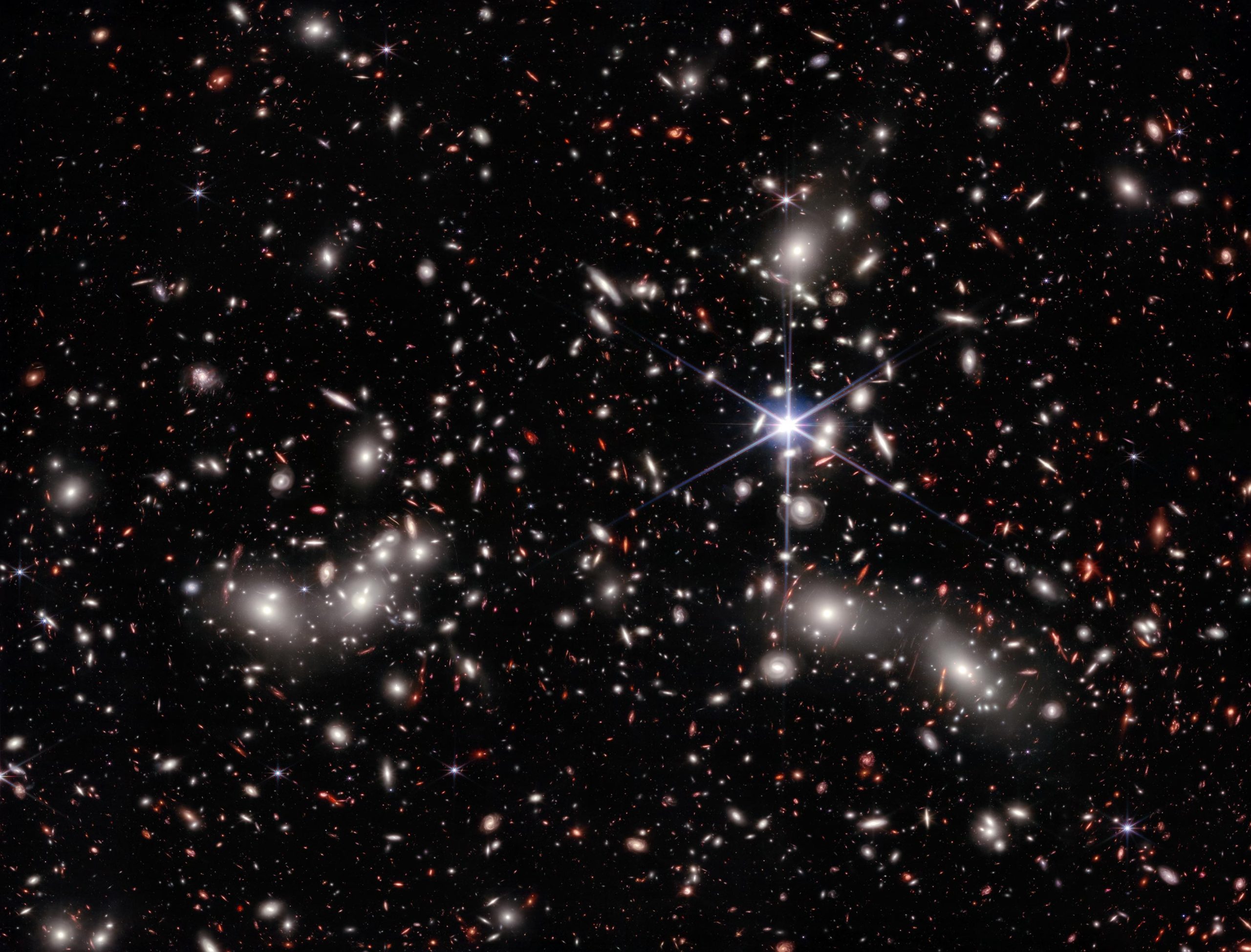
The James Webb Space Telescope has captured a detailed image of Pandora's Cluster, a region of space where multiple galaxy clusters are merging, using gravitational lensing to magnify much more distant galaxies behind it. The image displays roughly 50,000 sources of near-infrared light, including some never-before-seen features, and offers new insight into cosmology and galaxy evolution. The UNCOVER team used Webb's Near-Infrared Camera to capture the cluster and plans to make follow-up observations with the Near-Infrared Spectrograph in the summer of 2023.