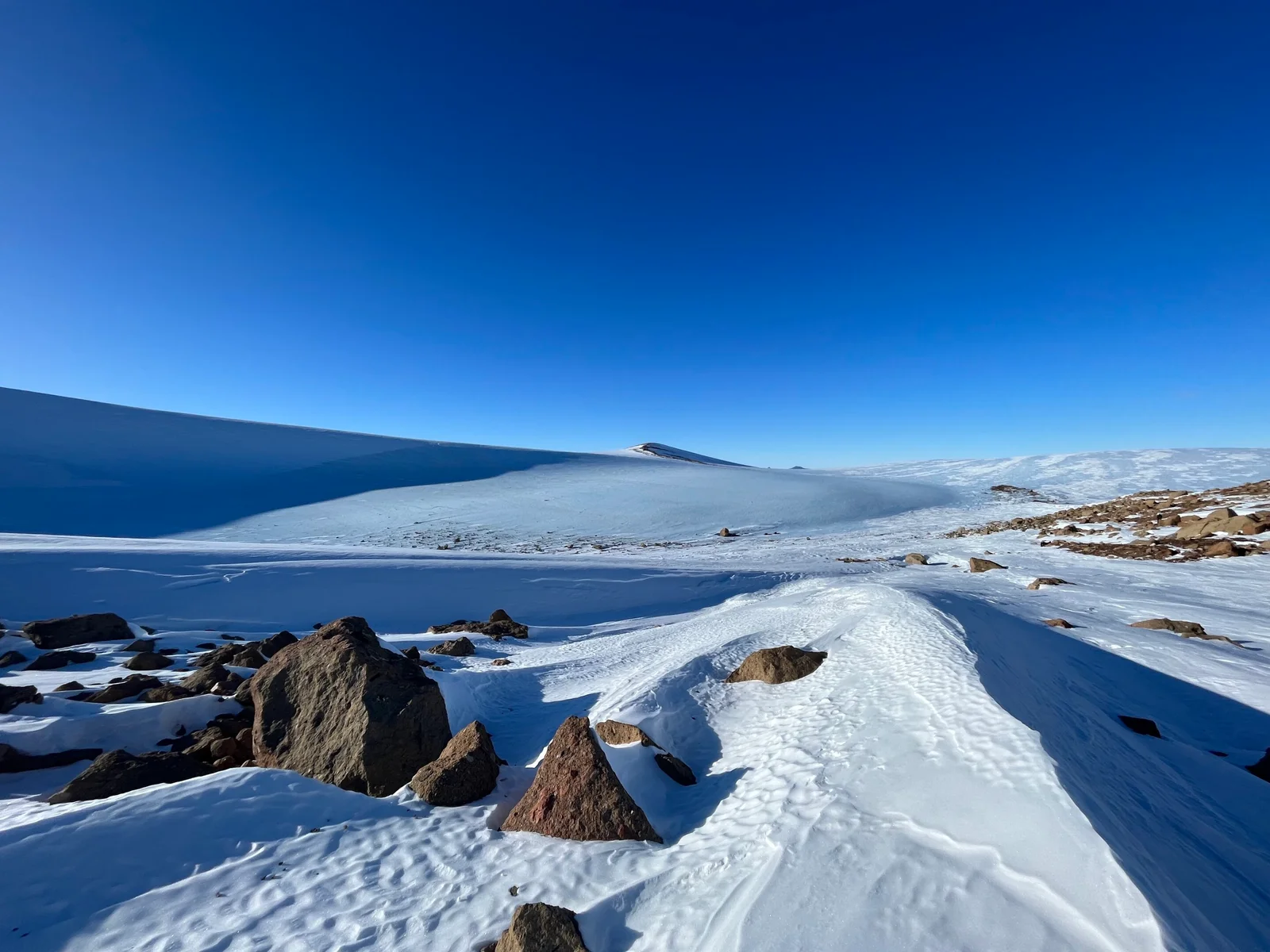
Scientists have discovered 6-million-year-old ice in Antarctica's Allan Hills, providing unprecedented insights into Earth's past climate and long-term cooling trends, which could help understand natural climate variability and future changes.
Earth's climate has experienced a vast range of temperatures and conditions over the past half-billion years, driven primarily by atmospheric CO2 levels, with periods of extreme heat and cold that have shaped the evolution and survival of animal life. Modern climate change, caused by rapid CO2 emissions, risks pushing the planet beyond its historical bounds, threatening the biosphere.
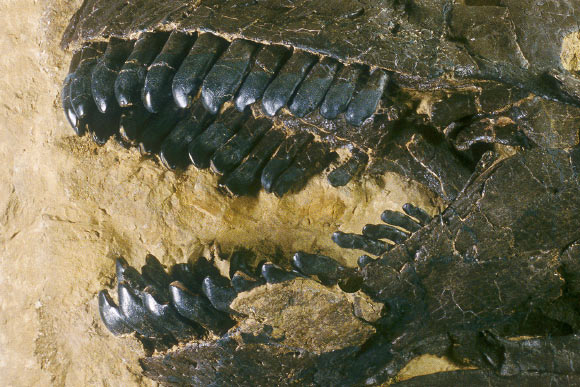
Scientists analyzed dinosaur tooth enamel to reconstruct Mesozoic atmospheric CO2 levels and photosynthesis, revealing that Earth's atmosphere contained significantly more CO2 and had higher plant productivity during that era, providing new insights into ancient climate dynamics.
A new study challenges the long-held belief that northern Africa became arid around 3 million years ago, showing evidence that rainfall remained stable during a critical period of human evolution, which may prompt a reevaluation of theories linking climate change to early human development.
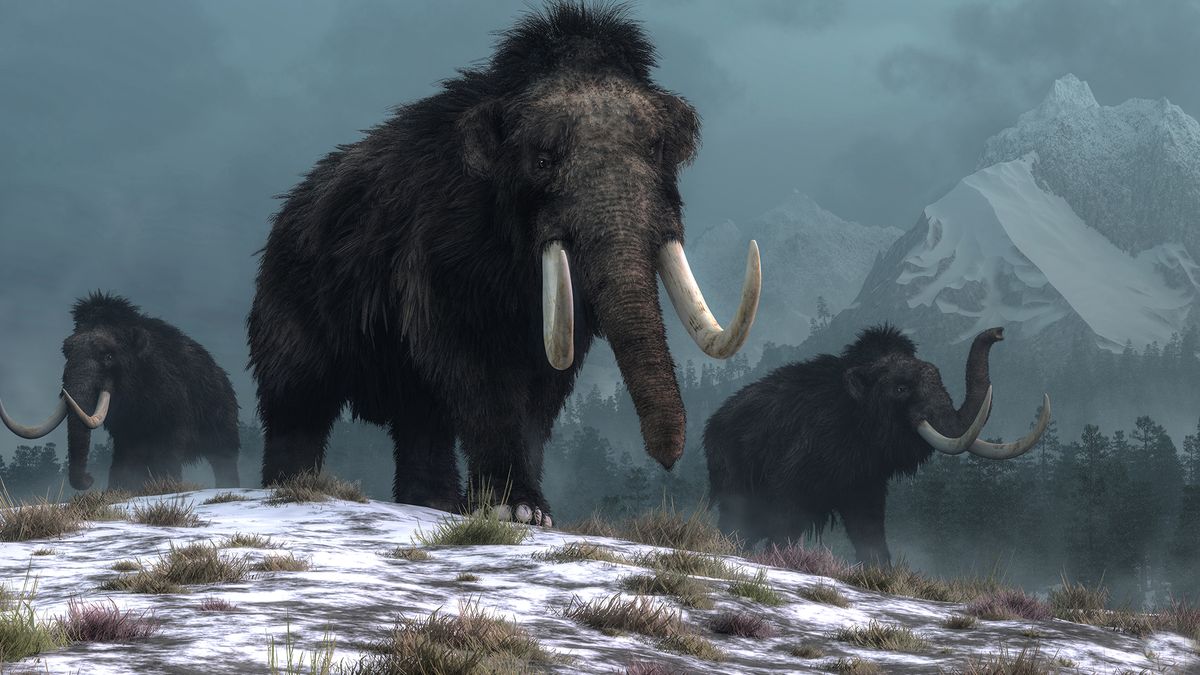
Europe's first humans, Homo erectus, likely went extinct about 1.1 million years ago due to an extreme cooling event. Fossils and stone tools indicate that Homo erectus arrived in Europe from Asia between 1.8 million and 1.4 million years ago but disappeared around 1.1 million years ago. The cooling event, supported by evidence from marine sediment cores, caused a significant drop in temperature and may have led to the extinction of archaic humans in Europe. The cold climate made it difficult for them to find food, and their lack of adaptations for the cold likely contributed to their demise. This study highlights the impact of climate variability on early human populations and its relevance to understanding modern climate change.
Observations from satellites and weather stations confirm that the Earth has been rapidly warming over the past 44 years, and data from as far back as 1850 shows a clear rise in average temperatures. While it is challenging to precisely determine temperatures from thousands of years ago, paleoclimatologists are confident that the current warming trend is exceptional compared to any period since before the last ice age, about 125,000 years ago. Although it is difficult to pinpoint the hottest day in the past 100,000 years, scientists estimate that temperatures during a warm period 6,000 years ago were likely similar to current conditions. However, the current heat is unprecedented due to its rapidity and the fact that it is caused by human activities, particularly the burning of fossil fuels and greenhouse gas emissions.