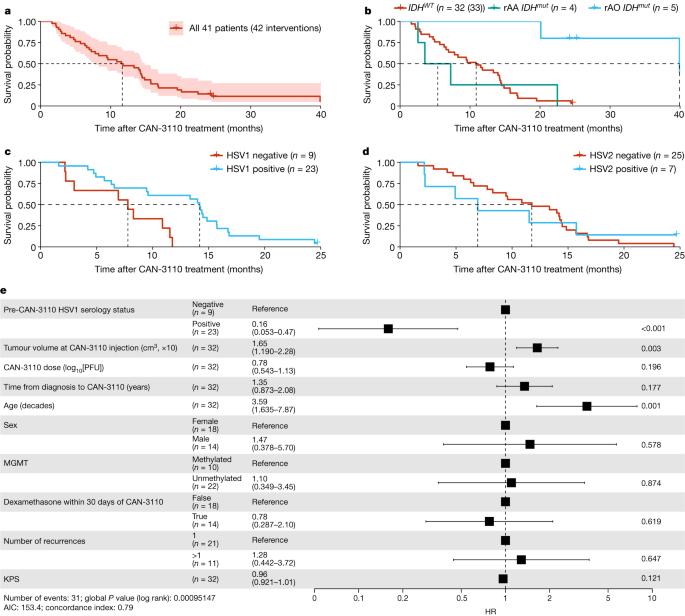
A phase 1 trial in 41 patients with recurrent glioblastoma found that a single injection of a modified herpes simplex virus can kill tumor cells and recruit enduring T cell activity into the tumor, correlating with longer survival than historical outcomes.
A phase I clinical trial involving 41 patients with recurrent high-grade gliomas (HGGs) or glioblastoma (GBM) found that treatment with an oncolytic virus called CAN-3110 resulted in increased survival in patients with positive herpes simplex virus type 1 (HSV1) serology. The study also showed that CAN-3110 treatment led to an increase in tumor-infiltrating lymphocytes (TILs), particularly CD8+ and CD4+ T cells, in the injected tumors. Furthermore, the persistence of CAN-3110 in the tumors was associated with negative HSV1 serological status. These findings suggest that intralesional oncolytic treatment modalities can alter the immunosuppressive tumor microenvironment and improve the efficacy of immunotherapy in solid cancers like GBM.