
Tag

Oj287

All articles tagged with #oj287

"Double Black Hole System Causes Massive Cosmic Burst"
astronomy2 years ago

"Double Black Hole System Causes Massive Cosmic Burst"

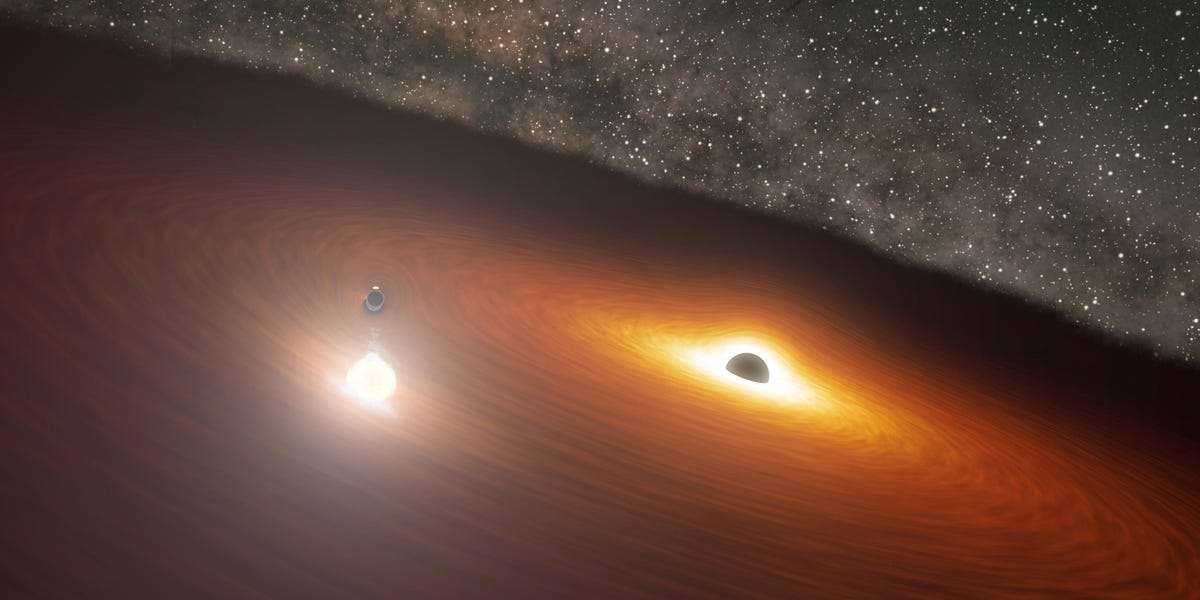
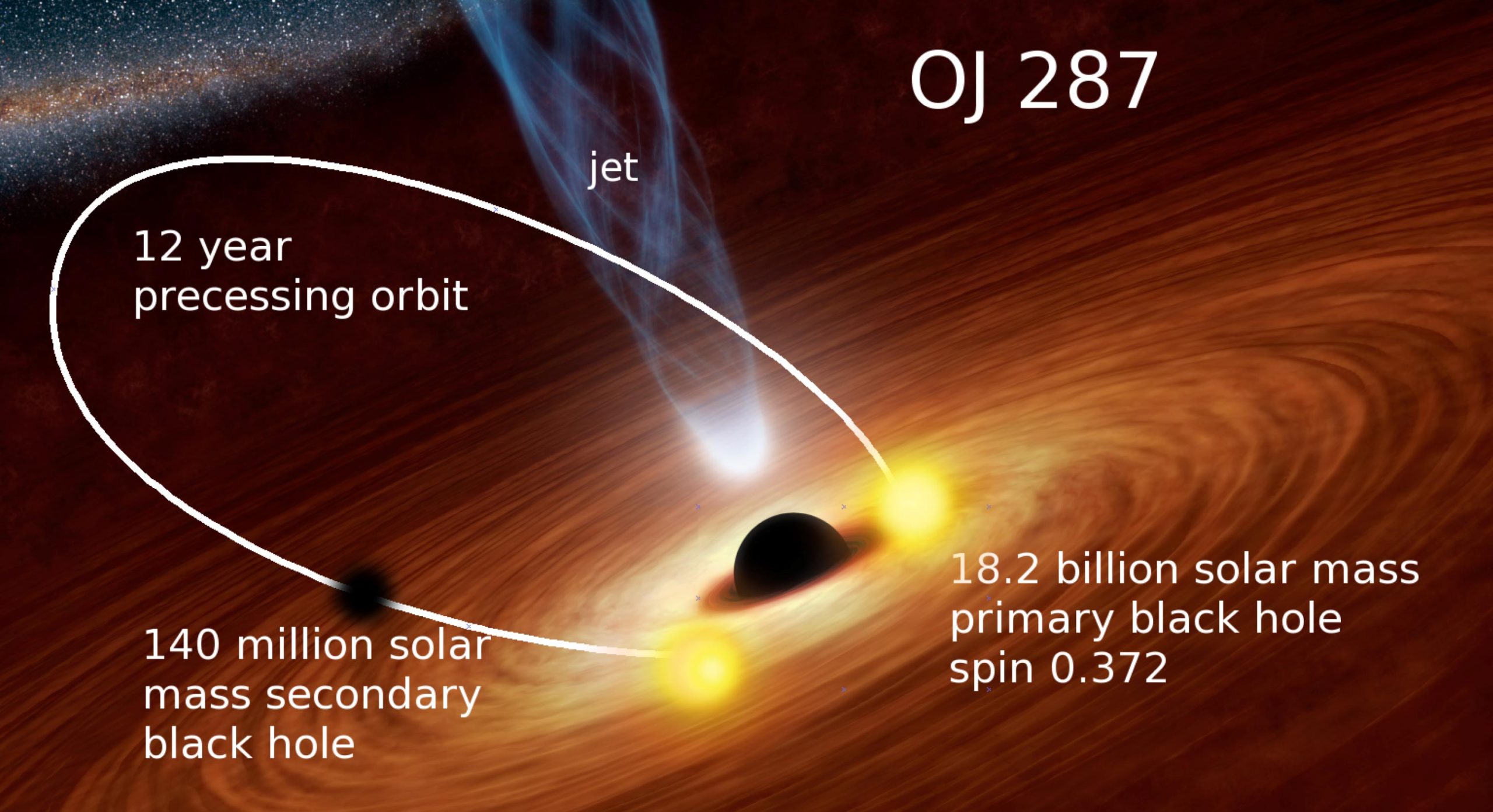
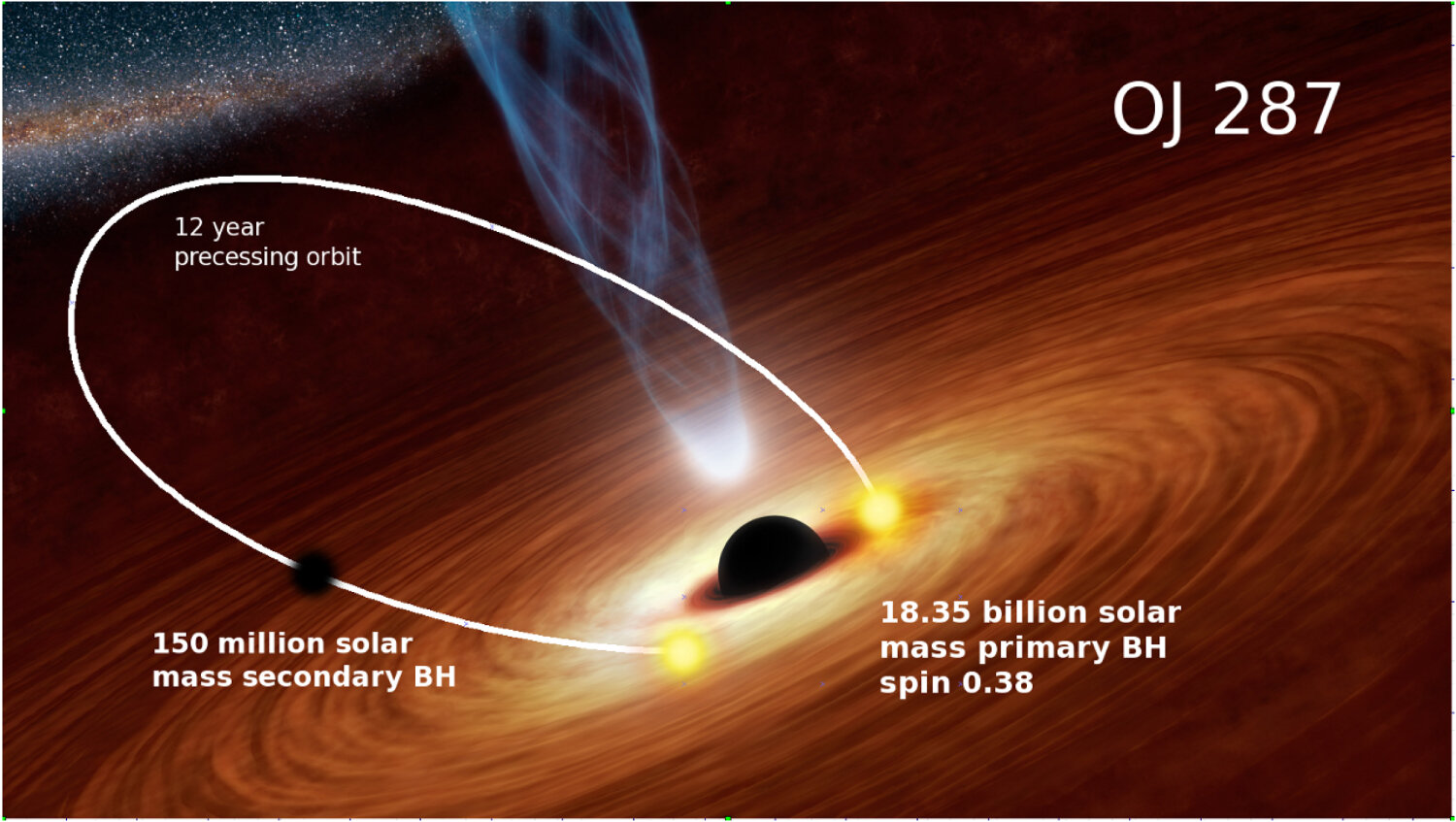
A brilliant cosmic burst 100 times brighter than our galaxy was observed coming from a binary system consisting of two black holes in galaxy OJ287, located 5 billion light-years away. The smaller black hole, with a mass of about 150 million suns, orbits its larger companion, with a mass of 18 billion suns, at near the speed of light. The burst occurred when the smaller black hole crashed into a disk of gas surrounding the larger black hole, energizing an explosive jet of radiation that ejected from the smaller black hole. This is the first time astronomers have observed a flare directly from the smaller black hole in OJ287, providing observational proof of its existence.
New Discoveries in Supermassive Black Hole Research.
astronomy2 years ago

New Discoveries in Supermassive Black Hole Research.

Astronomers have directly observed the second supermassive black hole in the binary system of OJ287, confirming the binary system hypothesis. The black holes are so close together that they merge into one dot, but the fact that it consists of two black holes becomes apparent by detecting two different types of signals. The secondary black hole was observed plunging through the accretion disk for the first time, producing a blue flash and new types of flares. These findings make OJ287 a prime candidate for further study of gravitational waves.

Discovery of Secondary Supermassive Black Hole in Binary System
astronomy2 years ago

Discovery of Secondary Supermassive Black Hole in Binary System

Astronomers have detected a secondary supermassive black hole in the well-known binary system of OJ287, located 5 billion light years away in the constellation Cancer. The black holes are so close together that they merge into one dot, but the team was able to observe signals from both black holes through flares and gamma rays. The smaller black hole was directly observed for the first time, producing a blue flash and a one-day burst of light. These efforts make OJ287 the best candidate for a supermassive black hole pair that is sending gravitational waves in nano-hertz frequencies.