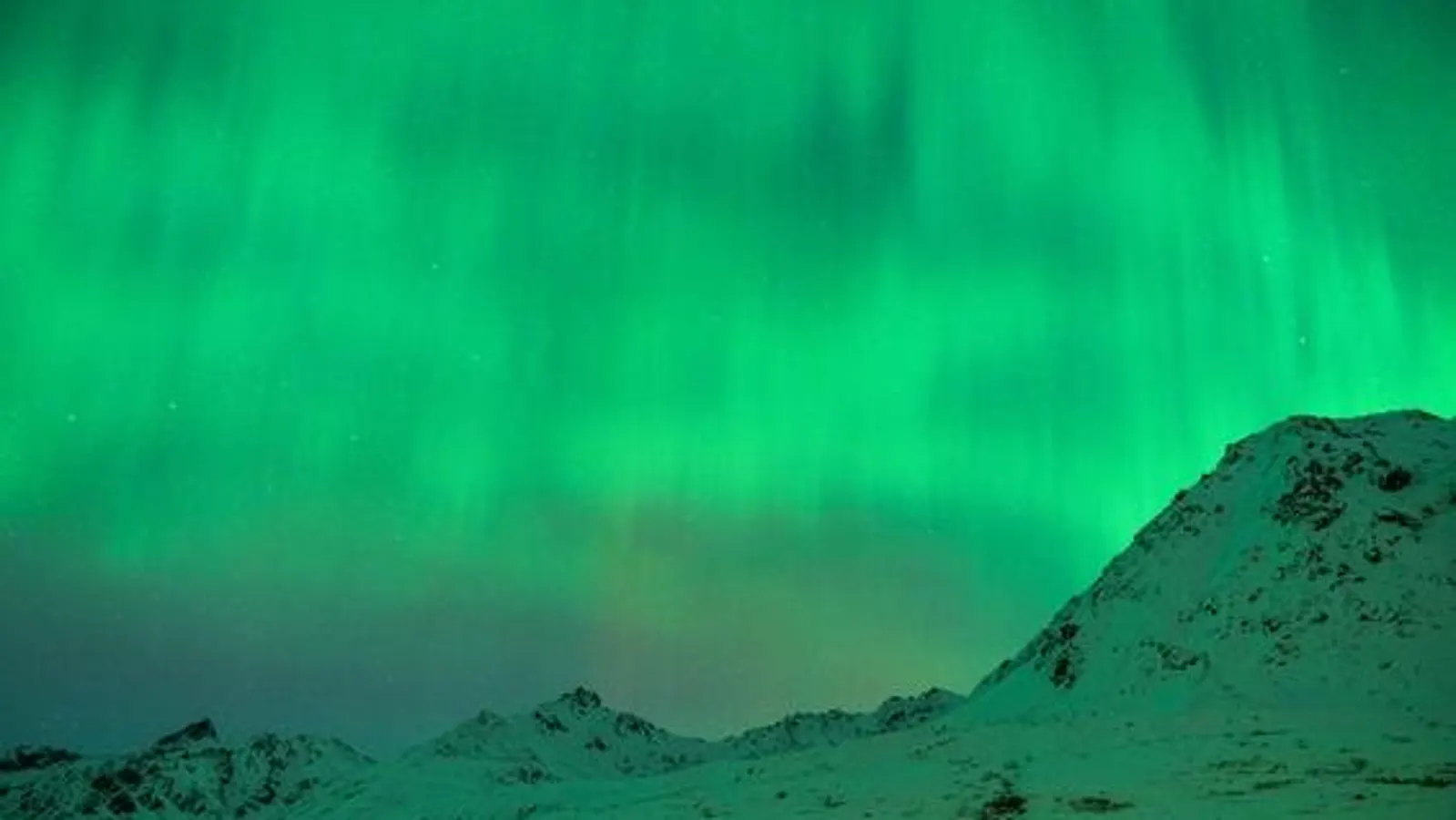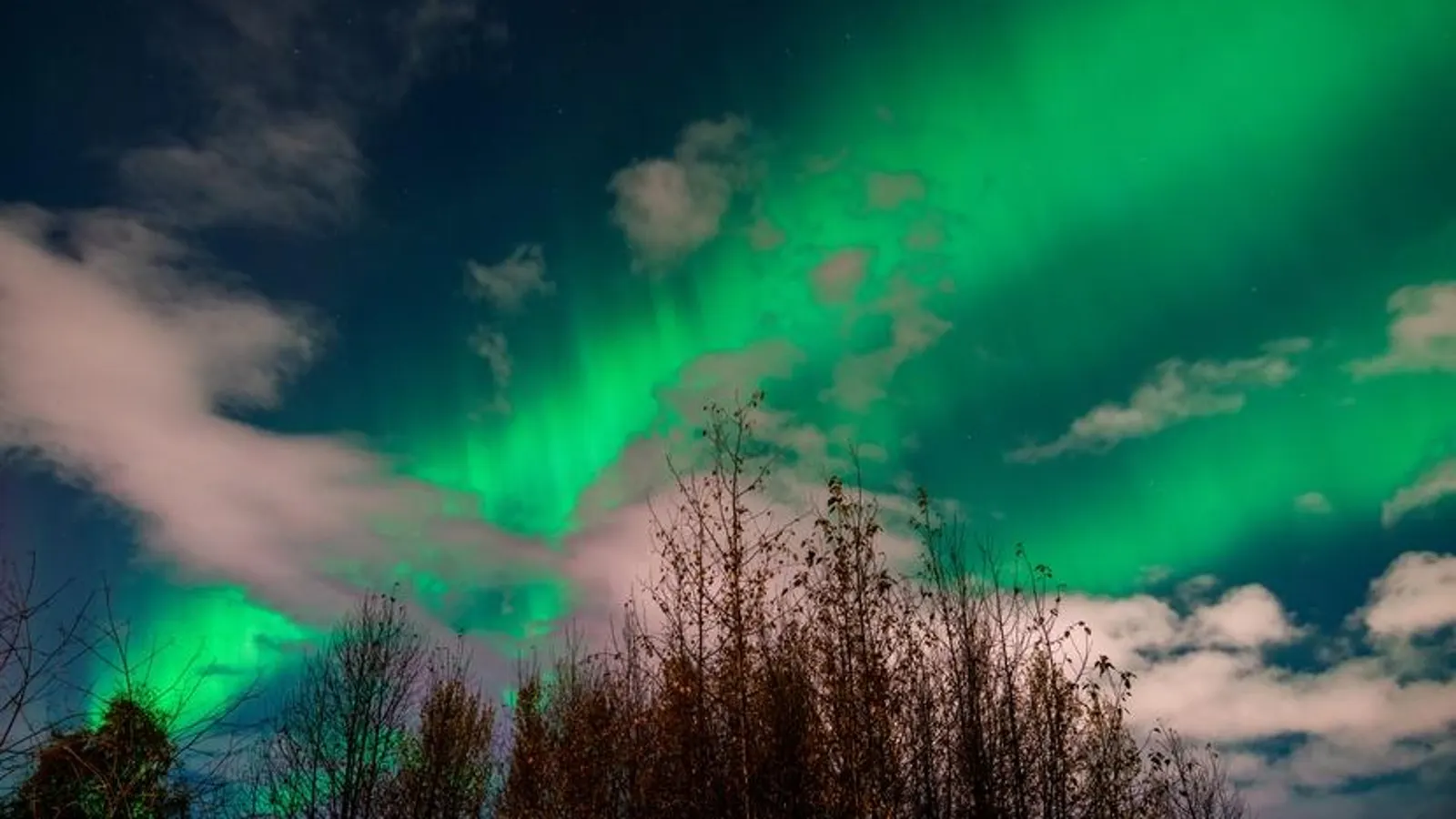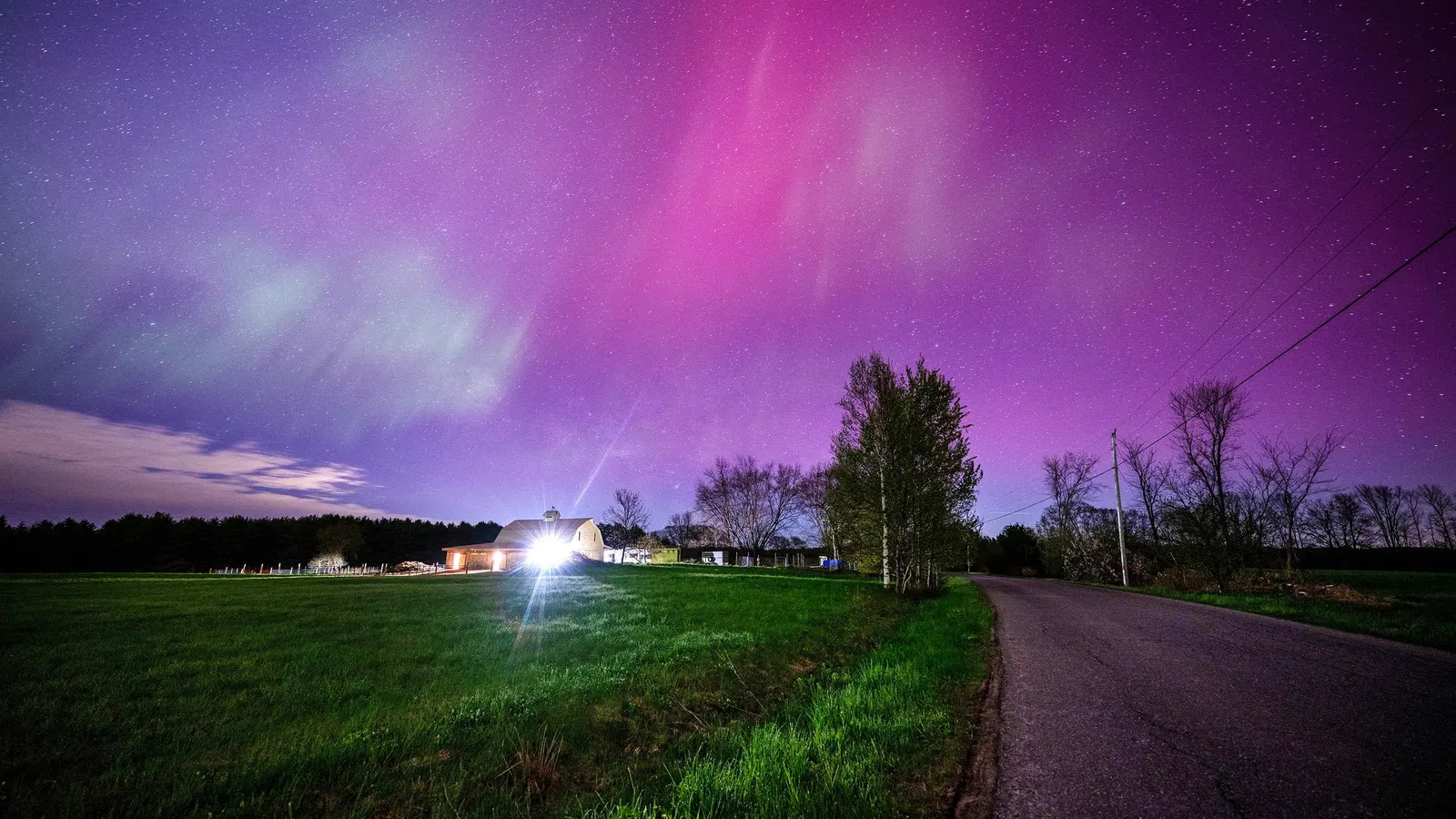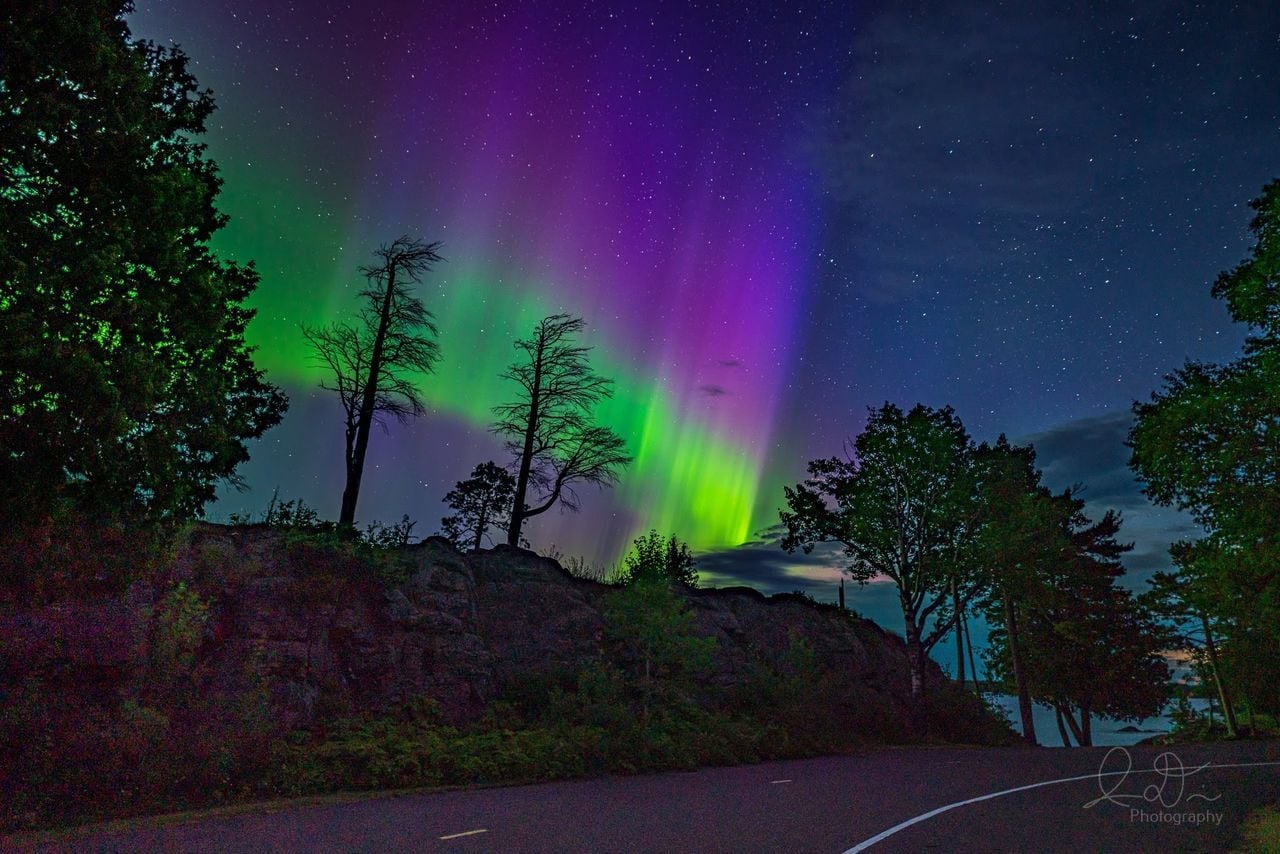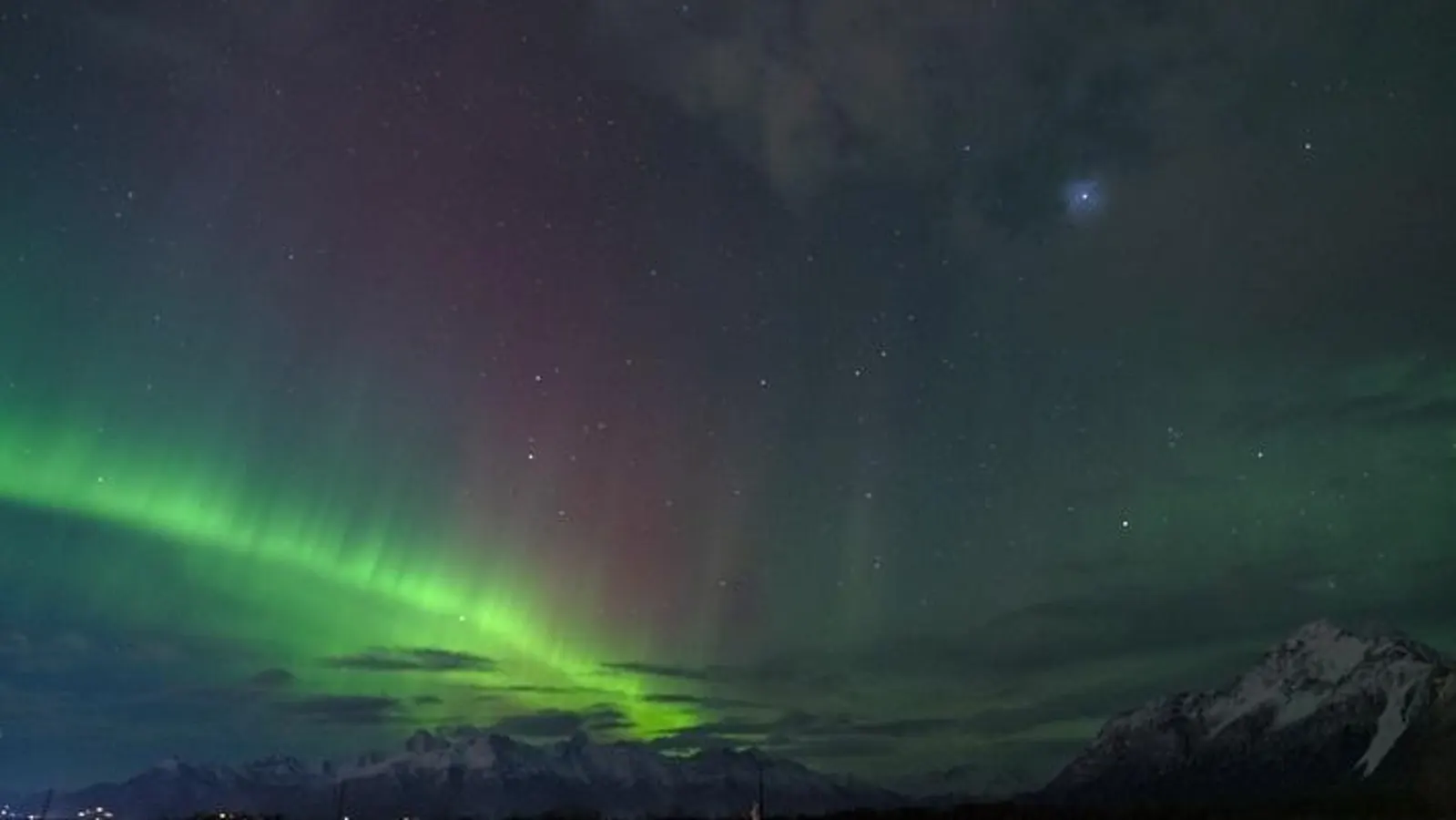
The northern U.S. may witness the aurora borealis on Saturday night, with states like Michigan, Wisconsin, and Washington having a chance to see the northern lights due to a Kp index of three, as forecasted by NOAA. This auroral activity is expected to continue through Monday, with potential disruptions to radio communications and power grids due to solar radiation. The best viewing times are between 10 p.m. and 2 a.m. local time, away from light pollution. The increased visibility of the northern lights is linked to recent solar activity and a recent supermoon event.
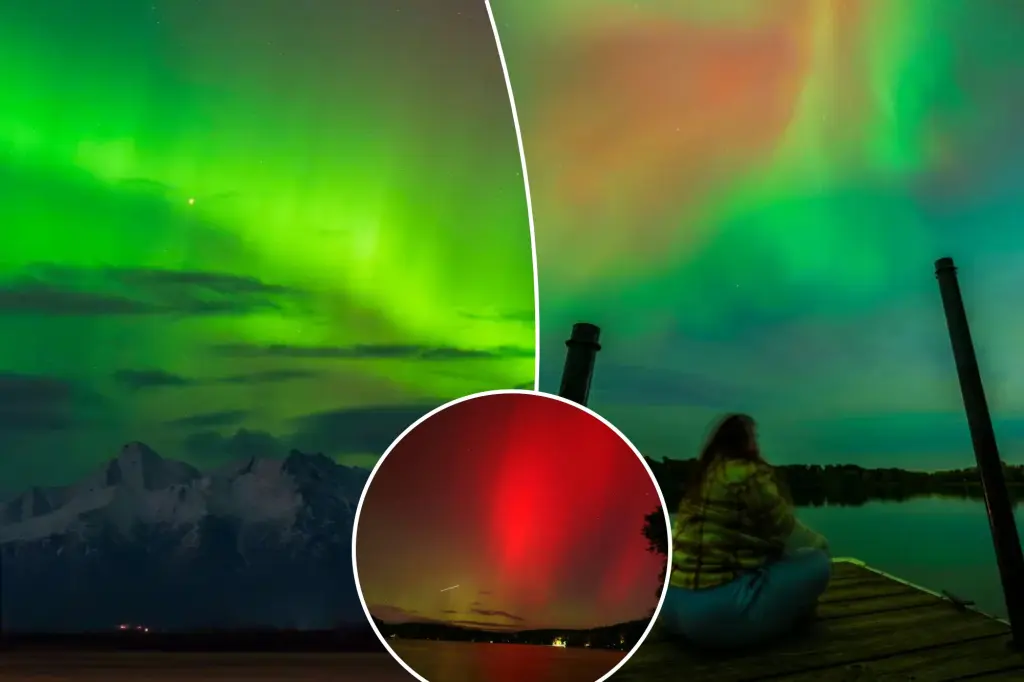
A geomagnetic storm is providing a rare opportunity for several U.S. states, including parts of New York, to witness the northern lights early this week. The National Oceanic and Atmospheric Administration has rated the storm as moderate, with the best viewing times between 10 p.m. and 2 a.m. on Monday and Tuesday. While cloud cover may obstruct views in some areas, states like Alaska, North Dakota, and Minnesota are in prime positions for sightings. The aurora borealis could extend into the northernmost parts of New York by Tuesday night.
The National Oceanic and Atmospheric Administration (NOAA) forecasts that the aurora borealis will be visible in some northern U.S. states on Monday night, with a Kp index of 3, indicating moderate auroral activity. The visibility is expected to improve on Tuesday night with a Kp index of 4, potentially allowing more states to view the northern lights. The best viewing times are between 10 p.m. and 2 a.m. local time. This increased auroral activity is due to the sun's current solar maximum phase, which is part of its 11-year cycle.
The National Oceanic and Atmospheric Administration (NOAA) forecasts that a minor geomagnetic storm may make the aurora borealis visible in several northern U.S. states, including Alaska, Washington, and Minnesota, on Thursday night. The aurora, with a Kp index of 4, is best viewed between 10 p.m. and 2 a.m. local time. This increased solar activity is part of the sun's "solar maximum" phase, which is expected to continue over the next year.
The National Oceanic and Atmospheric Administration (NOAA) forecasts increased auroral activity, with the northern lights potentially visible in parts of the northern U.S. states like Maine, Michigan, Minnesota, and Wisconsin due to a geomagnetic storm. The Kp index is expected to reach four on Tuesday and five on Thursday, indicating brighter auroras. The best viewing times are between 10 p.m. and 2 a.m., away from light pollution. This surge in celestial activity is linked to a solar maximum, which will continue to enhance visibility of the aurora borealis through 2025.
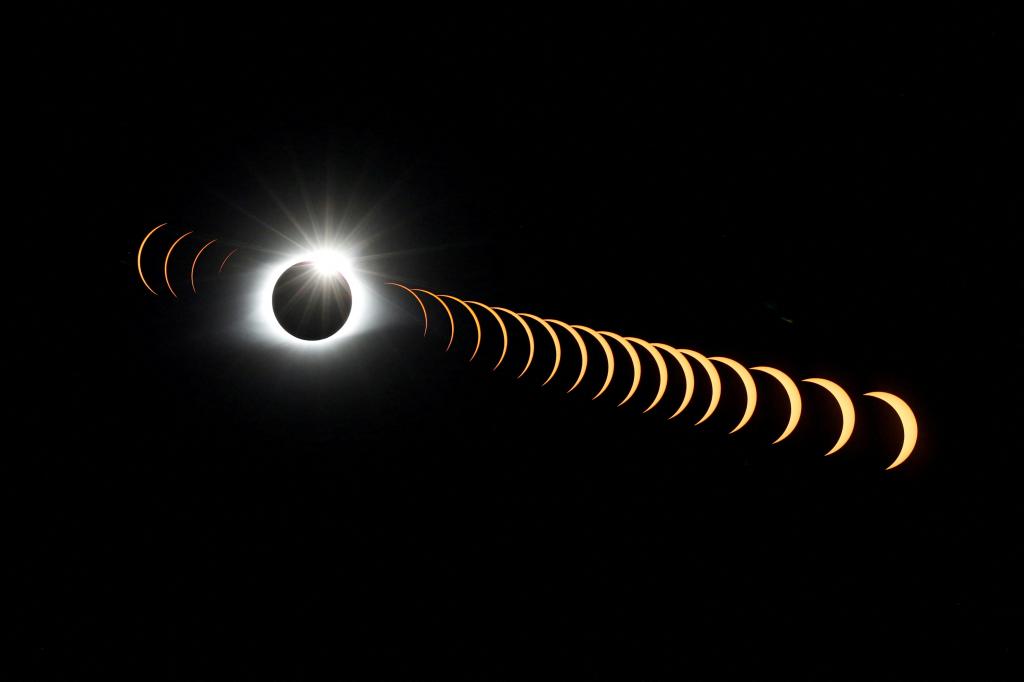
The next total solar eclipse visible from the United States will occur on March 30, 2033, with visibility from Alaska and coinciding with the peak season for the aurora borealis. Contrary to some reports, the next North American total solar eclipse after that will be on August 23, 2044, visible in Montana and North Dakota, with a subsequent similar eclipse on August 12, 2045. Additionally, the world will witness a total solar eclipse on August 12, 2026, with the path of totality falling over Greenland, Iceland, Spain, and parts of Portugal.
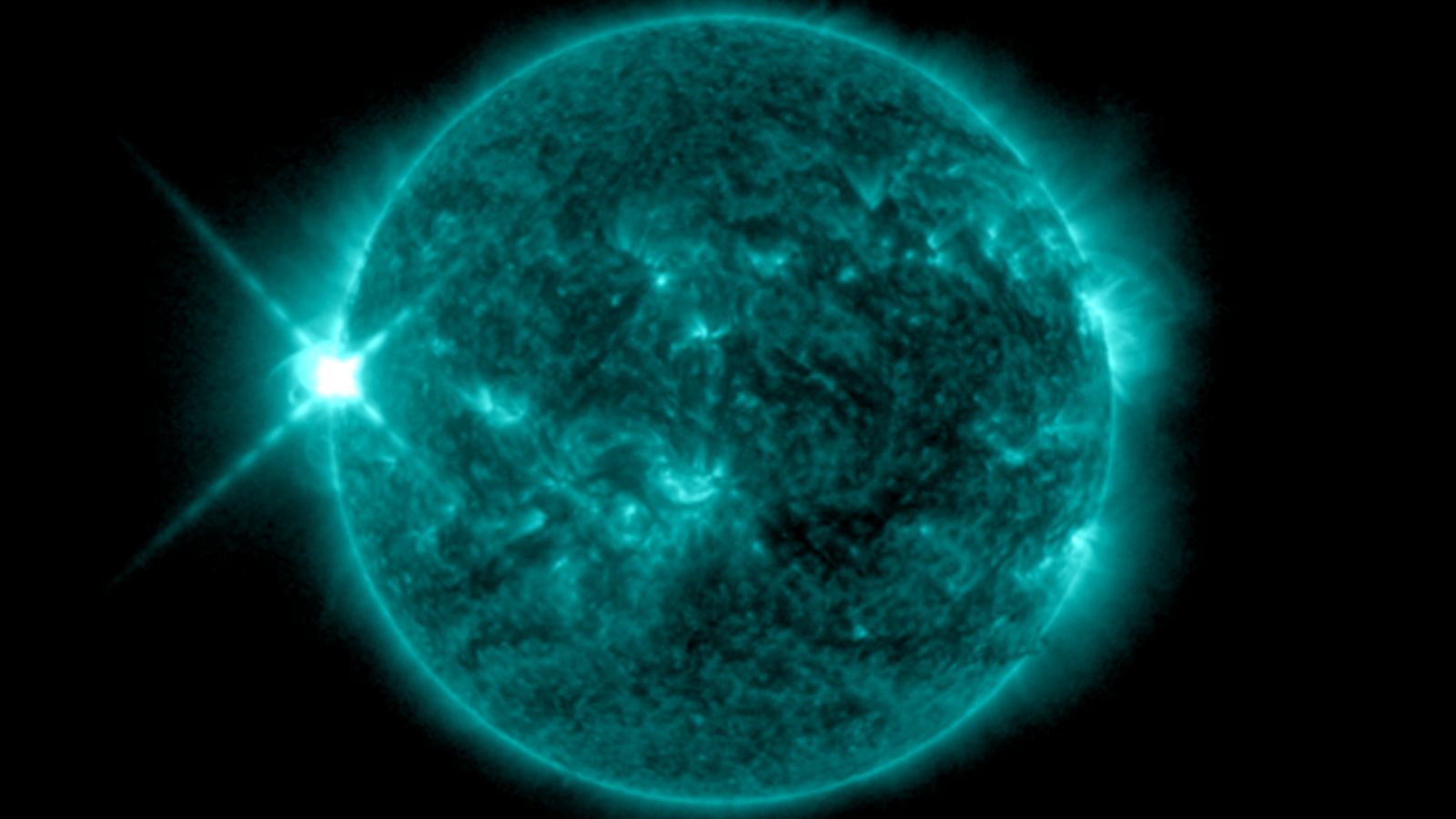
The Sun emitted its strongest solar flare since 2017, an X5.0 class, which may lead to visible auroras, including the northern lights, around January 2. Observers in favorable locations like Norfolk, UK, with clear northern horizons, are in a good position to witness the event. Solar flares are massive bursts of energy from the Sun that can cause the Earth's atmosphere to light up when charged particles interact with it. The potential for auroral displays depends on the interaction of these particles with Earth's magnetic field, and updates from space weather prediction services like NOAA can provide the latest information on visibility.
The year 2024 is expected to be an excellent time for viewing the Northern Lights in Michigan's Upper Peninsula due to the solar maximum. The Keweenaw Peninsula, being the northernmost point in Michigan, offers the best chance to witness the aurora borealis with its low light pollution and north-facing Lake Superior shoreline. Five recommended spots for stargazing include McLain State Park, Calumet Waterworks Park, Fitzgerald’s Restaurant & Hotel, Great Sand Bay, Esrey Park, and the Keweenaw Dark Sky Park. These locations provide ideal conditions for observing the Northern Lights, with additional resources and workshops available at the Keweenaw Dark Sky Park.