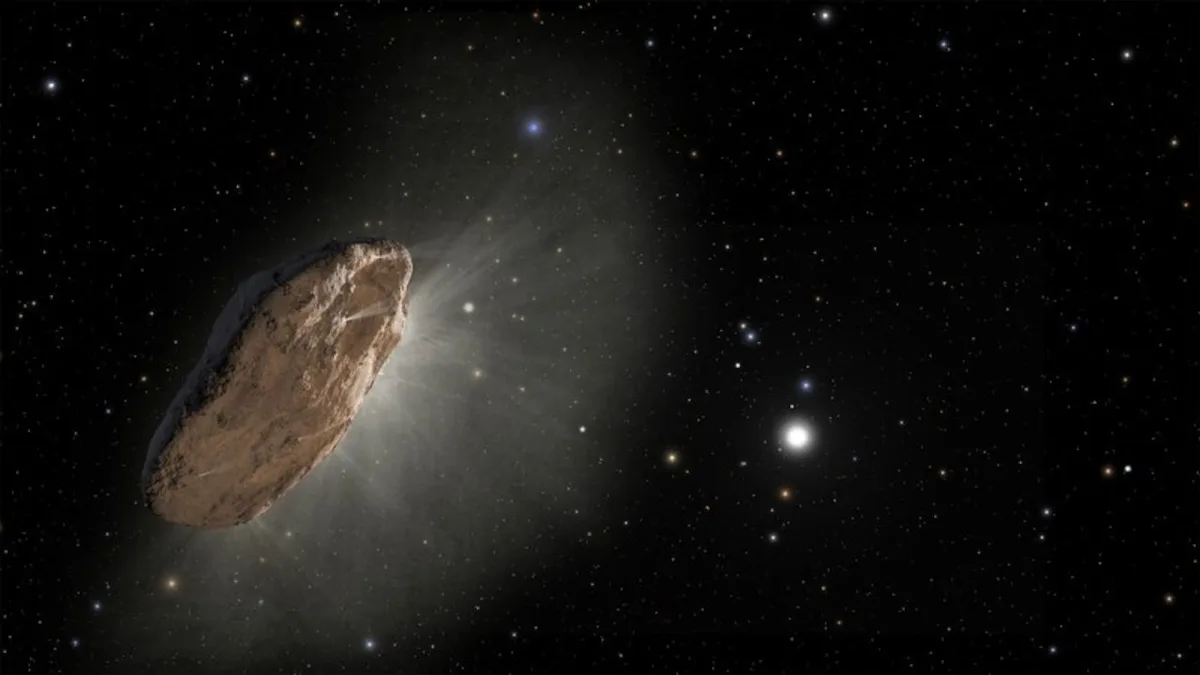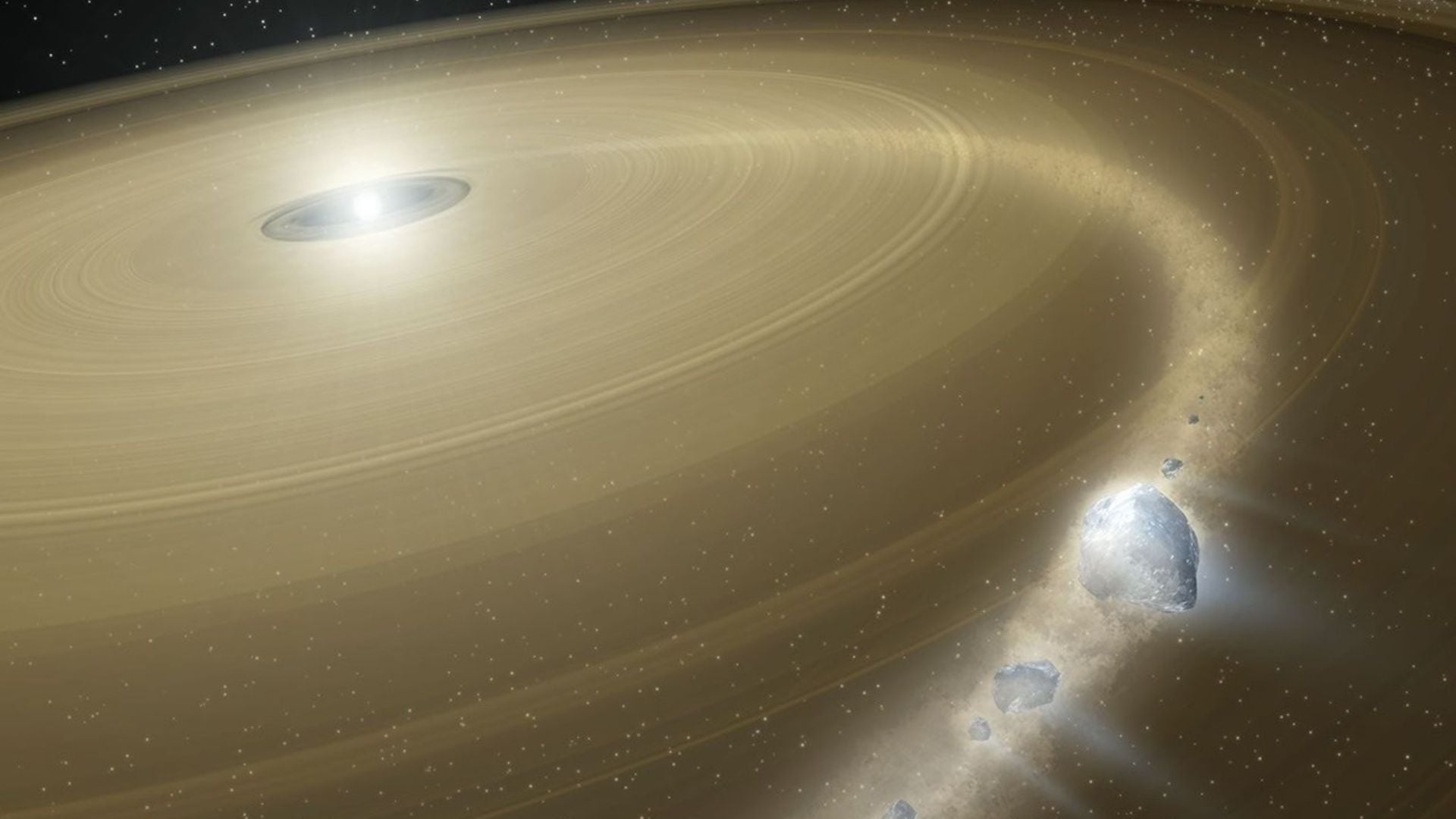
NASA's Hubble Space Telescope has observed a white dwarf star consuming a Pluto-like object rich in water ice and volatiles, providing insights into the future of our solar system as the star evolves into a white dwarf and potentially pulls in icy bodies from its Kuiper Belt.
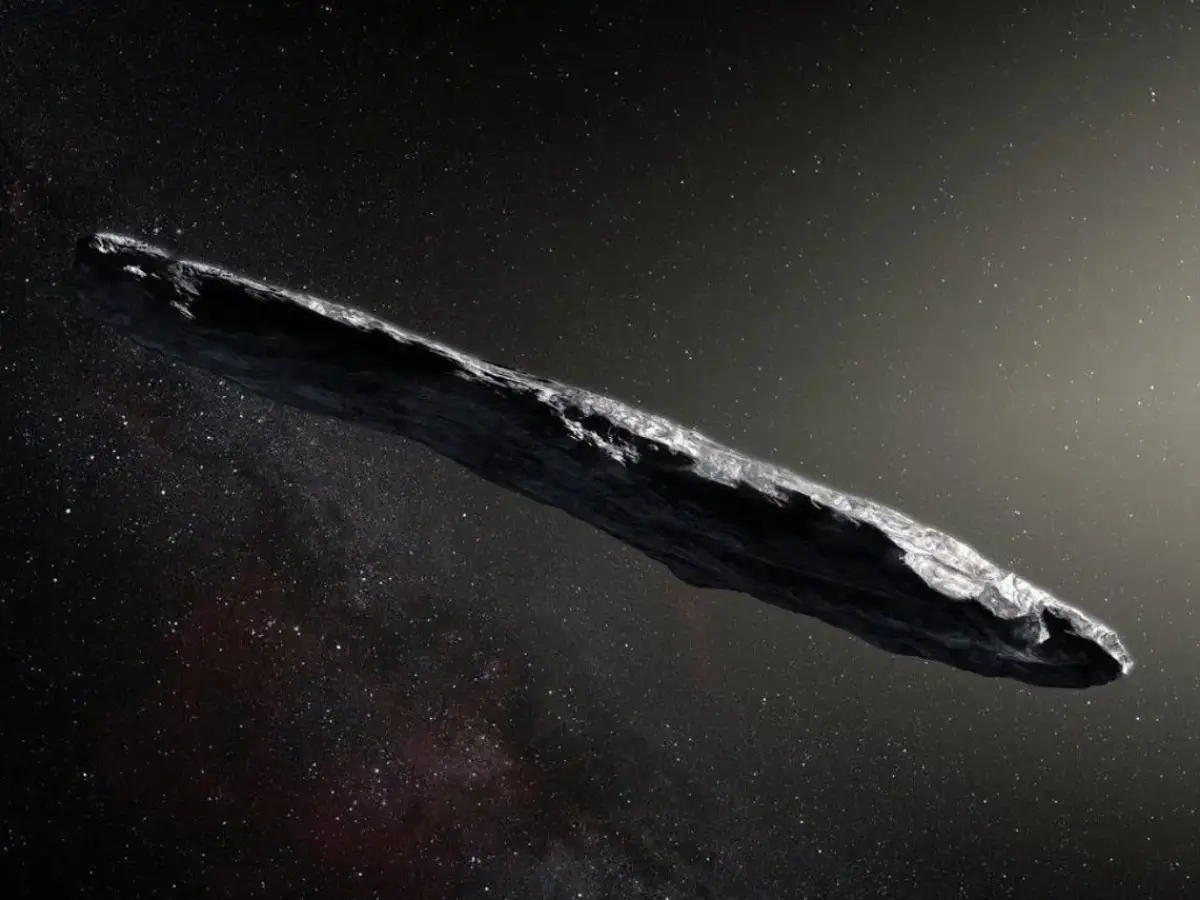
Scientists now believe 'Oumuamua is a fragment of an ancient Pluto-like body ejected from the solar system, composed mainly of nitrogen ice, and not a typical comet, providing new insights into the chaotic early history of our solar system.
Research suggests that 'Oumuamua, the first known interstellar visitor, may be a fragment of an icy exoplanet similar to Pluto, composed mainly of nitrogen ice, and represents a new class of celestial objects called 'exo-Plutos,' indicating such objects might be more common than previously thought.
Scientists suggest that 'Oumuamua, the first known interstellar object, is a fragment of an icy exoplanet, specifically an 'exo-Pluto' composed mainly of nitrogen ice, representing a new class of objects that may be more common than previously thought.