Asia-Pacific markets rose following Wall Street's gains, driven by AI stocks rebound after AMD's earnings beat; Japanese and Hong Kong markets led gains, while Chinese autonomous vehicle firms faced declines in their Hong Kong IPOs.
Japan's Nikkei 225 hit a record high above 51,000 driven by optimism over U.S.-Japan trade agreements and expectations of a Federal Reserve rate cut, amid positive market sentiment in Asia and the U.S. stock markets reaching new highs.
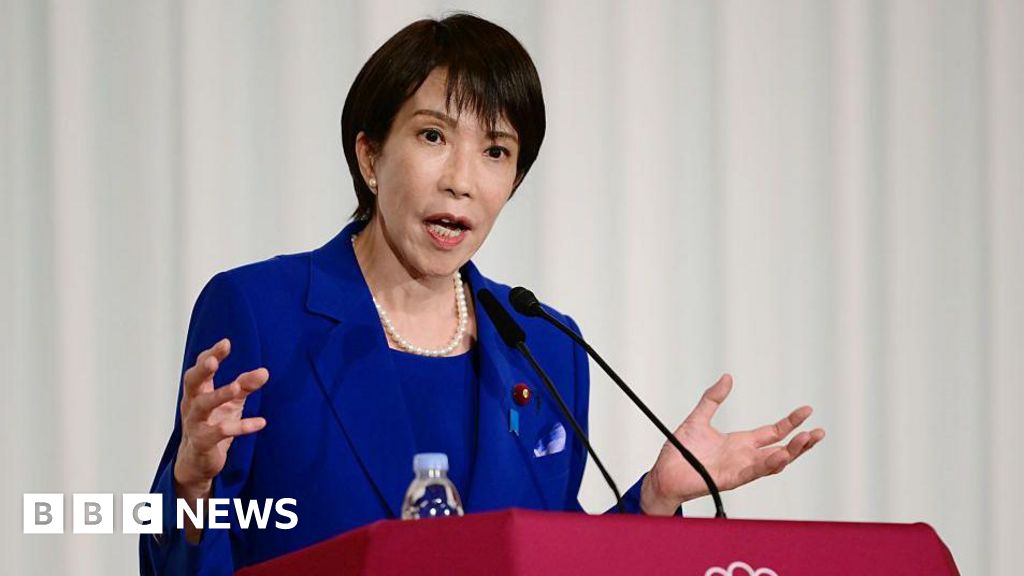
Japanese stocks, led by the Nikkei 225, hit a record high of over 50,000 points driven by optimism over Prime Minister Sanae Takaichi's pro-growth policies and easing US-China trade tensions, amid expectations of increased government spending and positive diplomatic developments.
Japan's Nikkei 225 surpasses 50,000 for the first time amid positive developments in US-China trade negotiations and strong Wall Street momentum, with regional markets also rallying on optimistic trade prospects and US economic data.
Japan's Nikkei 225 erased its gains after reaching record highs as Sanae Takaichi became Japan's first woman prime minister, while other Asian markets like South Korea and Australia hit new highs amid optimism over trade deals and mineral agreements. US markets showed positive momentum with major indices rising, driven by strong earnings and tech stock upgrades.
Japanese stocks reached a record high after Sanae Takaichi was named the ruling party's leader, positioning her as Japan's next prime minister. The market responded positively to her pro-business stance, though concerns remain about the yen's decline and economic challenges ahead.
Japan's Nikkei 225 reached a record high as Asia-Pacific markets mostly closed higher, driven by positive Wall Street gains and expectations of a potential Federal Reserve interest rate cut, with technology stocks leading the rally.
Japan's Nikkei 225 Stock Average experienced its largest weekly drop since June 2022, falling 2.7% amid a global selloff in stocks driven by concerns over US interest rates and tensions in the Middle East. The index is approaching a technical correction, dropping 10% below its all-time high, and is now less than 1% away from that level.
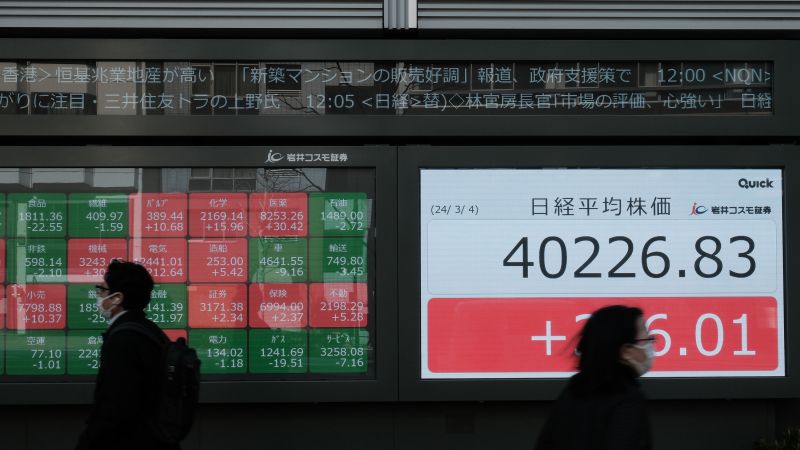
Japan's Nikkei 225 index surged above 40,000 points for the first time, driven by strong corporate earnings, a weaker yen, and increased foreign investment interest. The milestone comes amid a broader upbeat trend in Asian markets, with Taiwan's stock market hitting an all-time high and South Korea's Kospi gaining. Meanwhile, Chinese stocks cautiously rose ahead of the upcoming National People's Congress, where Premier Li Qiang is expected to announce China's 2024 growth target and unveil stimulus measures to revive the economy, which faces challenges including stabilizing the property sector and reversing foreign capital outflows.
Japan's Nikkei 225 stock index surpassed the 40,000 mark for the first time, continuing its record-breaking rally, while investors awaited the outcome of China's "Two Sessions" meetings. South Korea's Kospi rose, and Australia's S&P/ASX 200 was flat. Oil prices rose as OPEC+ producers extended voluntary crude supply cuts, and U.S. tech stocks were stand-out performers in 2023. South Korea's industrial output fell for the second straight month, while retail sales grew in January. The equity rally is expected to continue, with Citi remaining bullish on U.S. equities, particularly technology stocks, and U.S. crude oil prices topped $80 for the first time in nearly four months ahead of an OPEC+ decision on production cuts.
Most Asian stocks retreated as caution persisted before key economic readings, with Japan’s Nikkei 225 falling from record highs after slightly stronger-than-expected inflation data fueled fears that the Bank of Japan may end its ultra-dovish policies. Broader Asian markets also retreated before a string of key inflation and business activity readings this week, with China's rebound stalling as markets awaited signs of actual improvement in the economy.
Japan's Nikkei 225 index reached its highest level in nearly 35 years, surpassing its 1989 peak, with major gainers including Mitsubishi UFJ Financial Group and Daiichi Sankyo. The surge in Japanese stocks has been fueled by foreign investment, a cheap yen, and corporate governance reforms, but the country's overall economy continues to struggle with anaemic growth and recently entered a recession, relinquishing its position as the world's third-largest economy to Germany. Meanwhile, other Asian markets, including Hong Kong's Hang Seng and South Korea's Kospi, fell on Monday.
Japan's Nikkei 225 index has surged past its 1989 record, closing at 39,098.68, marking a return to levels not seen in 34 years. Despite the economy being in recession, record gains in corporate earnings and improved governance have attracted foreign investors, leading to an 18% increase in the index this year. The market's resurgence comes after years of struggle following the burst of Japan's financial bubble in the early 1990s.
Japan's Nikkei 225 stock index has surged past its 1989 record to an all-time high, closing at 39,098.68, marking a significant milestone after years of faltering growth. The market's recent sharp gains have been driven by strong interest from foreign investors, particularly in computer chip-related shares, and the Bank of Japan's easy money policies. Record gains in corporate earnings, improved corporate governance, and a shift in investor behavior, particularly among younger generations, have also contributed to the market's appeal. Meanwhile, China's markets have struggled amid economic slowdown and tensions with the U.S. Despite the market's success, experts caution that the stock market does not fully reflect the overall economy.
Japan's Nikkei 225 stock index reached a record high, surpassing its 1989 peak, as stocks in Japan have been steadily rebounding for over a decade and surged sharply in the past year. The stock surge is attributed to a weak yen benefiting exporters, changes in the corporate sector giving shareholders more rights, rising inflation signaling positive economic direction, and foreign investors pumping a net $14 billion into the market in January. Strong corporate profits and earnings at large Japanese companies, such as Toyota and SoftBank, have also contributed to the market's rise.